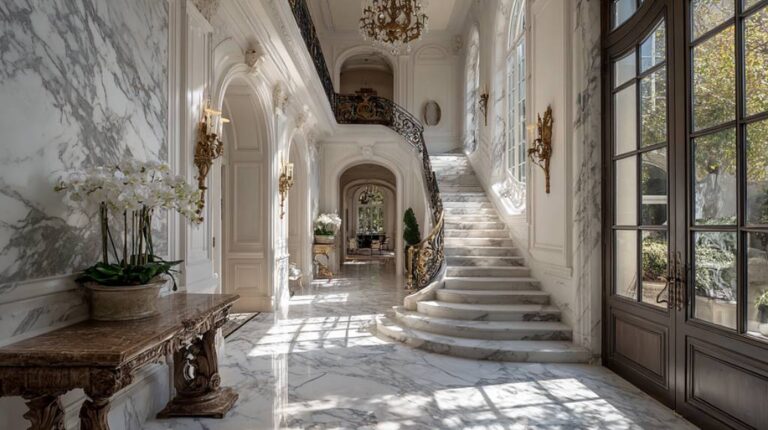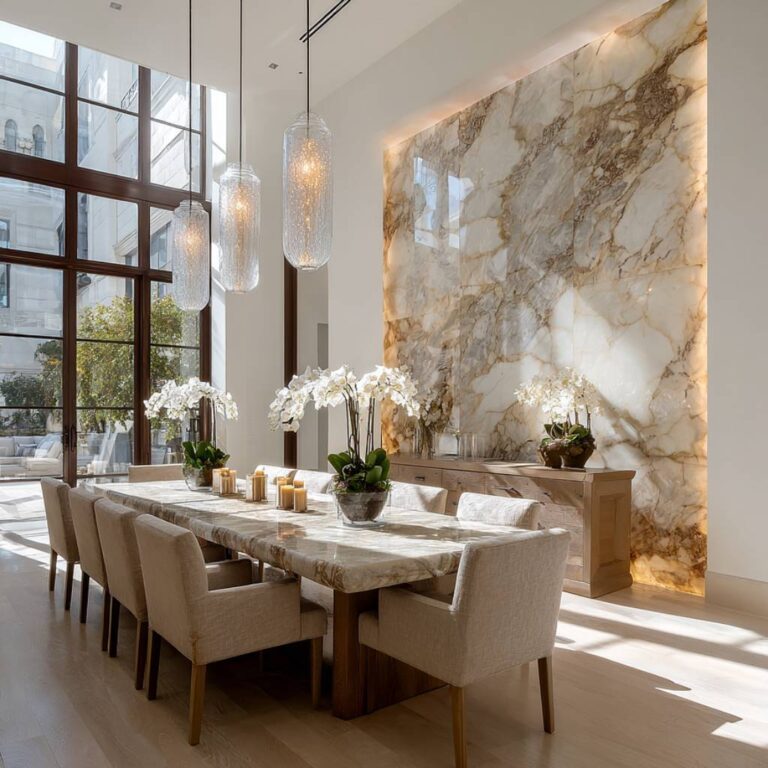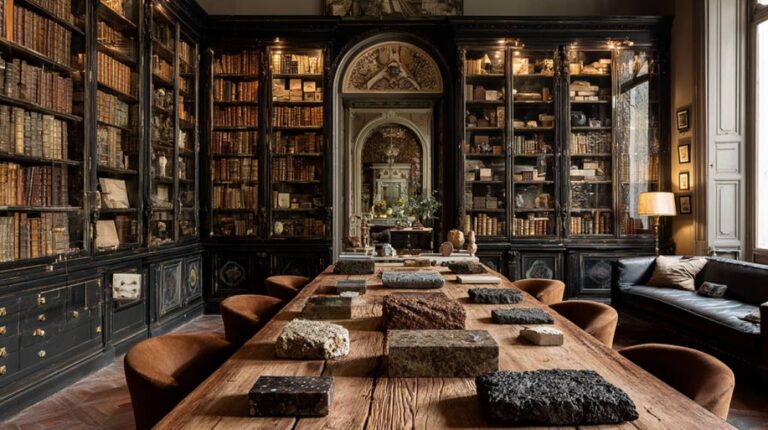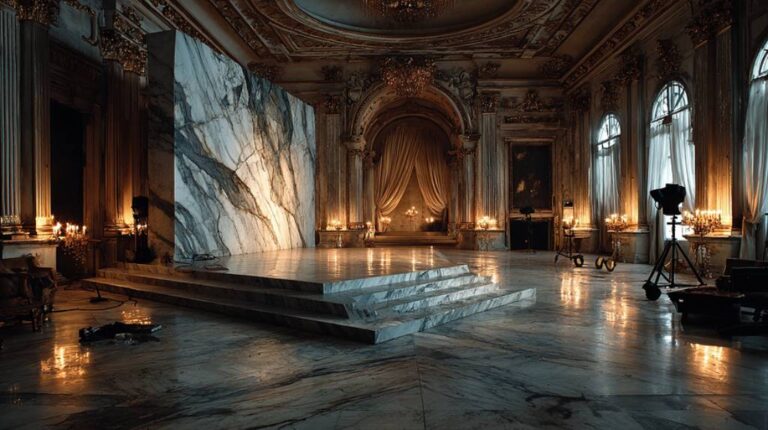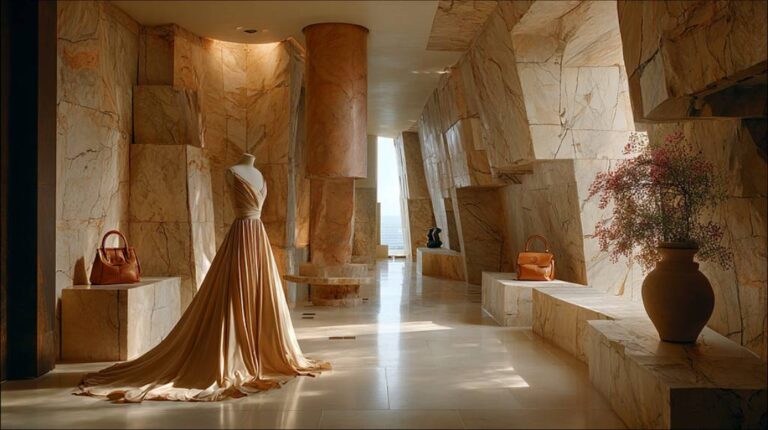
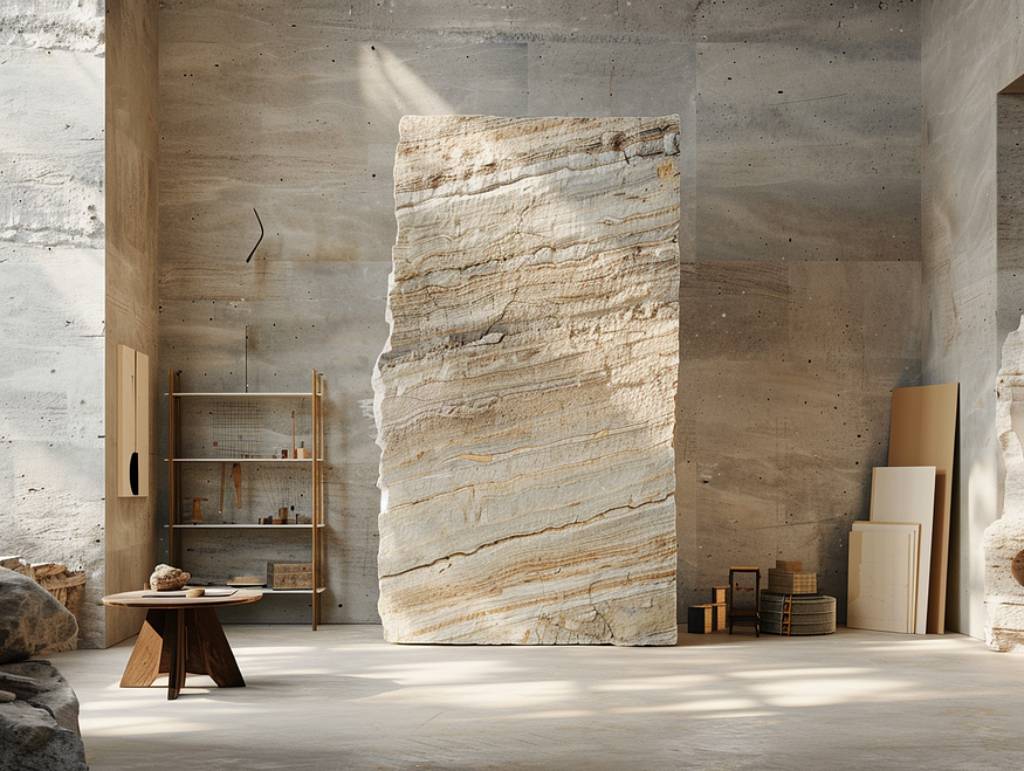
There is a quiet but critical shift happening in how natural materials are being understood within high-end architecture. Stone, once treated primarily as a finish, selected for colour, texture, and compliance within a broader aesthetic, has begun to reclaim its position as something far more substantial. It is no longer sufficient for a material to appear resolved. It must now be understood, articulated, and ultimately, narrated. In this emerging framework, a slab is no longer an object. It becomes a biography.
Natural materials are inherently variable. This variability is often described as a challenge to be managed: something to control, reduce, or neutralize in order to achieve visual consistency. Yet this instinct, while practical, overlooks the very quality that gives these materials their cultural and architectural weight. Variation is not noise. It is information. It is the visible record of formation, pressure, time, and transformation. When this information is left unnamed, it remains aesthetic. When it is documented and contextualized, it becomes meaning.
The issue is not that projects lack access to extraordinary materials. It is that they lack a structured language through which those materials can be communicated. A slab may be rare, geologically complex, and precisely fabricated, but without a narrative framework, it is reduced to surface. It is seen, but not read. And in the absence of reading, it cannot contribute to the deeper identity of the space.
This is where the idea of a provenance caption emerges, not as marketing, but as architectural discipline. A provenance caption is a structured way of translating material reality into cultural language. It transforms what would otherwise remain implicit into something legible, shareable, and enduring. It does not embellish the material; it reveals it.
At its core, this approach operates through a sequence that can be understood as a material biography stack: a set of layers that move from physical origin to architectural placement. Each layer adds specificity, and together, they create a complete narrative of the material as it moves through the project.
The first layer is geography. Every material begins in a location that is not interchangeable. The quarry, the region, the geological conditions, these are not background details, but defining characteristics. To name the origin of a stone is to anchor it within a specific landscape, to acknowledge that it carries the conditions of that place into the built environment. Without this, the material becomes anonymous.
The second layer is formation. Beyond location, materials are shaped by processes that occur over immense spans of time. Compression, mineral deposition, tectonic movement, these forces are what produce the veining, tonal shifts, and structural qualities visible in the slab. To understand, formation is to recognize that the material is not designed, but evolved. It introduces a dimension of time that no manufactured finish can replicate.
The third layer is rarity. Not all materials are equal in availability or consistency. Some quarries produce limited blocks. Some formations occur only under specific conditions. Rarity is not a marketing claim; it is a logistical and geological reality. When documented accurately, it explains why a material appears as it does, and why it cannot be easily substituted or replicated.
The fourth layer is craft. At this stage, the material transitions from raw condition to architectural component. Extraction, cutting, finishing, and alignment are not neutral processes. They are decisions that shape how the material is ultimately perceived. A slab that is carefully book matched and aligned carries a different presence than one that is treated generically. Craft is where intent meets execution.
The final layer is placement. Materials do not exist in isolation; they are positioned within space. Orientation, scale, adjacency, and light all influence how the material is experienced. Placement is what allows the previous layers: geography, formation, rarity, and craft, to become legible within the architecture. Without thoughtful placement, even the most extraordinary material can feel incidental.
Together, these five layers: geography, formation, rarity, craft, and placement, form a complete provenance caption. They transform a slab from a visual element into a structured narrative. More importantly, they allow that narrative to be communicated consistently across different platforms and stakeholders: from design discussions to client presentations, from editorial features to on-site documentation.
This framework also introduces a shift in authorship. Traditionally, the narrative of a project has been carried by the architect or designer, with materials supporting that vision. In a biography-first approach, materials become co-authors. Their origin and behaviour inform the design as much as the design shapes their use. The role of the architect evolves from selector to curator, from composer of forms to interpreter of matter.
In practice, this does not complicate the process instead clarifies it. Decisions that might otherwise remain subjective are grounded in documented criteria. Selection becomes more precise, communication becomes more aligned, and the risk of misinterpretation is reduced. The project gains a shared language that extends beyond aesthetics.
There is also a broader cultural implication. As luxury continues to move away from overt branding toward more intrinsic forms of value, the ability to articulate material provenance becomes increasingly important. Clients are no longer satisfied with surfaces that appear refined; they seek materials that carry meaning, history, and permanence. A provenance caption does not create that value, but it allows it to be recognized.
Ultimately, the shift from material as surface to material as biography is not a stylistic trend. It is a return to a deeper architectural logic, one in which materials are understood not only for how they look, but for what they are. It reintroduces time, place, and process into spaces that might otherwise feel detached from all three.
A slab, in this context, is no longer a selection.
It is a sequence.
And when that sequence is made visible, through language, through documentation, and through design, the material begins to carry more than weight. It carries meaning.