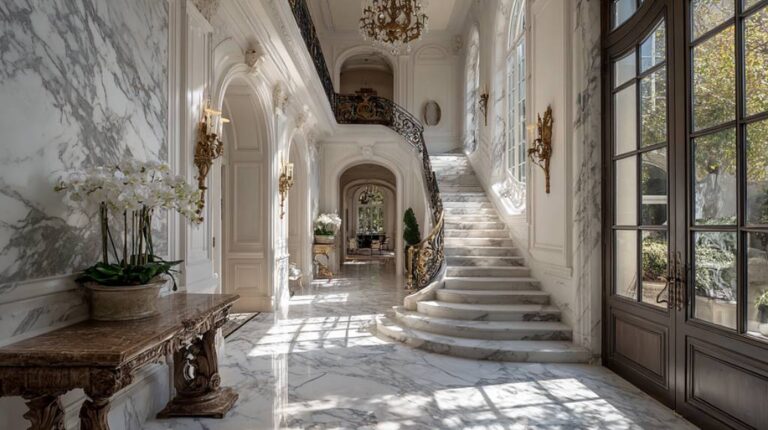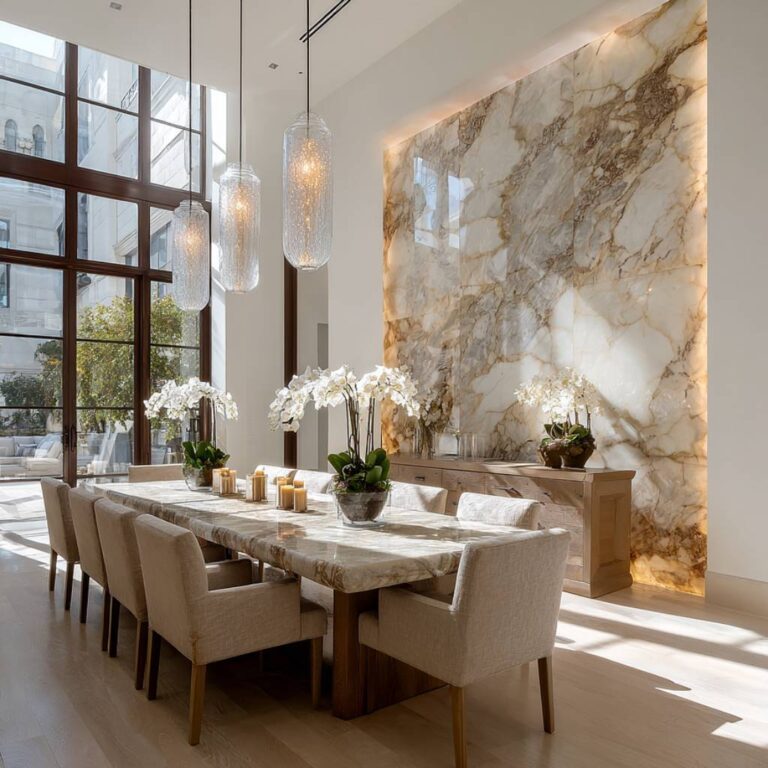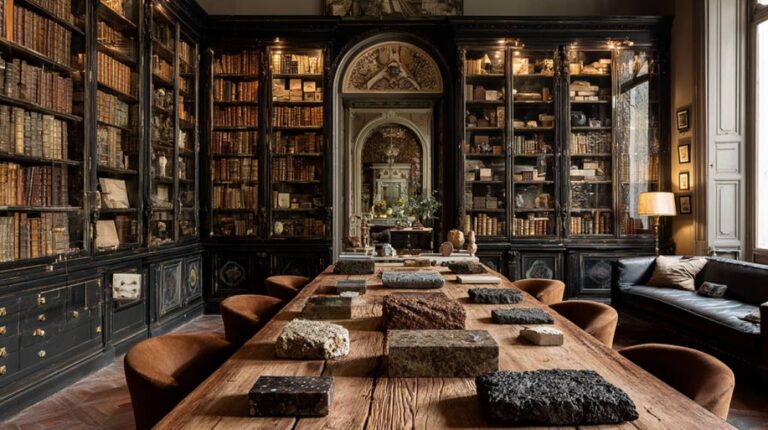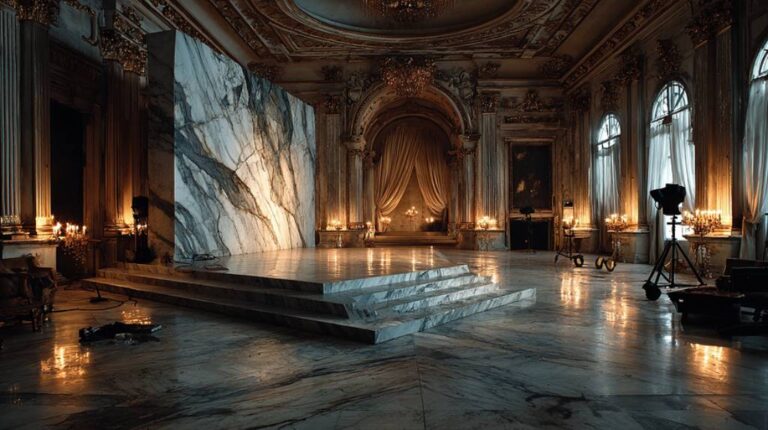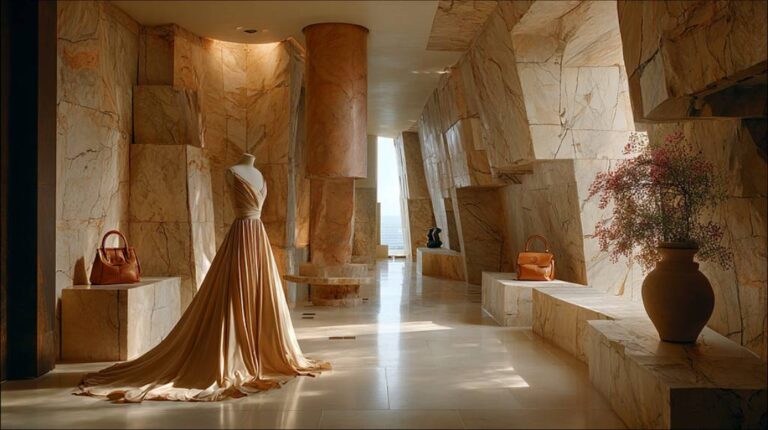
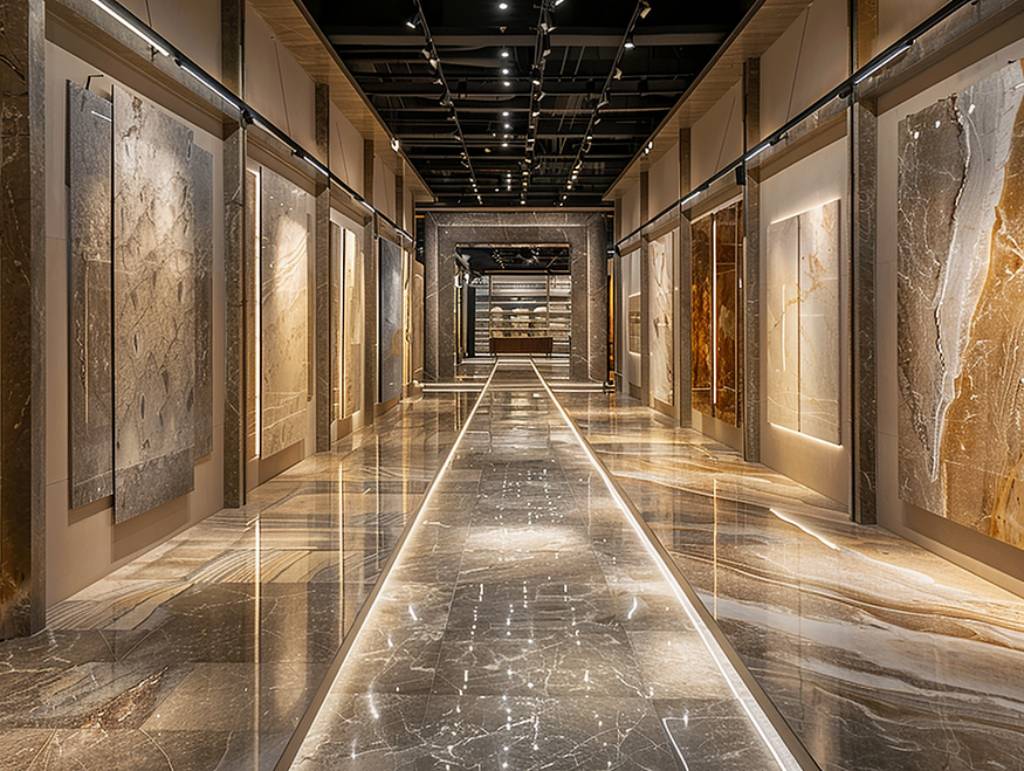
Taste is often spoken of as something instinctive, as if it emerges privately within the individual. Yet in practice, it is rarely formed in isolation. It is shaped, refined, and often quietly directed by the environments in which materials are encountered. Increasingly, these environments resemble not marketplaces, but institutions, spaces where materials are not simply displayed, but staged, interpreted, and ultimately elevated.
The contemporary material gallery operates less like a showroom and more like a cultural space. Its logic is not driven by volume or availability, but by selection and sequence. What is shown is deliberate. What is omitted is equally important. The visitor is not asked to browse freely, but to move through a carefully constructed narrative, where each material is positioned with intention.
In this sense, the gallery begins to take on a role that is closer to that of a temple than a store.
This is not a comparison rooted in ritual alone, but in authority. Temples do not present everything; they present what has been deemed significant. They frame objects in a way that invites reverence, not consumption. Similarly, the material gallery creates conditions where stone, metal, or wood is encountered not as inventory, but as subject. The material is given space, light, and context, allowing it to be read rather than simply seen.
This shift from display to staging is critical in the production of taste.
When materials are encountered in isolation, without context, they tend to be judged quickly. Preference becomes immediate and often superficial. However, when they are placed within a curated environment, where scale, light, and adjacency are controlled, the process slows. The visitor begins to notice variation, depth, and behaviour. The material reveals itself over time, and with that, perception begins to change.
What is often overlooked is that this process is not neutral.
Institutions do not merely present materials; they interpret them. Through curation, they suggest what is valuable, what is refined, and what is worth attention. Over time, these suggestions solidify into collective understanding. Taste, then, is not discovered, it is constructed.
This construction operates through a series of subtle mechanisms.
The Institutional Production of Taste
Staging shapes how a material is first perceived.
Narrative frames what that material represents.
Curation determines what is included and what is excluded.
These elements work together to create a coherent language around material. A slab of stone, for instance, is no longer just a surface. It becomes part of a larger discourse, linked to ideas of origin, craftsmanship, and permanence. The visitor is not simply selecting; they are aligning with a set of values that have already been articulated.
What makes this particularly powerful is that it operates quietly. The visitor often leaves with the impression that their preferences are entirely their own. Yet those preferences have been shaped by the sequence of encounters, the pacing of the experience, and the authority of the environment.
This is where the role of the curator becomes significant. Unlike the salesperson, whose objective is to facilitate choice, the curator constructs meaning. They decide not only what is shown, but how it is understood. Their presence, whether visible or embedded within the design of the space, introduces a layer of authorship that extends beyond commerce.
In many contemporary spaces, this authorship is carefully calibrated. It avoids overt instruction, favouring suggestion over declaration. Materials are not explained excessively; they are positioned in a way that invites interpretation. The visitor is guided, but never overtly directed.
This balance is what allows the gallery to maintain both authority and accessibility.
However, it also introduces a question of responsibility. If institutions are shaping taste, they are also shaping expectations. They influence how materials are specified, how projects are imagined, and ultimately how spaces are experienced. The implications extend far beyond the gallery itself.
To create taste is, in a sense, to create a framework for decision-making.
This framework can be expansive, encouraging exploration and deeper understanding. Or it can be narrow, reinforcing a limited set of preferences. The distinction lies in how open the institution is to variation, to nuance, and to the evolving nature of material itself.
The most compelling galleries recognise that their role is not to dictate, but to reveal. They create environments where materials can be encountered in their full complexity, where variation is not corrected, but contextualised, and where the visitor is invited to engage rather than simply select.
In doing so, they shift the focus from ownership to understanding.
This is where the idea of the gallery as temple becomes most relevant. It is not a place of transaction, but of interpretation. A space where material is elevated, not through price or rarity alone, but through the depth of attention it receives.
And in that attention, taste is quietly formed. Not as an instinct, but as a learned perception.
Not as a reaction, but as a way of seeing.