
There is a particular moment that defines a showroom, though it is rarely acknowledged explicitly. It occurs not when a material is selected, but when it is first encountered. In that instant, the space either invites interpretation or directs decision. It either slows the visitor down or moves them forward. It either teaches, or it sells.
At first glance, the distinction may seem semantic. After all, every showroom exists to facilitate choice, and every material must eventually be specified, purchased, and installed. Yet the manner in which this process unfolds reveals a deeper philosophy. Some spaces are structured to accelerate decisions, while others are designed to cultivate understanding. The difference lies not in what is displayed, but in how it is framed.
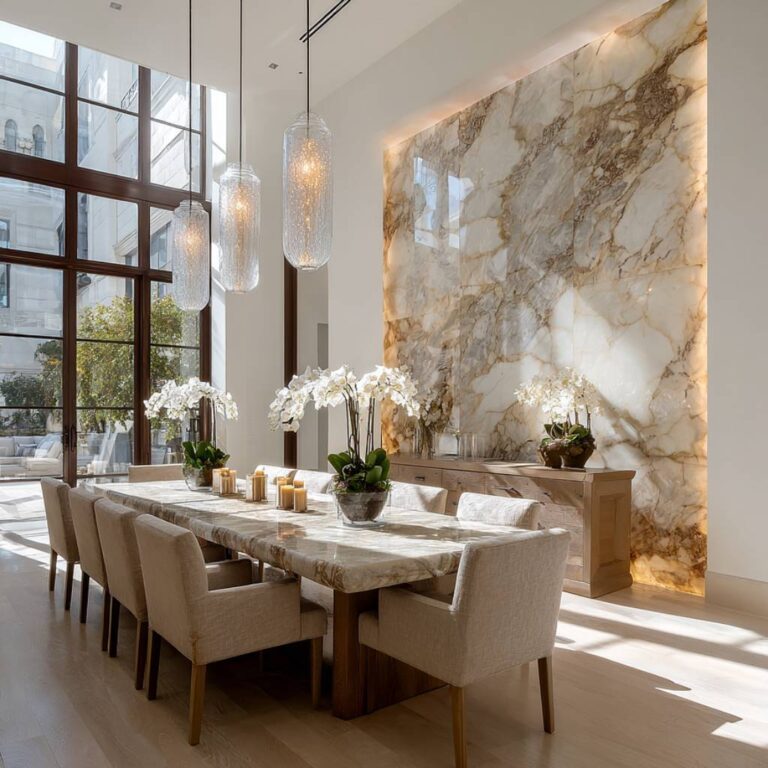
The showroom that sells is often defined by density. Materials are presented in abundance, arranged to maximise visibility and comparison. The visitor is encouraged to browse, to scan, to evaluate quickly. Surfaces compete subtly for attention, each one positioned as a potential answer. The environment, though visually rich, operates with a certain urgency. It assumes that clarity will emerge from exposure.
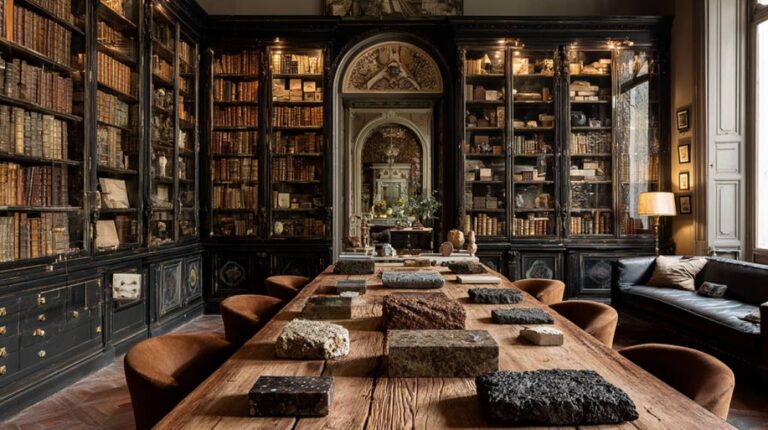
In contrast, the showroom that educates approaches material differently. It reduces rather than expands. It curates rather than accumulates. Instead of overwhelming the visitor with options, it constructs a sequence, the one that allows materials to be read, not just seen. The pace shifts. Time elongates. The visitor is not asked to choose immediately, but to understand first.
This shift from selling to educating is not simply a matter of layout. It is a redefinition of the role of the space itself. In an educational showroom, material is not positioned as a product but as a subject. Its texture, variation, and behaviour are revealed gradually, often through proximity rather than repetition. One does not compare ten stones at once; one studies one stone deeply.
The presence of a curator, whether explicit or implied, becomes critical in this environment. Guidance replaces persuasion. The conversation is not about what is available, but about what is appropriate. This introduces a different kind of authority, one that is rooted in knowledge rather than inventory.
What is particularly striking is how this approach transforms the visitor’s role. In a conventional showroom, the visitor arrives as a decision-maker. In an educational one, they arrive as a learner. This does not diminish their agency; it refines it. By the time a decision is made, it is not reactive but informed, grounded in an understanding of material beyond surface appearance.
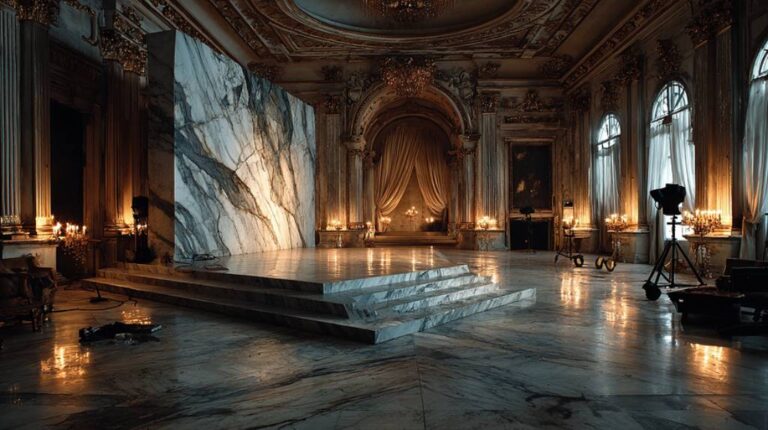
There is also an aesthetic consequence to this shift. When materials are allowed to be read like art, their presence changes. Variation is no longer treated as inconsistency but as character. Imperfection is not corrected but contextualised. The slab becomes less of a sample and more of a narrative, the one that unfolds through observation.
This is where the idea of education as luxury begins to emerge.
Luxury, in this context, is not defined by rarity alone, but by the quality of attention a space affords. To be given the time and framework to understand a material and to see it in relation to light, scale, and use is itself a form of privilege. It moves the experience away from transaction and towards engagement.
However, this model requires restraint. It resists the impulse to display everything. It demands clarity about what is being shown and why. It also requires confidence, an understanding that not every visitor needs to be converted immediately, and that depth of experience can be more valuable than speed of decision.
To clarify this distinction, one might consider the following conceptual lens:
Showroom Literacy: A Comparative Frame
The Showroom That Sells
1. Operates through volume and visibility.
2. Encourages quick comparison and immediate selection.
3. Positions material as product.
4. Relies on persuasion and availability.
The Showroom That Educates
1. Operates through curation and sequence.
2. Encourages observation and delayed decision-making.
3. Positions material as subject.
4. Relies on guidance and understanding.
This is not to suggest that one model is inherently superior to the other. Both respond to different contexts, different markets, and different expectations. Yet, as design becomes increasingly global and clients more informed, there is a growing appetite for spaces that offer more than choice.
They offer clarity.
In such environments, the showroom becomes less of a marketplace and more of a gallery. The act of selection is reframed as a process of interpretation. The visitor leaves not only with a decision, but with a deeper comprehension of what that decision entails.
The implications of this extend beyond retail. They influence how materials are specified, how projects are communicated, and ultimately how spaces are experienced. When a material is chosen through understanding rather than impulse, it carries a different weight. It integrates more seamlessly into the architecture. It performs not just visually, but conceptually.
This is where the role of the showroom evolves most significantly. It is no longer a place where materials are displayed. It is a place where they are translated.
And in that translation lies a quiet but powerful shift. Some spaces will continue to sell. But the ones that endure, are the ones that teach.