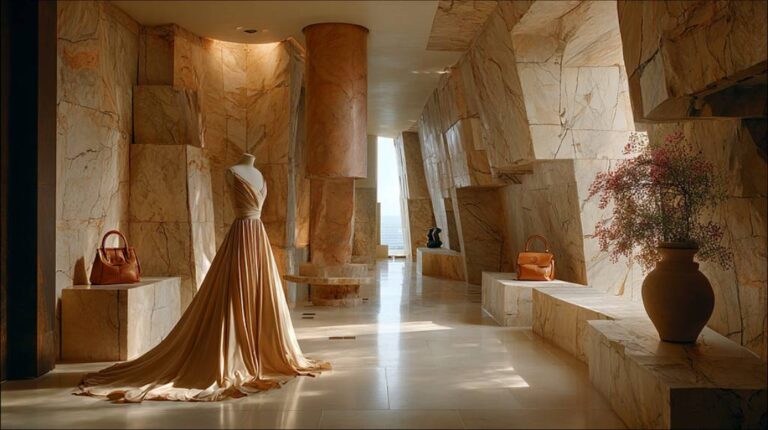
Why luxury fails when a fragment is asked to represent a whole
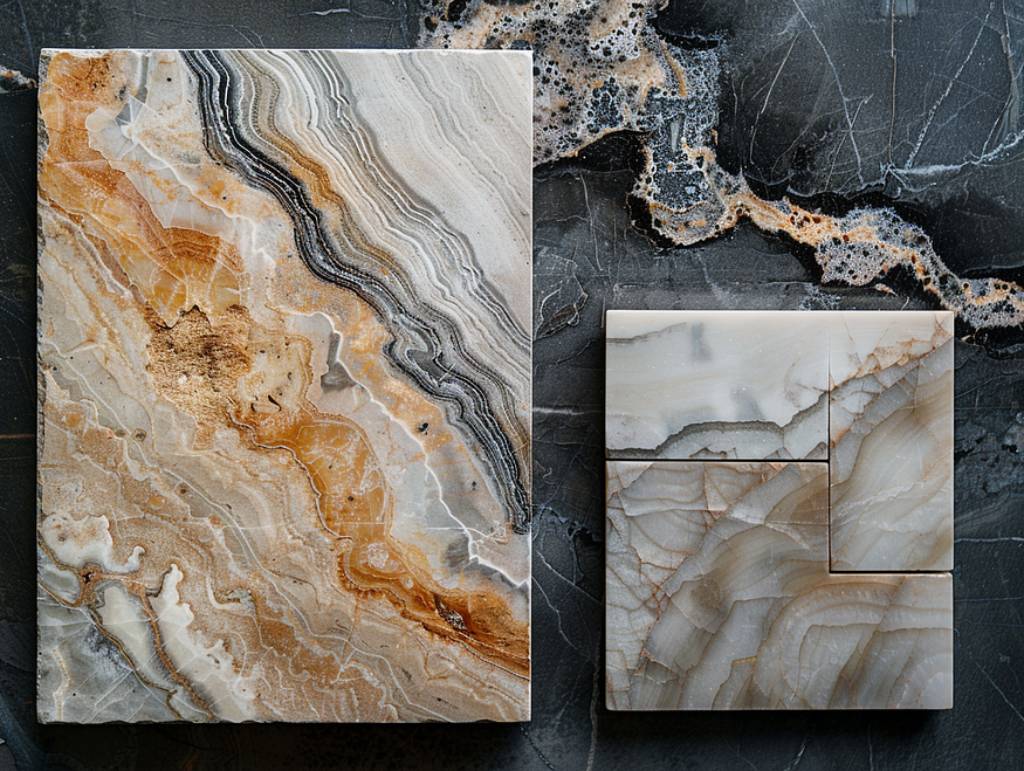
In luxury architecture, conflicts rarely begin where they appear to. They do not originate in the slab yard, the fabrication workshop, or even on-site during installation. They begin much earlier, at the moment a small, controlled fragment is mistaken for the truth of a much larger reality.
A sample, in its most technical definition, is a representation. It is a fragment extracted to demonstrate colour, texture, and finish. But in luxury, a sample is rarely read technically. It is interpreted symbolically. It becomes a proxy for expectation, identity, and authorship. And when the final installation diverges from that symbolic reading, what emerges is not a defect claim, it is a status dispute.
The phrase often heard in such moments, “this isn’t what I approved” is not, in fact, about material mismatch. It is about a deeper misalignment between what was imagined and what has been delivered. The sample did not fail materially. It failed culturally.
The Illusion of Control in Fragmented Selection
The modern design process has inherited a habit from industrial production: the belief that consistency can be guaranteed through standardization. Samples are presented, approvals are documented, and specifications are signed off. The assumption is that the final outcome will replicate the approved fragment at scale.
This logic works in manufacturing. It fails in geology.
Natural materials like stone, wood, leather, are not products. They are formations. They carry within them the conditions of their making: pressure, time, mineral composition, environmental shifts. No two sections are identical because no two moments in their formation were identical.
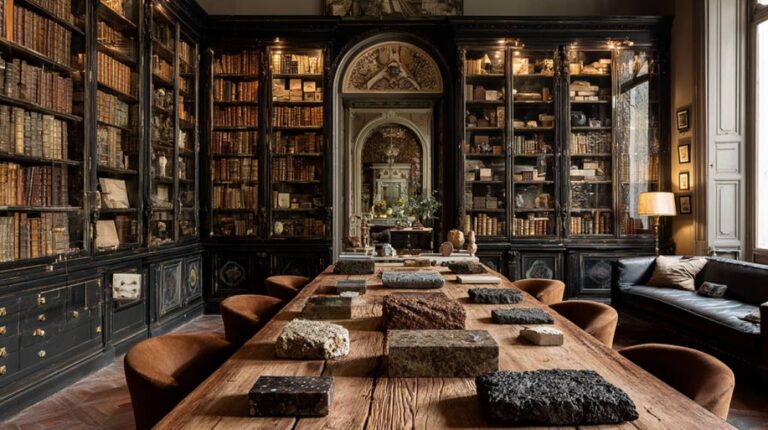
Yet the sample process attempts to compress this variability into a single, controlled piece. A 100×100 mm stone sample is expected to stand in for an entire slab that may span several meters. Within that expectation lies the first fracture.
The sample suggests certainty. The material embodies variation.
Luxury clients, conditioned by brand-driven consistency, often read the sample as a promise. Designers, under pressure to simplify decisions, present it as reassurance. Suppliers, constrained by logistics, provide it as approximation. Each participant understands the limitation, yet collectively, the system behaves as though the sample is definitive.
This is not a technical oversight. It is a cultural misalignment.
When Approval Becomes Identity
In high-end residential projects, material selection is rarely neutral. It is deeply tied to identity. The stone chosen for a kitchen island, the marble lining a bathroom, the timber defining a living space, these are not just design elements. They are declarations.
To approve a sample is to participate in authorship. It is to say: this is the material that represents my taste, my values, my idea of luxury.
When the final installation diverges, even subtly from the approved sample, the reaction is not simply disappointment. It is dissonance. The material no longer aligns with the identity that was imagined.
This is why disputes escalate so quickly. The conversation shifts from measurable attributes: colour variation, veining intensity, finish, to intangible ones: feeling, presence, correctness. The language becomes subjective because the conflict itself is symbolic.
What is being contested is not whether the stone matches the sample. It is whether the space matches the self.
The Failure of Minimalism as a Template
In recent years, a particular aesthetic has dominated luxury interiors: restrained palettes, minimal detailing, and an emphasis on surface continuity. This approach, while visually calming, places enormous pressure on materials.
When a space relies heavily on a single material say, a pale limestone or a subtly veined marble any variation becomes amplified. There are no competing elements to absorb or balance it. The material is both background and focal point.
In such contexts, the expectation of uniformity intensifies. Clients and designers alike begin to seek a level of consistency that natural materials cannot provide. The sample, often carefully selected to represent an idealized version of the stone, reinforces this expectation.
But the installed slabs, with their inherent variation, disrupt it.
The result is what might be called weightless luxury, spaces that appear refined but feel culturally thin. They lack the depth that comes from acknowledging material biography. They prioritize visual control over material truth.
And when that control inevitably slips, the entire composition feels compromised.
From Selection to Curation
If the problem lies in the way samples are used, the solution is not to eliminate them. It is to reposition them within a broader, more meaningful process.
Luxury, at its highest level, is not about selecting materials. It is about curating them.
Curation acknowledges that materials are not interchangeable units but individual entities with distinct characteristics. It shifts the focus from finding a match to assembling a narrative. Instead of asking whether each slab conforms to a sample, it asks how each slab contributes to the overall composition.
This requires a different kind of engagement.
Full-slab viewing becomes essential. Clients and designers must encounter the material at scale, understanding its variations, its rhythms, its moments of intensity and calm. Documentation must move beyond static images to include sequences, pairings, and placement strategies.
The conversation evolves from approval to interpretation.
In this model, variation is not a risk to be minimized but a resource to be managed. The role of the designer becomes less about enforcing uniformity and more about orchestrating difference.
Documentation as Cultural Infrastructure
Many disputes in luxury projects are attributed to poor communication. But communication, in this context, is not just about clarity. It is about completeness.
A single sample, accompanied by a specification sheet, is insufficient documentation for a material that will define an entire space. What is needed is a layered record, a “proof stack” of sorts that captures the material’s origin, selection, and intended placement.
This might include:
- Quarry information and block identification
- Full-slab photographs and layout diagrams
- Notes on variation, including areas of interest or concern
- Mock-ups or test installations
- Clear mapping of where each slab will be used
Such documentation does more than reduce ambiguity. It reframes the material as something with a biography. It provides context that allows all parties: client, designer, fabricator, to align their expectations.
When a client sees not just a sample but the journey of the material, from quarry to slab to installation, the likelihood of symbolic misinterpretation decreases.
The material is no longer an abstract promise. It is a documented reality.
The Role of Fabricators and Installers
Often overlooked in discussions of luxury are the craftspeople who translate material into built form. Fabricators and installers operate at the intersection of design intent and material behaviour. They understand, perhaps more than anyone, the limits of what can be controlled.
Inviting their perspective earlier in the process can be transformative.
What documentation prevents the most conflict?
Which variations are predictable, and which are not?
How can slabs be cut and arranged to achieve the desired effect?
These are not technical questions alone. They are interpretive ones.
By involving fabricators and installers in the selection and documentation process, the project gains a layer of practical intelligence. Decisions are informed not just by aesthetics but by feasibility. Expectations are grounded in experience.
This does not eliminate variation. But it reduces the gap between what is imagined and what is achievable.
De-escalating the Status Dispute
When a dispute does arise, the instinct is often to resolve it through comparison: sample versus installation. Measurements are taken, tolerances are debated, and responsibility is assigned.
But if the root of the conflict is symbolic, technical arguments will only go so far.
De-escalation requires reframing the conversation.
Instead of asking whether the material matches the sample, the question becomes: does the material fulfil the narrative that was intended? Does it carry the qualities: depth, richness, authenticity, that define the project’s vision?
This shift does not negate the importance of accuracy. But it acknowledges that luxury is not judged solely on precision. It is judged on coherence.
A space can tolerate variation if that variation feels intentional. It cannot tolerate misalignment between expectation and experience.
Toward a New Ritual of Approval
The traditional approval process: sample, sign-off, specification, is rooted in a paradigm of control. It assumes that materials can be standardized and outcomes can be predicted.
Luxury, increasingly, operates in a different paradigm. It values uniqueness, provenance, and narrative. It embraces materials that resist uniformity.
To reconcile these realities, a new ritual of approval is needed.
One that includes:
- Encountering materials at scale
- Documenting their full range of variation
- Curating their placement within the space
- Aligning all stakeholders around a shared narrative
In this ritual, the sample does not disappear. But it is no longer the sole authority. It becomes one layer in a more comprehensive understanding.
Approval is no longer about freezing a moment. It is about committing to a process.
Conclusion: From Fragment to Whole
The sample, in itself, is not the problem. It is a useful tool, a necessary shorthand in a complex process. The issue arises when it is asked to carry more meaning than it can sustain.
In luxury architecture, where materials are expected to embody identity and aspiration, this overburdening becomes particularly acute. The sample becomes a symbol, and when reality diverges from that symbol, conflict follows.
The path forward is not to abandon the sample but to contextualize it. To recognize it as a fragment, informative but incomplete. To build around it a richer, more nuanced understanding of material.
When this happens, the sample ceases to be a point of contention. It becomes part of a larger narrative, the one that acknowledges variation, embraces biography, and ultimately, aligns expectation with experience.
In that alignment, luxury finds its true authority.