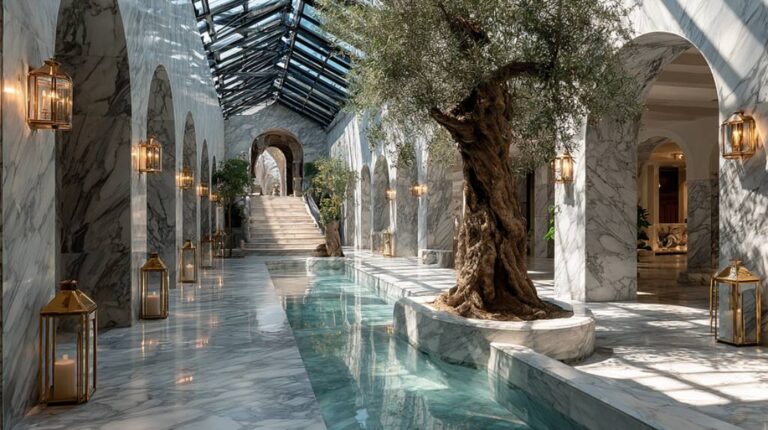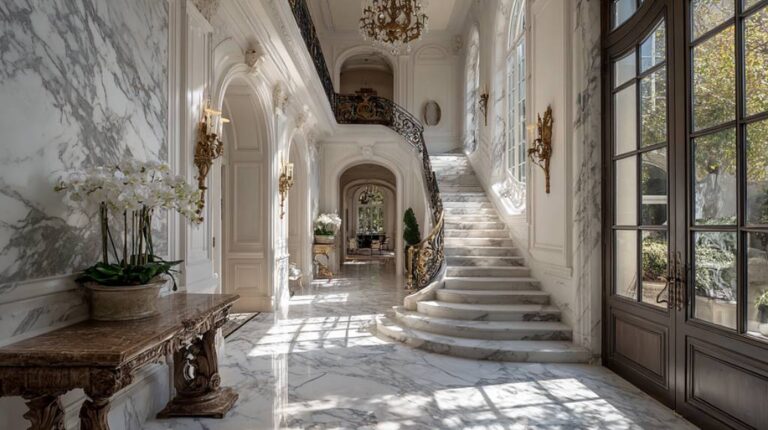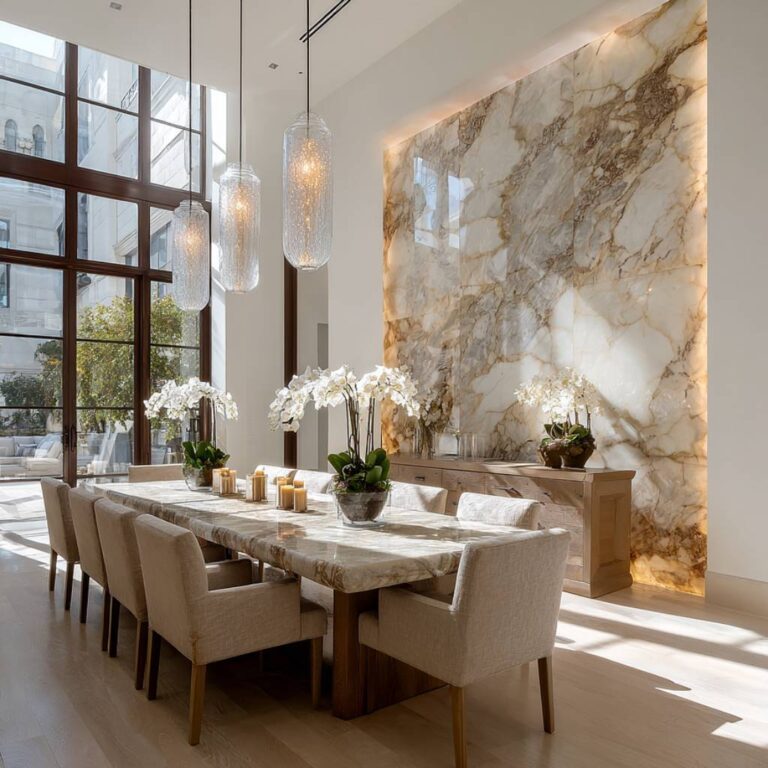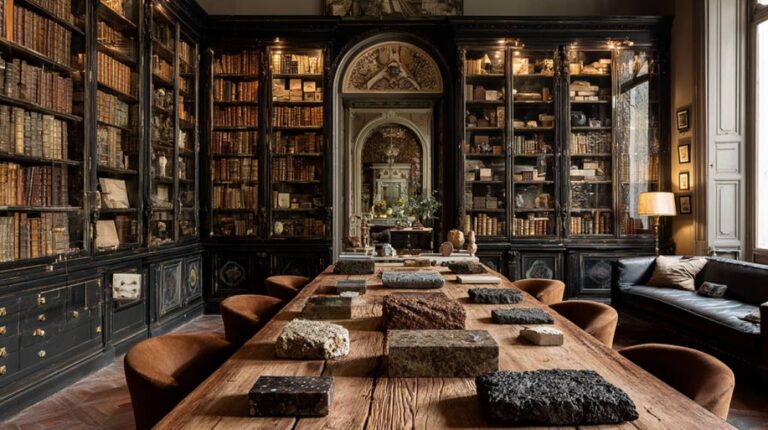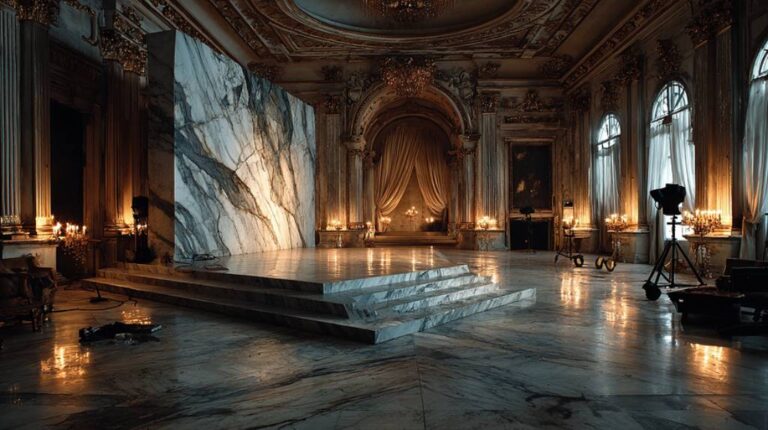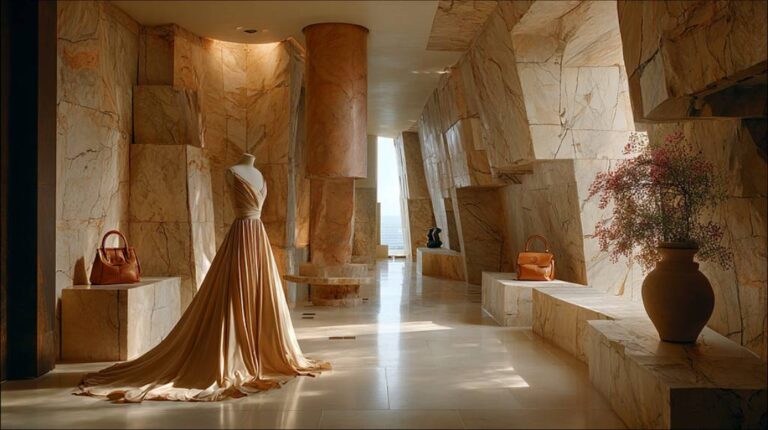
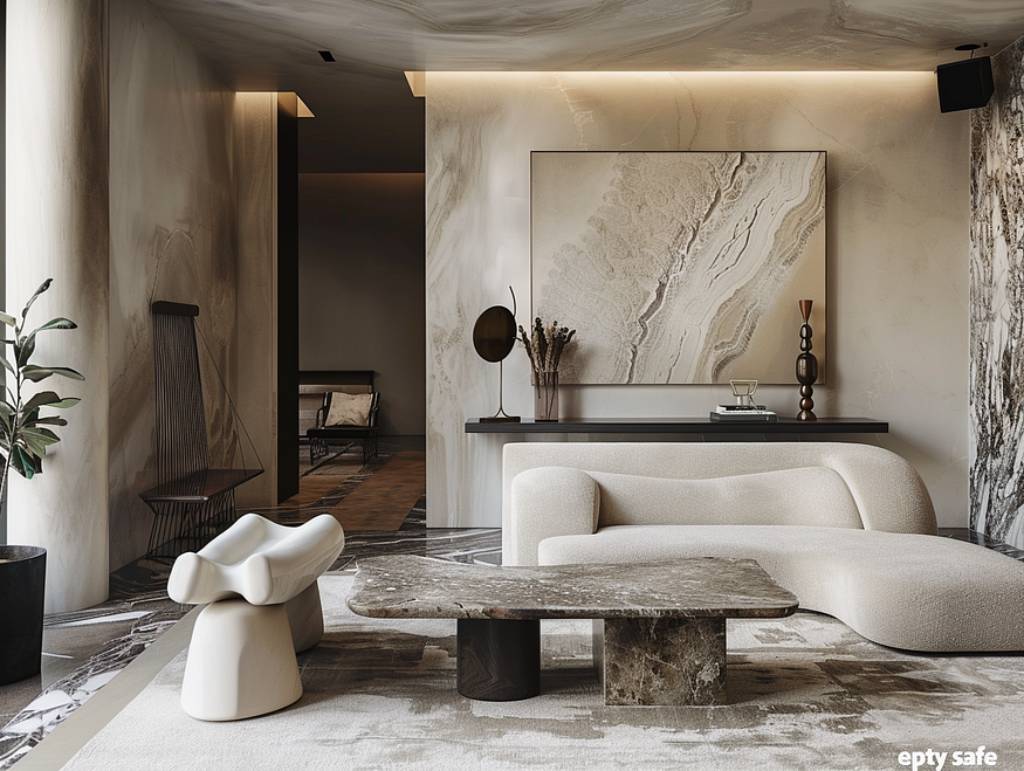
There is a particular kind of interior that immediately reads as expensive. The materials are pale, the lines are restrained, the detailing is precise. Light moves cleanly across surfaces. Nothing appears excessive, nothing appears unresolved. And yet, despite this visual clarity, something feels absent. The space does not hold. It does not settle. It does not accumulate meaning. It performs luxury, but it does not sustain it.
This condition, where a project appears refined yet feels culturally thin is becoming increasingly common in high-end residential architecture. It is not a failure of budget, nor of design competence. It is, more precisely, a failure of material depth. The space has been composed through visual control, but not through material authorship. It has been edited, but not grounded.
Minimalism, in its current application, often accelerates this outcome. Stripped of its original philosophical rigor, it has become a template rather than a discipline. Surfaces are reduced, palettes are softened, and visual noise is removed. But when this reduction is not supported by a deeper narrative of origin, of labor, of time, the result is an architecture that feels interchangeable. It could exist anywhere, belong to anyone, and carry no memory beyond its completion.
What is missing in these spaces is not ornament, but biography. Materials appear without context. Stone is selected for colour uniformity rather than geological character. Wood is specified for tone rather than grain history. Finishes are flattened to eliminate variation, rather than curated to express it. In the pursuit of visual calm, the project loses the very qualities that allow it to resonate: friction, specificity, and trace.
The consequence is subtle but decisive. A space that should feel anchored instead feels weightless. It photographs well, but it does not endure scrutiny. It is immediately legible, but not progressively discoverable. It offers no resistance, and therefore no depth. And in luxury architecture, depth is not an aesthetic choice, it is the condition that allows a project to hold value over time.
Projects that achieve a different outcome tend to operate through a more deliberate material framework, one that can be understood as a form of embedded authorship. Rather than treating materials as finishes, they are treated as carriers of narrative. Each element is selected not only for how it looks, but for what it represents and how it behaves across scale, light, and time.
This begins with origin. Materials are not abstracted from their source, but traced back to it. Stone is understood in terms of quarry, block, and extraction condition. Its geological formation is not suppressed, but positioned as part of the project’s identity. This is not storytelling as embellishment, but as structure. The material is no longer interchangeable; it is specific, located, and therefore irreplaceable.
From origin, the process moves into curation. Selection is no longer a matter of approving isolated samples, but of composing relationships. Slabs are viewed in sequence, compared in context, and mapped against spatial intent. Vein direction, tonal shifts, and scale variation are not treated as risks to be minimized, but as variables to be orchestrated. The material begins to operate as a system rather than as a surface.
Craft then becomes the mechanism through which this intent is translated. Cutting is not simply a technical step, but a design decision. Book matching, alignment, and joinery are resolved with precision, ensuring that the logic established during selection is carried through to execution. At this stage, the project moves from concept to continuity. The material is no longer selected, it is constructed.
Finally, the project acknowledges time. Luxury, in its most enduring form, is not static. Materials age, surfaces respond, and environments evolve. Rather than resisting this process, projects that hold weight anticipate it. Maintenance is defined, patina is understood, and the lifecycle of the material is considered as part of the design itself. The space is no longer frozen at completion; it is allowed to develop.
This layered approach: origin, curation, craft, and time, forms what can be described as a material biography. It is not immediately visible in the way a finish is visible, but it is perceptible in how a space feels. The interior gains gravity. It resists quick consumption. It invites attention not through spectacle, but through coherence.
In contrast, interiors that rely solely on visual reduction often lack this structure. They are composed efficiently, but not deeply. They achieve clarity, but not consequence. And as a result, they struggle to maintain relevance beyond the moment of completion. Without a material biography, they remain visually resolved but experientially incomplete.
This is where the distinction between “expensive” and “valuable” becomes critical. Expense is measurable at the point of procurement. Value is constructed over time, through alignment, continuity, and material integrity. One can be achieved quickly. The other requires a system.
For architects and designers operating at the highest level, the challenge is no longer to simplify, but to substantiate. To move beyond surfaces that read well, toward materials that hold meaning. To replace generic calm with specific depth. To build spaces that do not simply appear resolved, but remain resolved under scrutiny.
Because in the end, luxury is not defined by how little is shown.
It is defined by how much is embedded.
And it is that embedded depth; quiet, precise, and deliberate, that allows a space to move from being seen, to being felt, and ultimately, to being remembered.