Luxury, for much of the last century, has relied on a language of visibility. It has been constructed through recognition: logos, brands, and the immediate legibility of cost. To possess luxury was, in many ways, to display it. The object functioned as a signal, and its meaning was widely understood without requiring explanation. A handbag, a surface, a piece of furniture, or an interior did not need to justify itself beyond its association. It was enough that it belonged to a known system of value.
That language is now weakening.
Not disappearing entirely, but losing its authority as the primary way luxury is interpreted. In its place, a quieter but more complex system is emerging; one that demands not visibility, but verification. Luxury is no longer simply what can be seen; it is what can be substantiated. It is shifting from declaration to demonstration, from recognition to reading. Increasingly, the question is not “what is this?” but “what stands behind this?”
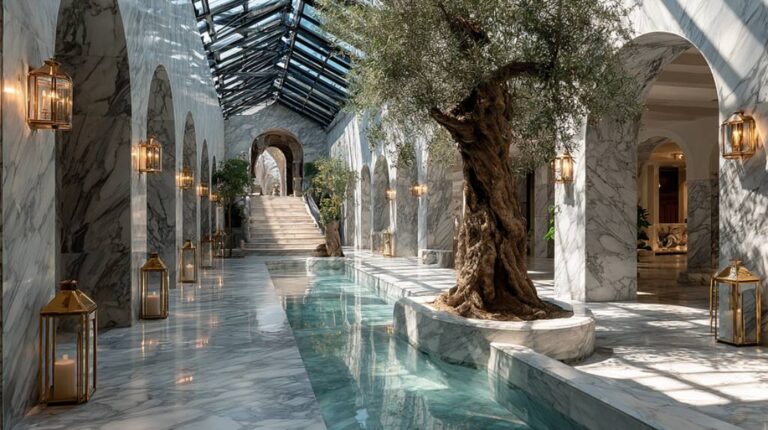
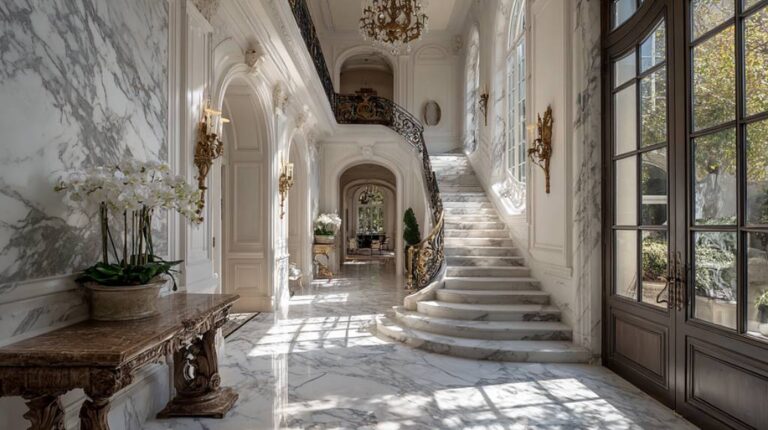
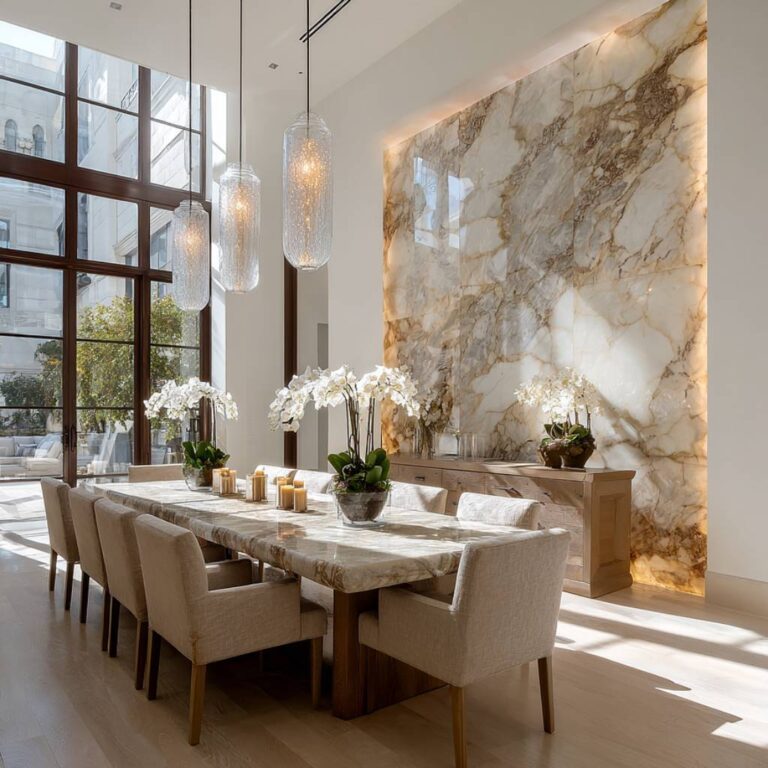
This transition marks the return of what might be called material authority. In this emerging framework, materials are no longer passive carriers of design intent. They are active participants in the construction of meaning. They do not simply finish a space; they define its legitimacy. A surface is no longer judged solely by its visual quality, but by the depth of information it contains; its origin, its formation, its extraction, its transformation, and the systems that govern its movement from earth to interior. Materials begin to function less like commodities and more like documents.
This shift is not accidental. It reflects a broader cultural movement in which value is increasingly tied to knowledge. In a world saturated with images and rapid consumption, what distinguishes one object from another is no longer appearance alone, but the density of meaning embedded within it. Luxury, in this sense, becomes a form of cultural capital, not merely something one owns, but something one understands. To engage with luxury now requires literacy: the ability to read provenance, to recognize craft, to interpret restraint, and to distinguish between what is merely expensive and what is structurally rare.
At the centre of this transformation is the idea of proof. Not proof in a legal or scientific sense, but in a cultural one. Proof operates as a framework through which legitimacy is established and communicated. It answers a set of implicit questions that define contemporary luxury: Where did this come from? Why does it exist in this form? Who was involved in its making? What processes shaped it? And how will it endure over time? Without these answers, an object may still be valuable, but it lacks authority.
To understand how this operates in practice, it is useful to think in terms of what can be described as a “proof stack.” This is not a checklist, nor a rigid methodology, but a layered structure through which materials accumulate meaning. At its base lies origin, the geographical and geological specificity that anchors a material in time and place. This is not simply about location, but about narrative: the conditions under which the material was formed, the history of its extraction, and the uniqueness that arises from that context. Origin establishes that the material is not generic. It situates it within a larger continuum of natural and cultural processes.
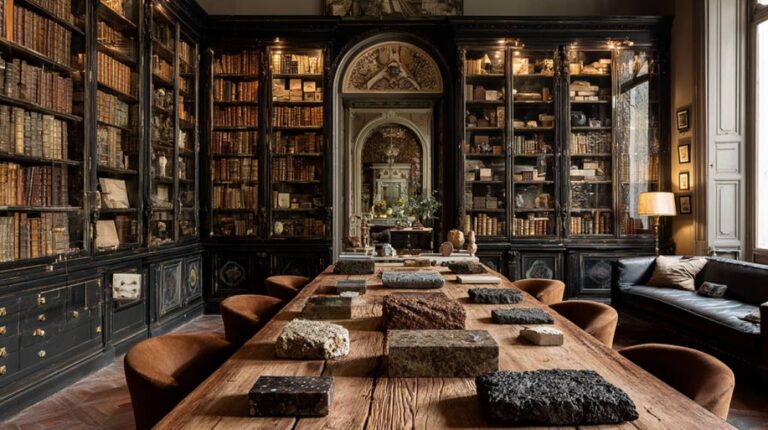
Above this sits the ritual of selection. Luxury, increasingly, is not only about what is chosen, but how it is chosen. The act of selection becomes a performative and cultural moment; guided, deliberate, and often mediated through curated environments. Access is structured, not open-ended. The process is slowed down, not accelerated. In this context, selection is no longer a transaction; it becomes a form of participation in a system of knowledge and taste. The value of the material is reinforced not just by its inherent qualities, but by the conditions under which it is encountered and chosen.
The next layer is the craft narrative. Here, the focus shifts from material to transformation. What has been done to the material, and by whom? How much time, skill, and labor has been invested in its making? What tolerances were required, and what decisions shaped its final form? In traditional luxury, craft was often romanticized, presented as an abstract idea of “handmade” or “artisan.” In the emerging model, craft is increasingly expected to be legible. It must be documented, understood, and traceable. The narrative of making becomes part of the object’s identity, not an optional embellishment.
Finally, there is aftercare discipline. This is perhaps the most overlooked layer, yet it is critical to the integrity of the entire system. Luxury materials are not static; they exist over time, and their meaning is sustained through maintenance, care, and use. Aftercare transforms ownership into stewardship. It acknowledges that value is not only created at the moment of acquisition, but preserved through ongoing engagement. Without this layer, even the most exceptional material risks degradation; not only physically, but culturally.
What is significant about the proof stack is not that these layers exist independently, but that they function as an integrated system. Each layer reinforces the others. Origin without craft remains abstract. Craft without selection lacks context. Selection without aftercare becomes superficial. It is the continuity between these layers that produces authority. When aligned, they allow a material to operate not just as an object, but as evidence, evidence of time, knowledge, and intentionality.
This has profound implications for how luxury interiors are conceived and evaluated. Spaces that rely purely on visual strategies like minimalism, symmetry, expensive finishes, are increasingly insufficient. Without embedded proof, they risk appearing interchangeable, regardless of budget. The globalisation of design has made it possible to replicate aesthetic languages with remarkable precision, but replication alone does not produce meaning. It produces familiarity. And familiarity, in the context of luxury, often translates into dilution.
In contrast, spaces that foreground material authority communicate something fundamentally different. They are not immediately legible, nor are they designed to be. Their value unfolds gradually, through layers of understanding. A surface is not simply admired; it is interpreted. Its origin is known, its selection is understood, its making is acknowledged, and its maintenance is anticipated. These spaces do not announce their luxury. They require it to be recognized.
Importantly, this shift does not privilege one material over another. The argument is not that certain materials are inherently more luxurious, but that materials become luxury through the systems that surround them. Stone, wood, metal, glass, all can operate within this framework, provided they are embedded within structures of provenance, curation, craft, and care. What matters is not the category, but the coherence of the system.
This is where institutions begin to play a critical role. Luxury, historically, has always been tied to institutions; whether courts, ateliers, galleries, or publications. These structures do more than distribute objects; they produce meaning. They frame materials, contextualize them, and establish the conditions under which they are understood. In the contemporary landscape, institutions that treat materials as cultural artifacts rather than commodities are increasingly central to the construction of luxury. They create environments where materials are not just displayed, but interpreted, where selection is guided, where narratives are articulated, and where execution is held accountable to defined standards.
Such institutions do not sell products in the traditional sense. They curate, they educate, and they validate. They transform the act of acquiring a material into participation in a larger cultural system. In doing so, they shift the focus from ownership to custodianship. To engage with luxury, in this context, is not simply to possess something rare, but to become responsible for it, to understand its origins, respect its making, and sustain its presence over time.
This reframing of luxury has significant implications for collaboration within the design ecosystem. Architects, designers, fabricators, and material curators are no longer operating in isolation. They are part of an interconnected system in which each layer of the proof stack must align. A decision made at the level of selection affects fabrication. A choice in fabrication affects installation. A lack of clarity in origin affects perception. The integrity of the final space depends not on individual excellence, but on collective coherence.
It also reshapes the role of the client. The contemporary luxury client is no longer a passive recipient of design, but an active participant in its construction. They are expected to engage with the process, to understand the material, and to appreciate the systems that produce it. This does not mean that luxury becomes inaccessible or overly technical, but that it becomes more meaningful. The value of the space is not only in how it looks, but in how deeply it has been considered.
Ultimately, the return of material authority signals a broader cultural shift. It reflects a movement away from immediacy and toward depth, away from surface and toward structure. In a world where almost, anything can be replicated visually, what cannot be replicated easily is the system behind it; the layers of knowledge, time, and coordination that produce true alignment.
Luxury, in this emerging paradigm, is no longer about what is most visible.
It is about what is most substantiated.
A logo can be copied. A form can be imitated. A style can be reproduced. But provenance, process, and proof resist simplification. They require engagement, discipline, and continuity. They transform materials from objects into arguments; arguments about value, about taste, and about the relationship between people, materials, and time.
Luxury is no longer a matter of display. It is a matter of proof.
And in that shift, material authority does not simply return, it redefines the terms on which luxury itself is understood.