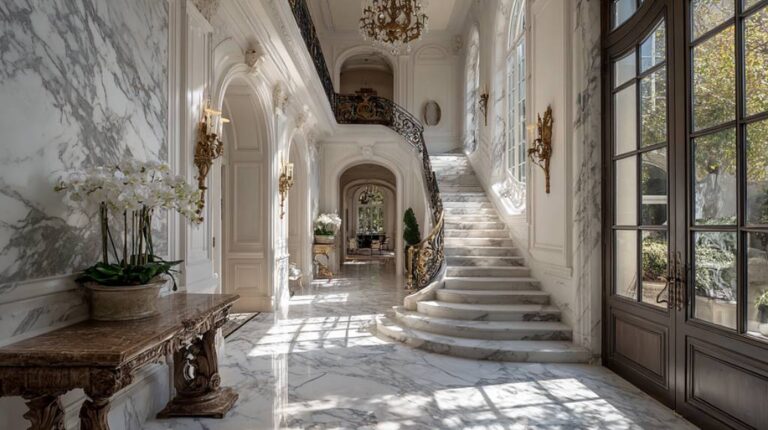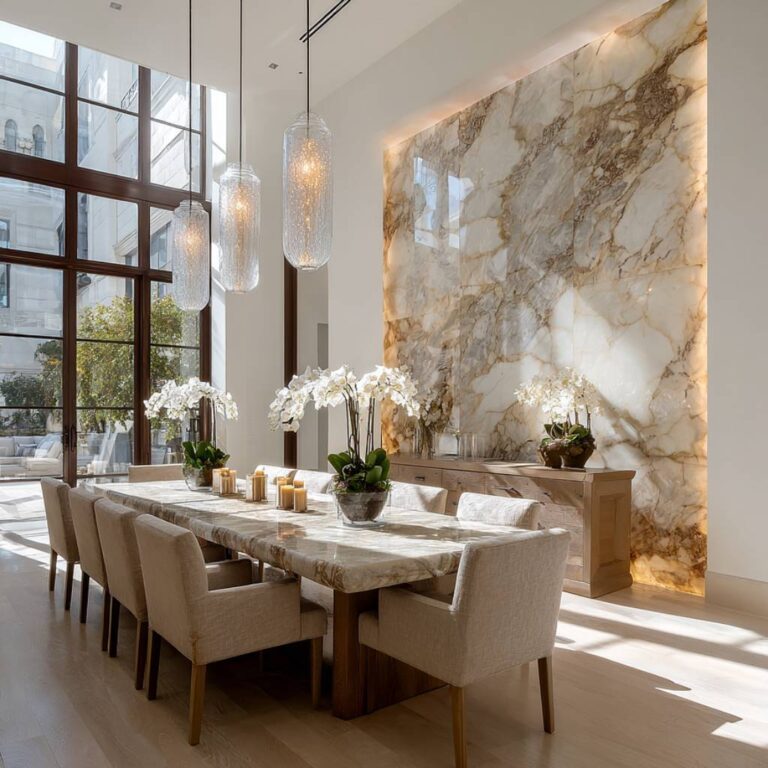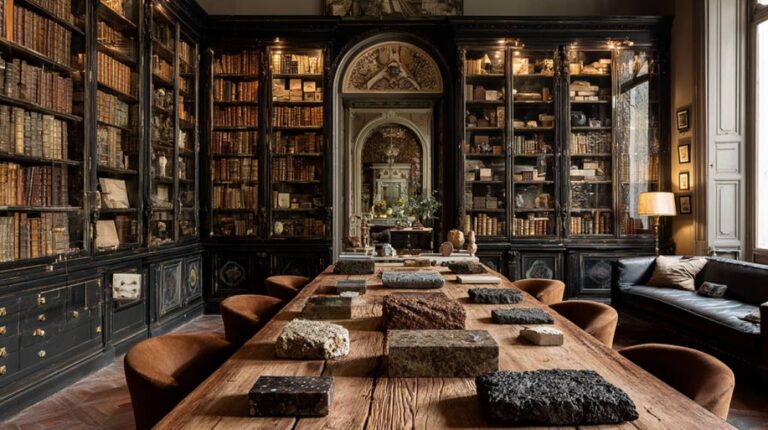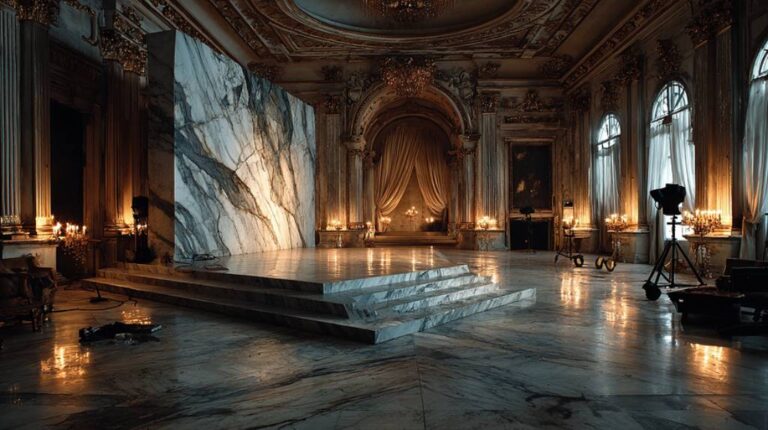
Architecture does not conclude when occupation ends. Long after programs shift, ownership changes, and political systems dissolve, buildings persist in altered states. Their doors may no longer open, their functions may no longer serve their original intent, but something remains. What survives is not design narrative or marketing ambition. What survives is material.
The afterlife of architecture is not theoretical. It is visible across the world. In Rome, fragments of empire endure not because rituals continued uninterrupted, but because stone resisted erasure. Columns still stand, arches still cast shadows, and foundations still mark ground. Timber roofs have long vanished. Textiles have decayed. Decorative finishes have peeled. Yet the dense mineral cores of these structures remain legible centuries later. Civilizations collapse, but material decides what history retains.
Across Europe, Renaissance palazzi weathered revolutions and regime changes. In India, Mughal sandstone and marble complexes continue to anchor landscapes long after imperial authority dissolved. Ottoman mosques still define skylines despite geopolitical transformation. These buildings have entered their afterlife, yet their presence is not diminished. Their material mass has allowed them to transition from active architecture into cultural artifact without disappearing.
What remains after a building’s function fades is a quiet measure of its material intelligence.
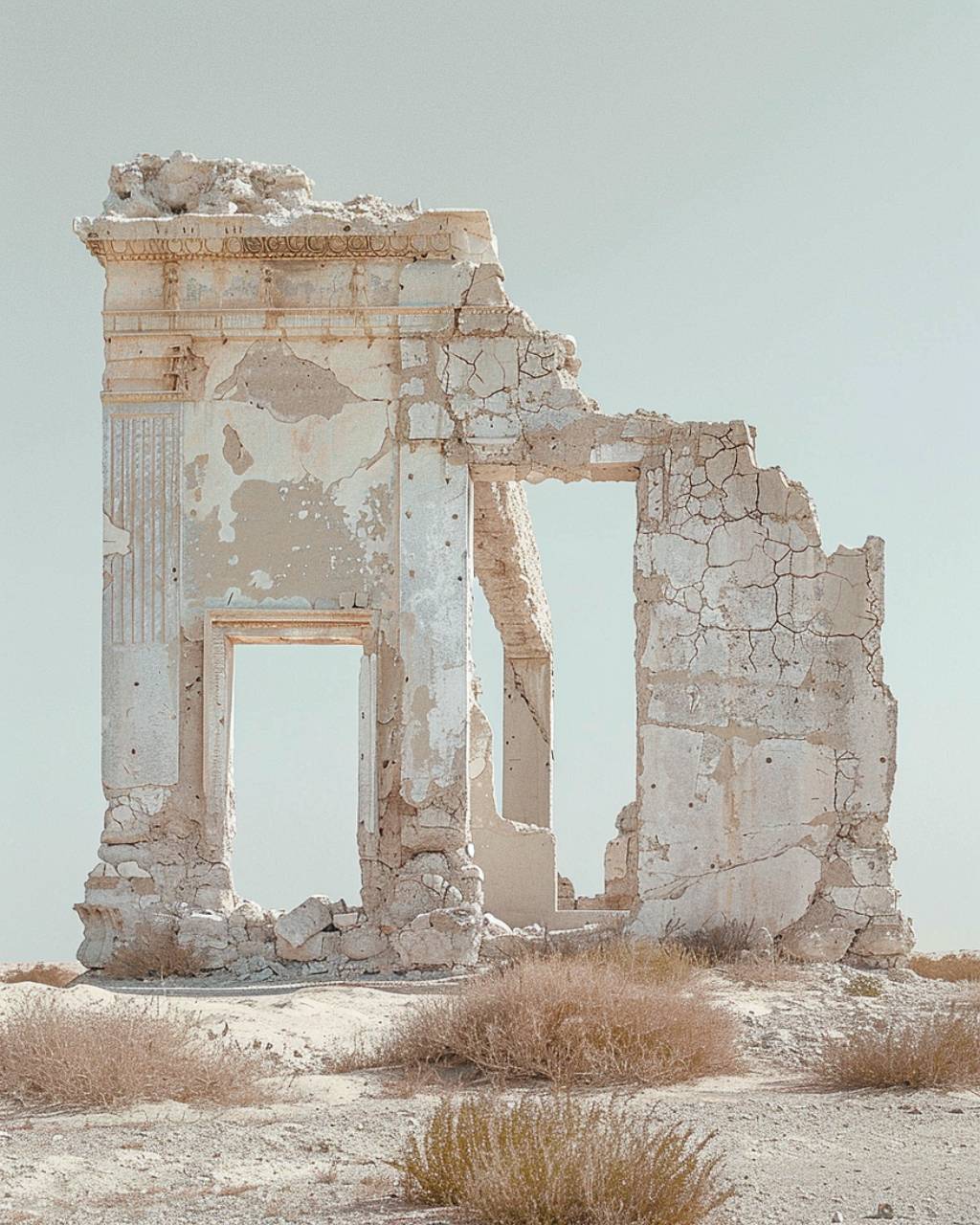
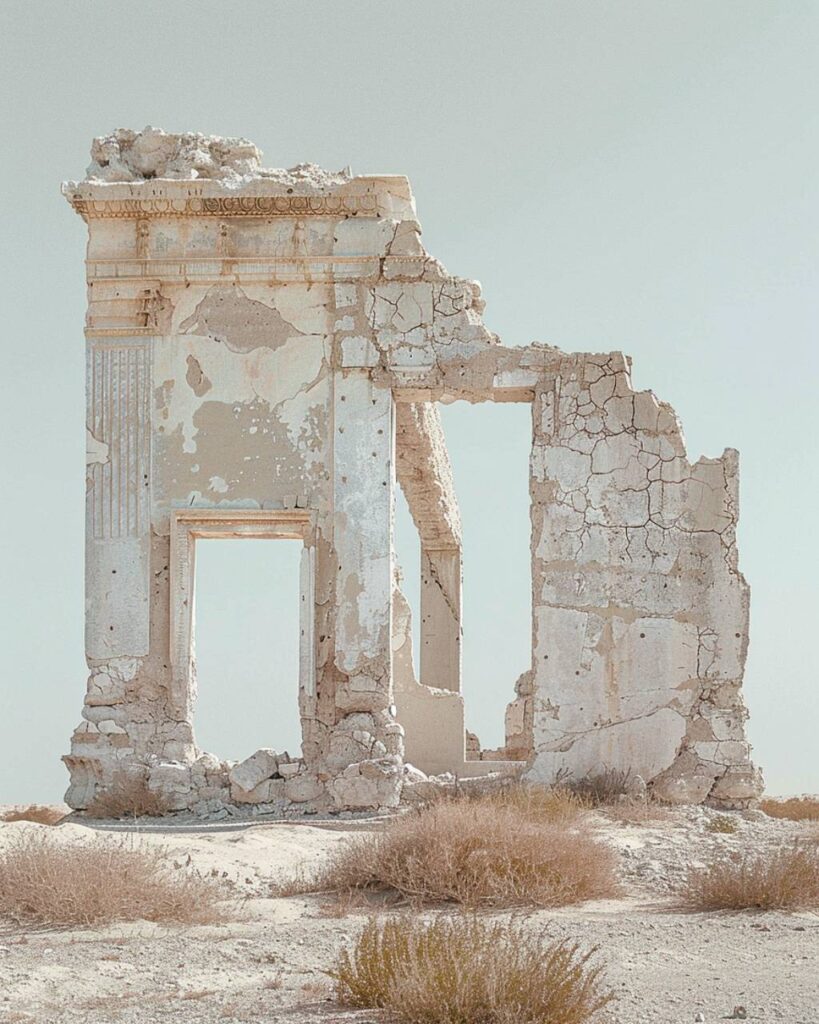
Ruins reveal hierarchy. Certain materials erode slowly and with dignity. Others disintegrate quickly and without trace. When we romanticize ancient ruins, we are responding to this distinction. We admire the fragment not because it is broken, but because it persists. A half-standing wall communicates more than a vanished structure ever could. It signals resistance to time.
There is a difference between erosion and disappearance. Erosion implies continuity through transformation. Disappearance implies failure of endurance. Materials that weather gracefully retain form even as edges soften. They allow the building to transition into memory without collapsing into waste.
This raises a rarely asked question: when our contemporary buildings enter their afterlife, what will remain?
Much of modern construction prioritizes efficiency, speed, and cost optimization. Composite systems, lightweight panels, synthetic laminates, and engineered surfaces perform well within defined lifecycle parameters. They meet environmental codes, accelerate installation, and align with economic logic. Yet when abandoned, many of these materials do not transform into evocative fragments. They deteriorate into debris. They do not acquire poetic ruin; they dissolve.
Architecture’s afterlife depends on density.
Heavy materials possess inertia. Even when neglected, they resist immediate collapse. They crack, they stain, they fragment, but they persist. A single carved block half-buried in soil still carries intention. Its surface may gather lichen, its edges may round, yet its mass continues to mark territory.
The psychological power of ruins lies in this persistence. We are drawn to ancient structures not only for their historical context but because their material endurance suggests continuity beyond human lifespan. A ruin reminds us that architecture can outlive its makers.
In contemporary discourse, sustainability often focuses on operational efficiency and embodied carbon. These metrics are essential, yet survivability introduces another dimension. A building designed to endure physically may reduce the need for replacement and reconstruction. A material capable of meaningful weathering may carry identity forward rather than requiring renewal.
The afterlife of architecture is therefore not accidental. It is shaped at the moment of material selection.
When one chooses materials that will fracture into fragments retaining legibility, one designs for future archaeology. When one chooses materials that decompose into indistinguishable waste, one designs for erasure. This is not nostalgia for antiquity; it is an acknowledgment that architecture participates in time beyond immediate occupancy.
Ultra-high-net-worth individuals frequently speak of legacy when commissioning residences. Yet legacy is often interpreted symbolically rather than materially. True legacy is not scale or extravagance. It is survivability. It is whether the structure will retain dignity even if abandoned.
A residence grounded in dense mineral material may one day stand partially intact, its surfaces weathered but recognizable. It may become landscape, artifact, or memory site. Its identity will shift, but it will not vanish.
There is humility in considering a building’s afterlife. It forces architects and patrons alike to acknowledge that present use is temporary. The building will eventually exist without them. The question is not whether time will alter it. Time alters everything, but how it will alter it.
Materials that endure accept time as collaborator rather than adversary. They absorb climate, respond to erosion, and gather patina without surrendering coherence. They become quieter, not weaker.
In contrast, materials designed primarily for surface perfection often struggle in abandonment. Once maintenance ceases, their deterioration accelerates. Their afterlife is brief.
History suggests that civilizations are remembered in fragments of stone. We know ancient cultures through remnants of mineral mass that resisted disappearance. Timber cities burned and vanished. Stone monuments endured.
When future generations encounter the remnants of our era, what will they find? Will they discover meaningful fragments that reveal our ambitions, or will they encounter residue without narrative?
The answer lies not in architectural style but in material choice.
Buildings do not truly die. They transition. They either transition into ruin with dignity or into absence.
The afterlife of architecture is written in density.
And in that quiet ledger of time, only certain materials remain legible.