Luxury once depended on controlled scarcity. Access defined status. Ownership signalled power. The rarer the object, the greater its authority. Yet in a world defined by advanced manufacturing and global distribution, replication has become effortless. Nearly any aesthetic can be reproduced, scaled, and circulated. Perfection is programmable. Uniformity is exportable. And repetition, once invisible, is now everywhere.
In this landscape, rarity has shifted meaning. It is no longer enough for something to be expensive or limited in quantity. What now carries cultural authority is what cannot be precisely repeated.
We inhabit an era of duplication. Digital imagery circulates endlessly. Architectural styles are replicated across continents within months. Even high-end materials are engineered to simulate individuality through controlled patterning. Surfaces that appear unique are often produced in series. Luxury developments in distant cities frequently share identical finishes, identical tones, identical calibrations of “refined minimalism.” The result is a strange paradox: environments that appear exceptional yet feel familiar.
Repetition has flattened distinction.
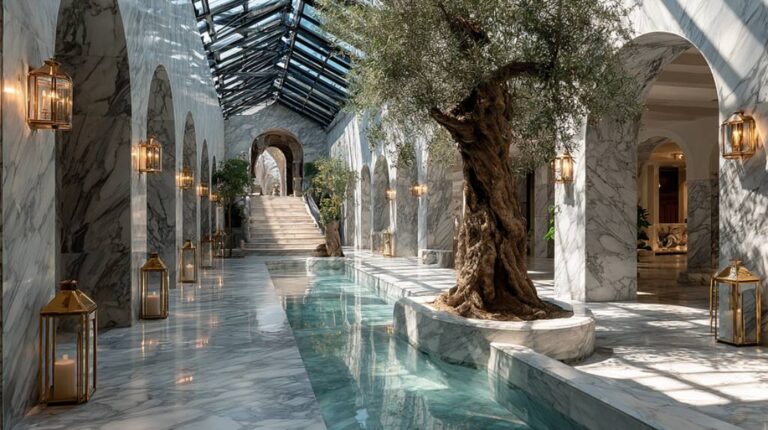
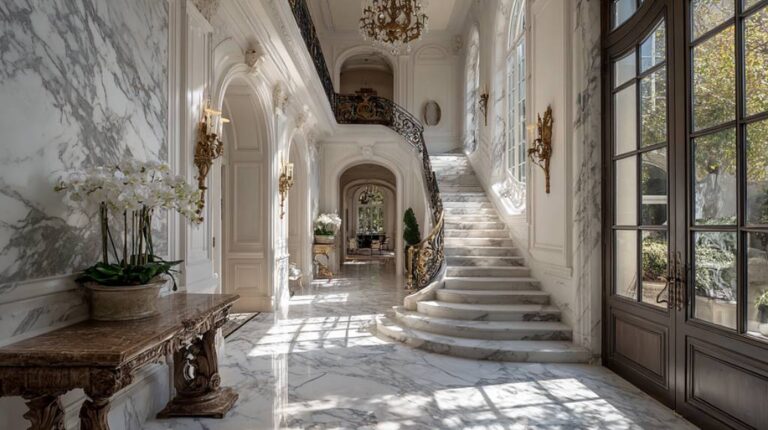
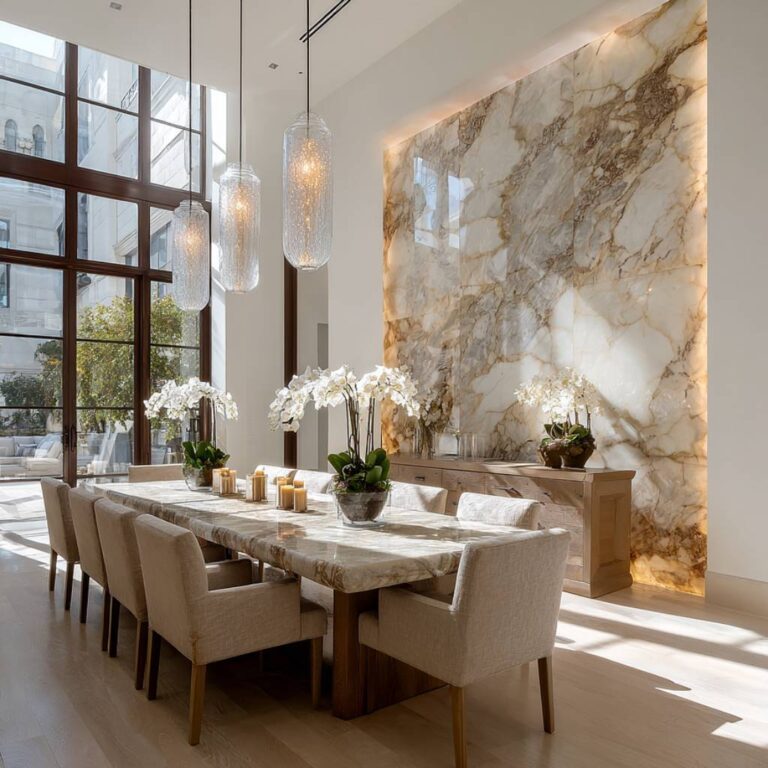
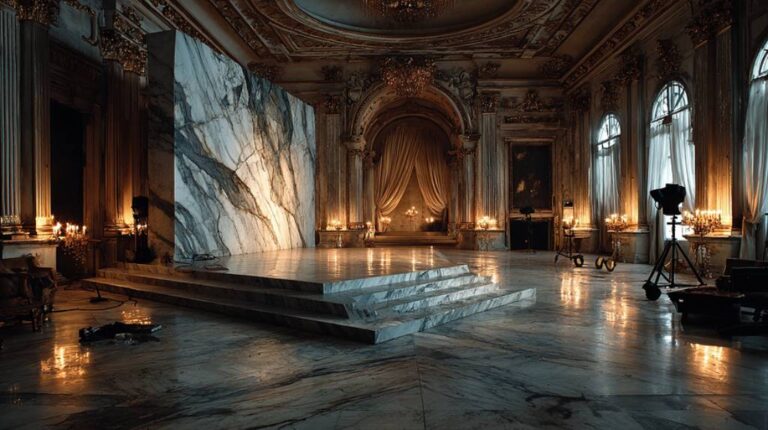
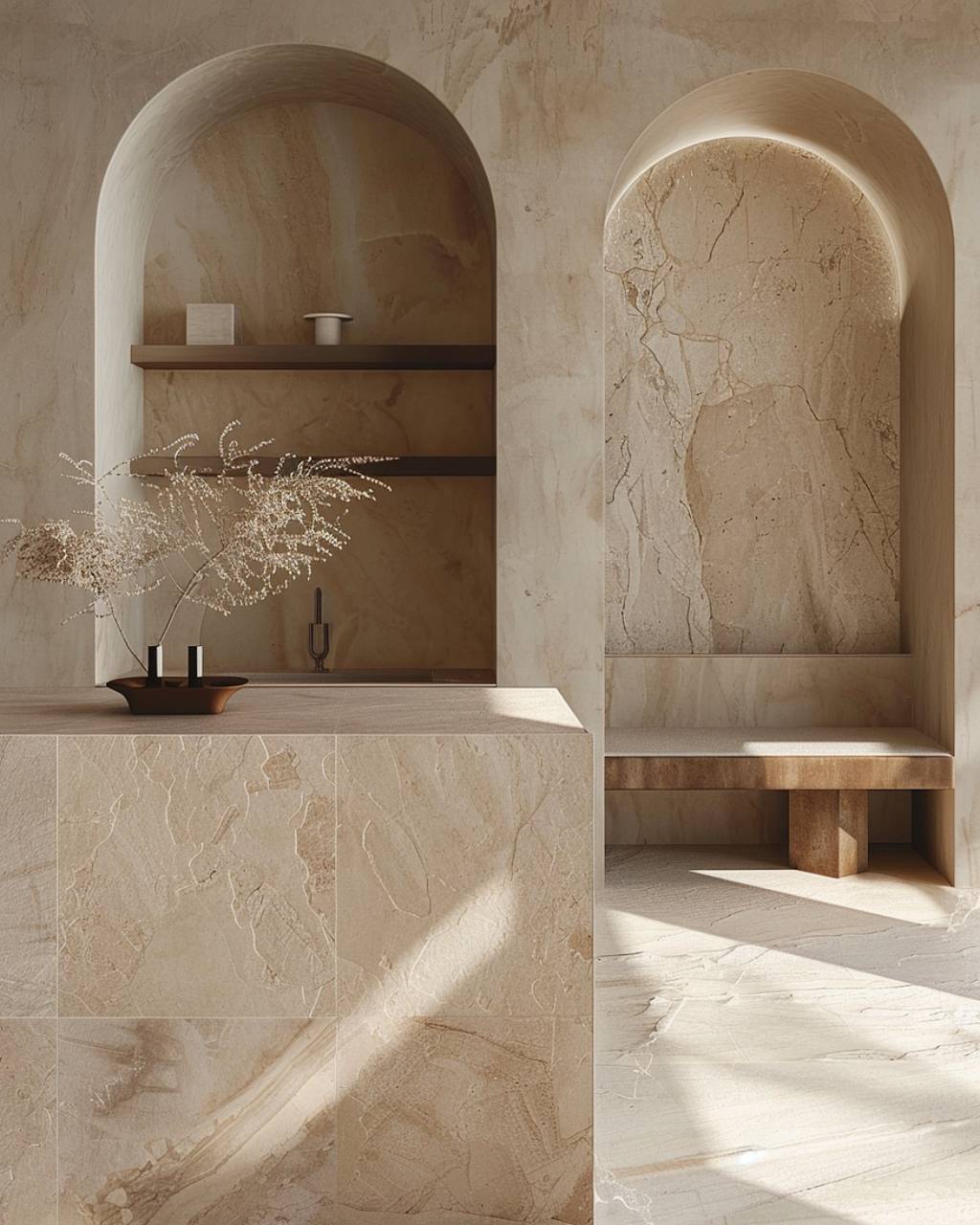
Against this saturation of sameness, natural variation has re-emerged as a powerful counterforce. A naturally veined slab does not follow a template. Its lines were not composed by a designer, nor calibrated by a machine. They are the residue of geological movement, pressure, mineral intrusion that processes indifferent to symmetry or repetition. Each formation carries its own internal logic, one that cannot be digitally replicated in full.
This irreproducibility is becoming the new marker of status.
In earlier decades, uniformity symbolized progress. Industrial precision represented technological mastery. Perfect alignment and seamless repetition suggested advancement. But when perfection becomes ubiquitous, it loses its power to distinguish. The eye grows accustomed to smoothness. The mind anticipates pattern. Predictability replaces wonder.
Natural variation interrupts that predictability. It introduces asymmetry, irregular rhythm, tonal shifts that resist algorithmic control. The surface refuses to resolve into repetition. It demands attention because it is not easily categorized.
For ultra-high-net-worth individuals operating within a world of near-total access, distinction requires something more nuanced than expense. When one can acquire almost anything, value shifts toward what cannot be duplicated exactly. A surface that cannot be sourced twice in identical form carries psychological weight. It implies singular ownership not merely of an object, but of a moment in geological history.
This is where variation becomes authority.
Each naturally formed slab carries internal uniqueness. Even slabs cut sequentially from the same geological block differ in pattern distribution, vein density, and tonal movement. The continuity may be familiar, but it is never identical. The moment a slab is installed, its pattern becomes site-specific. It cannot be reordered precisely. It cannot be replaced without altering identity.
That subtle irreversibility changes the relationship between owner and material. It shifts from consumption toward stewardship. One does not simply install a surface; one assumes responsibility for a singular formation that cannot be replicated elsewhere in exact form.
In a culture increasingly dominated by synthetic simulation: artificial textures, engineered irregularities, digitally generated randomness authenticity regains depth. But authenticity is not a marketing claim. It is a condition of origin. When variation arises from geological formation rather than design intent, it carries independence from human manipulation.
There is also a philosophical dimension to this shift. Repetition belongs to industrial time. It reflects assembly lines, algorithms, and scalable production. Variation belongs to geological time. It reflects sedimentation, compression, crystallization, processes unfolding across millennia without regard for market demand.
To choose variation is to align architecture with a slower temporal rhythm.
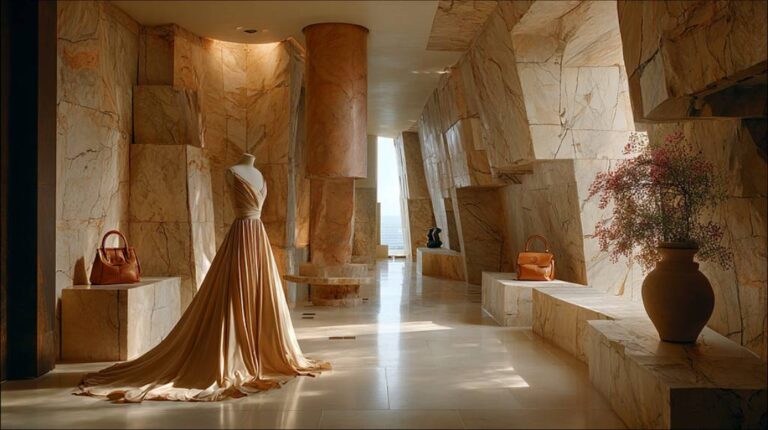
In contemporary luxury residences, this alignment is increasingly visible. Rather than masking difference to achieve homogeneity, designers are beginning to celebrate non-repeatable patterning. Veins are oriented deliberately to emphasize movement rather than suppress it. Book-matching becomes an exploration of continuity rather than an attempt to simulate symmetry.
The psychological effect is subtle but significant. A home composed of non-repeatable surfaces resists visual monotony. It reveals depth with time. Light interacts differently across each plane. No two vantage points yield the same reading. The residence becomes layered rather than flat.
Flatness, in many ways, has defined the previous era of luxury. Clean white plains, seamless expanses, flawless repetition. But when repetition dominates globally, it no longer signals exclusivity. It signals availability.
Natural variation reintroduces scarcity in a new form: scarcity of duplication.
This scarcity cannot be industrialized at scale. It is bound to origin. A geological formation produces patterns once. They are cut, distributed, installed. They do not repeat elsewhere in identical configuration. Even when similar material is sourced, the internal mapping differs.
In this sense, the most sophisticated luxury is not about acquiring what others cannot afford. It is about acquiring what cannot be precisely reproduced.
The distinction is subtle but powerful.
As architecture continues to evolve in a hyper-connected world, surfaces that resist replication will increasingly define status. Not because they are louder, but because they are quieter in their certainty. They do not rely on brand amplification or exaggerated spectacle. Their authority lies in singularity.
In a culture saturated with copies, authenticity becomes visible through difference.
Rarity, then, is no longer simply limited supply. It is non-repeatability.
And non-repeatability cannot be manufactured. It must be formed.