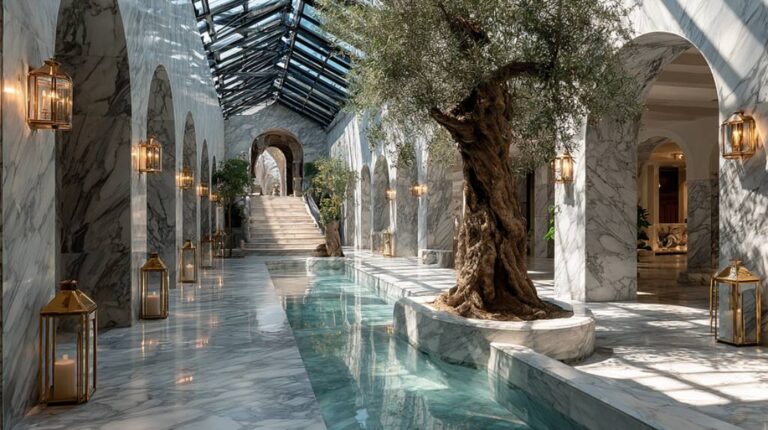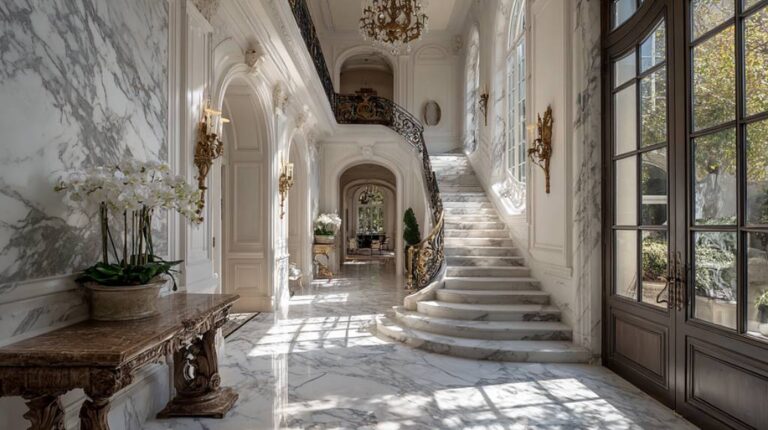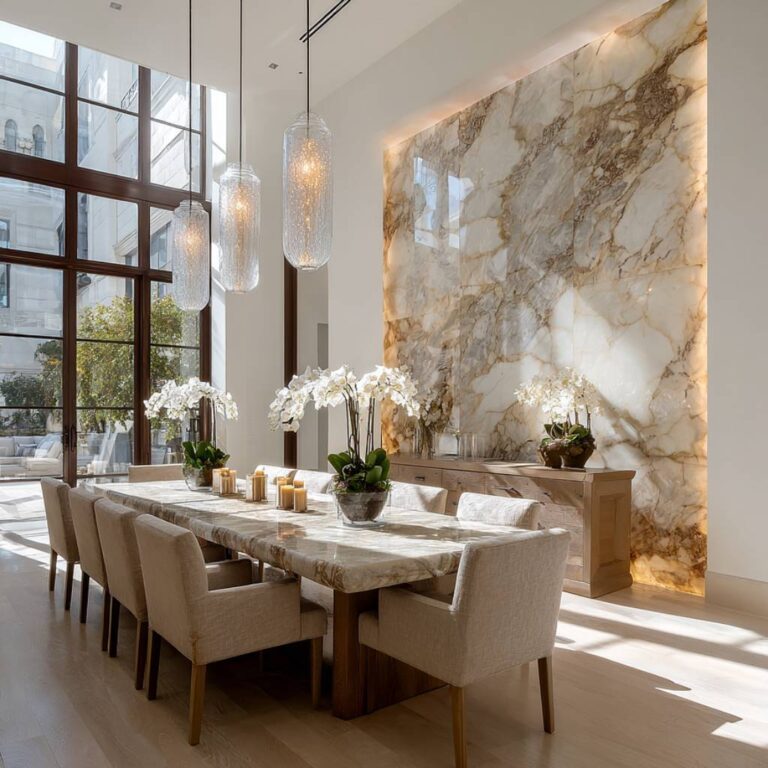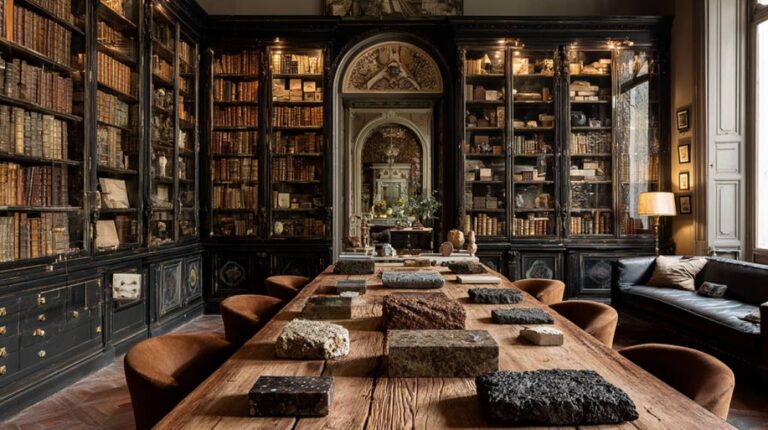
There is a visible but often misunderstood distinction between display wealth and lived luxury. At first glance, both may appear equally expensive. Both may involve rare materials, bespoke fabrication, and significant financial investment. Yet the experience of inhabiting them is fundamentally different. One feels immediate, dramatic and declarative. The other feels settled, composed and enduring. The difference lies not in budget, but in intention.
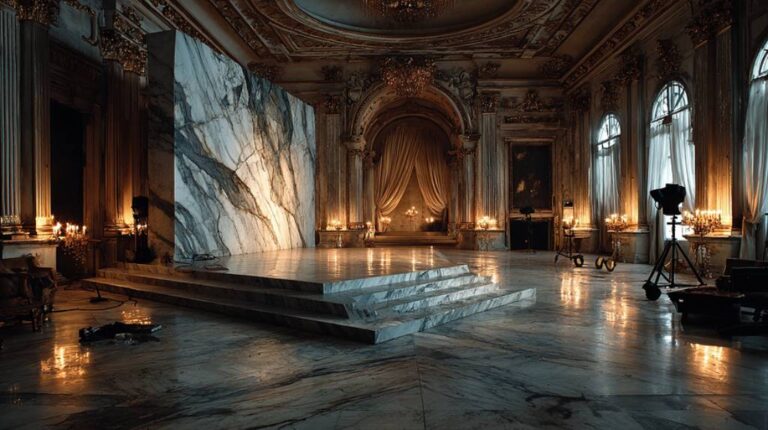
Display wealth is concerned with visibility. It seeks recognition. It relies on scale, shine and easily legible signals of cost. Exotic stones are selected for their bold veining rather than their ageing quality. Lighting is theatrical, engineered to highlight surfaces and create impact. Furniture is iconic and identifiable. The space is curated to communicate value quickly. It performs.
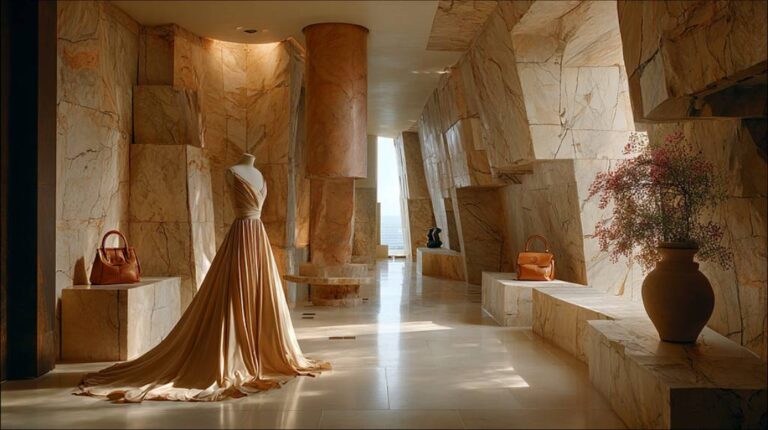
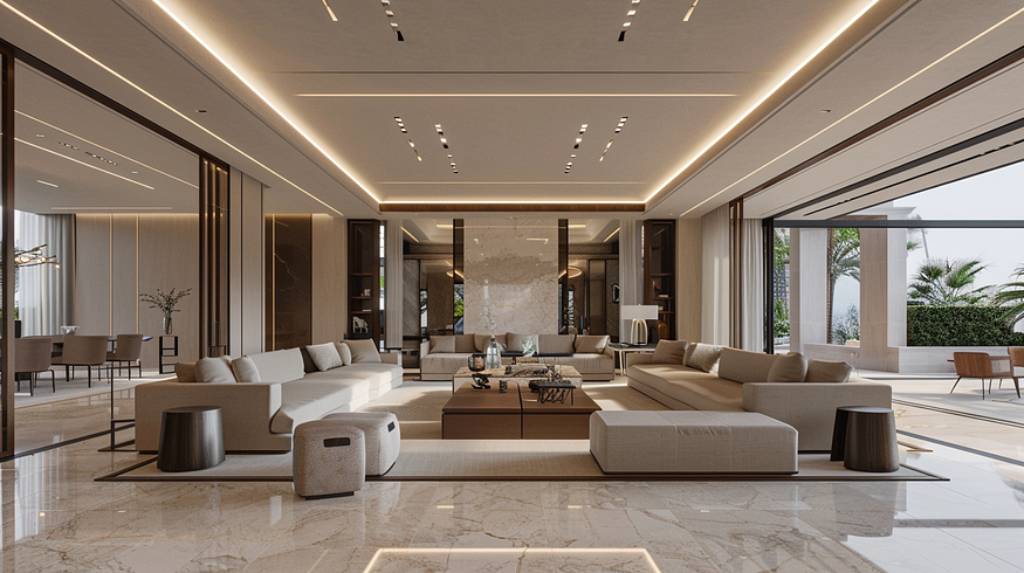
Lived luxury operates on a quieter register. It does not rush to declare its worth. Instead of spectacle, it prioritises spatial clarity. Instead of contrast, it favours continuity. The materials are often restrained in palette but exacting in execution. The lighting is indirect and controlled. The architecture does not compete with itself. It holds.
The distinction becomes clearer over time. Spectacle thrives on novelty. It depends on trend cycles and visual stimulation to remain impressive. What once felt dramatic can quickly feel dated. Surfaces selected for their immediate impact may lose relevance as tastes shift. The space becomes an artefact of a particular moment rather than a structure built for decades.
Lived luxury resists this cycle. It is rooted in permanence. Materials are chosen for how they mature, not how they photograph. Limestone softens. Walnut deepens. Plaster develops a subtle character. The architecture accommodates ageing without losing coherence. The house evolves with its inhabitants rather than demanding reinvention.
Branding further separates the two approaches. Display wealth often borrows its authority from external validation, like internationally recognised designers, imported styles, and prominent logos. The space becomes a catalogue of affiliations. It signals status through association. Its identity is constructed outward.
Lived luxury, by contrast, is internally resolved. It draws identity from context, climate, craftsmanship, cultural memory and site orientation. It feels rooted. There is alignment between structure and interior, between landscape and envelope, between light and material. Nothing feels applied as a statement. Everything feels necessary.
This rootedness creates belonging.
Belonging is different from branding. Branding communicates; belonging endures. In architecture, belonging manifests as spatial calm. Circulation feels intuitive. Transitions are subtle. Proportions are deliberate. There is visual breathing space. Rooms are not overcrowded with proof of expense. They are edited with discipline.
Discipline is often mistaken for minimalism. They are not the same. Minimalism can be aesthetic. Discipline is structural. It is the result of early decisions made with clarity. When the structural grid is coherent, ceilings do not require compensatory detailing. When services are coordinated early, walls remain clean. When materials are mapped in advance, transitions feel seamless. The visible calm of lived luxury is supported by invisible precision.
There is also a cultural dimension to consider. Societies and individuals secure in their position rarely rely on overt display. Confidence does not need amplification. In architecture, this cultural confidence manifests as restraint. Matte finishes over gloss. Indirect lighting over chandeliers. Continuity over contrast. These are not stylistic trends but signals of maturity.
Over time, the difference between spectacle and substance becomes unmistakable. Displaying wealth often demands attention. Lived luxury earns attachment. The former is admired briefly; the latter is inhabited deeply. One prioritises being seen. The other prioritises remaining relevant across decades.
In an era defined by visibility, the temptation to equate luxury with brightness and scale is strong. Social platforms reward immediacy. Images circulate faster than buildings age. Yet architecture is not experienced in a feed. It is experienced in time. Spaces built for longevity reveal their quality slowly in the way light moves across a wall in the afternoon, in the way materials settle into tone, in the way circulation patterns become effortless.
The most compelling environments are those that choose permanence over performance. They may appear understated at first encounter, but their depth becomes apparent with use. They do not exhaust the eye. They do not compete with life. They support it.
The real divide is simple but profound. Display wealth is about signalling arrival. Lived luxury is about sustaining presence. One seeks applause. The other builds continuity.
And in architecture, continuity is the most convincing form of prestige.