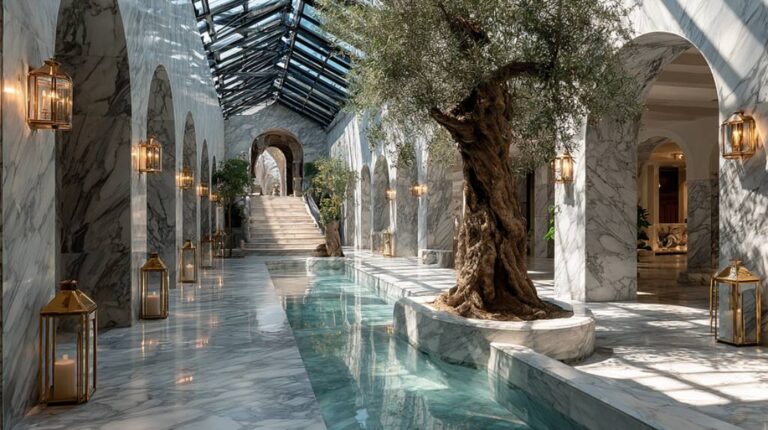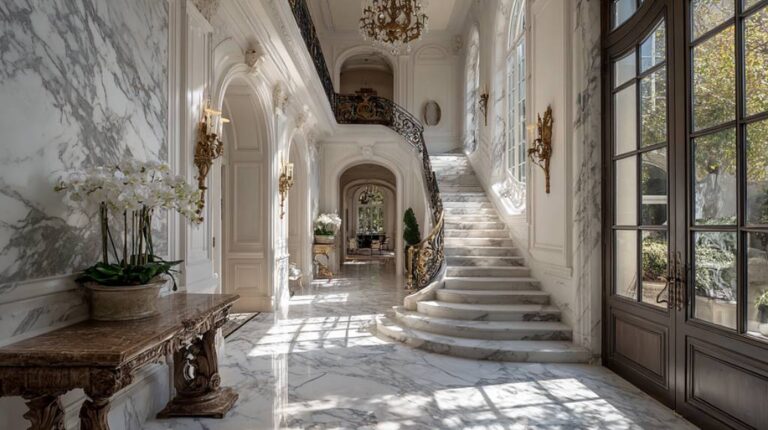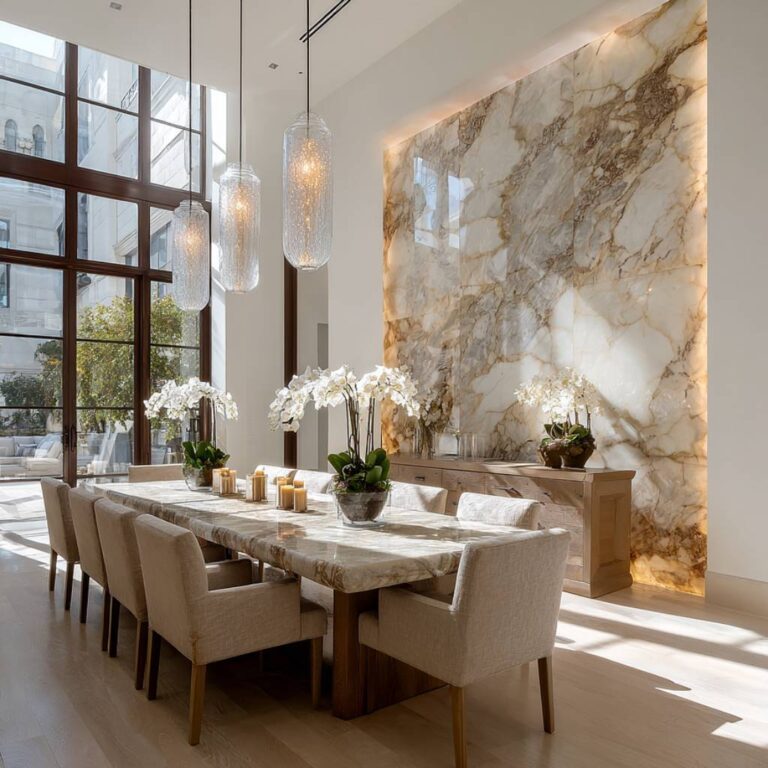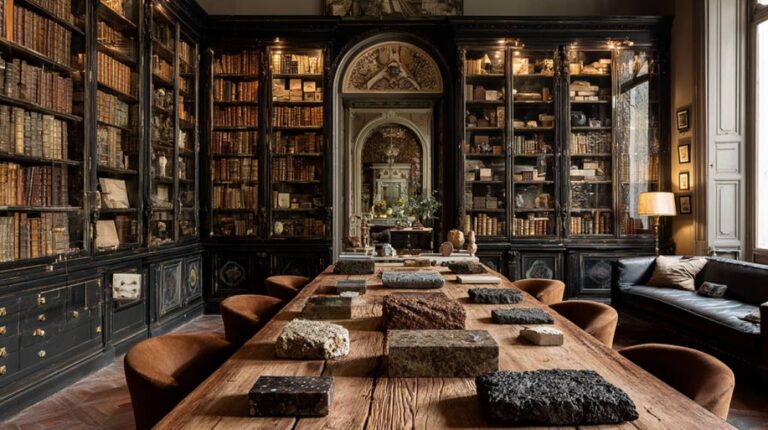
Luxury, in its truest form, is rarely about excess. It is rarely about spectacle, or even about money in the simple sense. Luxury is more often about time and about the invisible weight of time held inside an object, a room, a material, a gesture. The psychology of expensive things begins not with price, but with duration. Expensive things feel different because they seem to resist disappearance. They carry a quiet completion, a sense that they were not hurried into existence, that they belong to a slower world than the one most of us inhabit.
To hold something crafted well is, in a way, to hold time itself. Not metaphorically, but materially. Time is present in the patience of making, in the hours that cannot be compressed, in the decisions that cannot be rushed. Craft is not simply technique; it is temporal discipline. A hand-carved surface, a perfectly aligned joint, a stone edge finished with restraint: these are not only technical achievements. They are evidence of slowness. They are proof that someone, somewhere, was allowed to work without urgency. Luxury begins precisely where time is permitted to remain uncompressed.
Modern production, by contrast, is built on the elimination of time. The industrial world is designed to remove waiting, remove care, remove the slow rituals of making. Objects are manufactured to be efficient, repeatable, replaceable. They are made quickly, distributed quickly, consumed quickly, discarded quickly. In such a world, craft becomes emotionally arresting because it represents the opposite. Craft preserves time rather than erasing it. And the human mind, even without consciously articulating it, recognises this preservation instantly.
The psychology of expensive things is not primarily about cost as a number. The mind does not experience price as arithmetic. It experiences price as a signal. Expensive things carry psychological weight because they suggest that something has been spared from the economy of haste. To pay more is often, unconsciously, to pay for slowness, for attention, for care, for continuity. What makes something feel luxurious is not extravagance. It is the suggestion that it was not made under pressure. The most expensive objects are rarely those with the most decoration. They are often those with the least urgency.
There is a particular silence that surrounds expensive objects. Not the silence of emptiness, but the silence of completion. They do not vibrate with insecurity. They do not beg to be noticed. They simply endure. A well-made chair does not ask to be replaced next season. A carved wooden door does not participate in the rhythm of trend. A stone floor does not demand reinvention. These things sit in a room with a kind of confidence that comes from resolution. And humans respond deeply to resolution, because resolution implies permanence.
We live in an era of accelerated replacement. Objects are designed to be temporary. Spaces are designed to be updated. Homes are designed to be refreshed rather than inhabited. The modern world rewards change more than it rewards continuity. The culture of trend teaches us that nothing should remain the same for too long, that permanence is stagnation, that the new must always replace the old. In this climate, craft becomes a form of resistance. A crafted thing does not ask to be consumed and discarded. It asks only to remain.
This is why true luxury is increasingly psychological rather than material. Luxury is the feeling of being surrounded by things that do not require constant revision. A home with crafted details does not demand attention. It offers steadiness. It creates an environment in which the mind can rest, because nothing feels temporary, nothing feels anxious. A poorly made thing feels nervous. It feels as though it might fail, as though it might not last. A crafted thing feels settled. And humans, psychologically, are drawn toward settlement. We crave environments that suggest continuity because continuity is safety.
Luxury, at its deepest level, is often the architecture of safety disguised as taste. The emotional calm produced by well-made things is not superficial. It is rooted in the mind’s relationship with permanence. When we live among objects that feel durable, we feel less exposed to the fragility of modern life. We feel held. Expensive things, in this sense, are not indulgences so much as anchors.
Perhaps the rarest luxury today is not marble or brass or rare wood. Perhaps the rarest luxury is time itself. Time to build slowly. Time to repair rather than replace. Time to choose materials that will age instead of expire. The expensive home is not expensive because it is filled with costly objects. It is expensive because it contains decisions that were not rushed. It contains patience embedded in structure. The luxury residence, at its highest level, is a form of temporal wealth, a life where things are allowed to last.
Expensive things are often misunderstood as symbols of status. But psychologically, they are more often symbols of control. To own something crafted is to feel, briefly, outside the disposable cycle. It is to participate in a different relationship with materiality not consumption, but stewardship. Craft invites responsibility. A handmade object asks to be cared for. A well-built space asks to be maintained. A timeless design asks to be lived with, not replaced. This is not merely about wealth. It is about intimacy.
Craft feels personal because it is specific. Mass production is anonymous. Craft is recognisable. It contains the trace of a maker. And humans respond deeply to traces. We are moved by the evidence of another person’s patience embedded inside a thing. A crafted staircase, a carefully proportioned window frame, a ceramic surface shaped by hand, these are not objects alone. They are encounters. Luxury, at its most profound, is the feeling of being surrounded by human intention rather than industrial indifference.
Perhaps we should redefine what expensive truly means. Expensive is not simply what costs more. Expensive is what cannot be repeated endlessly. It is what requires time, attention, constraint. The most luxurious things are not those that sparkle. They are those that remain quiet for decades. Luxury is not excess. Luxury is the absence of disposability.
In older cultures, craft was not luxury. It was the norm. Buildings were made to outlive their builders. Furniture was made to become inheritance. Objects carried time forward. The modern world has, in many ways, broken this relationship with permanence. We live among things that expire rather than age, among spaces that demand constant updating, among objects designed for short lifespans. Modern luxury, then, is often a longing; a longing for the lost relationship with endurance.
We sense, even if we do not say it aloud, that something has been fractured in a world where nothing stays. And so, we pay for what stays. Not because we are superficial, but because we are human. We crave endurance. We crave things that do not vanish. We crave the quiet dignity of the lasting thing.
The psychology of expensive things is therefore not about showing. It is about holding. Holding time, holding care, holding permanence. Craft is luxury because it is slow, because it resists disposal, because it creates emotional calm. The most expensive objects are not the most extravagant. They are the most resolved. They do not beg to be noticed. They simply remain.
And perhaps that is the deepest luxury left to us: to live among things that have been given enough time to become real.