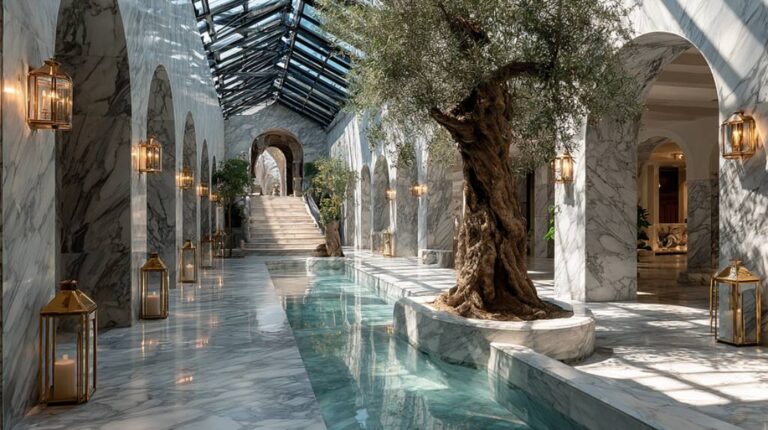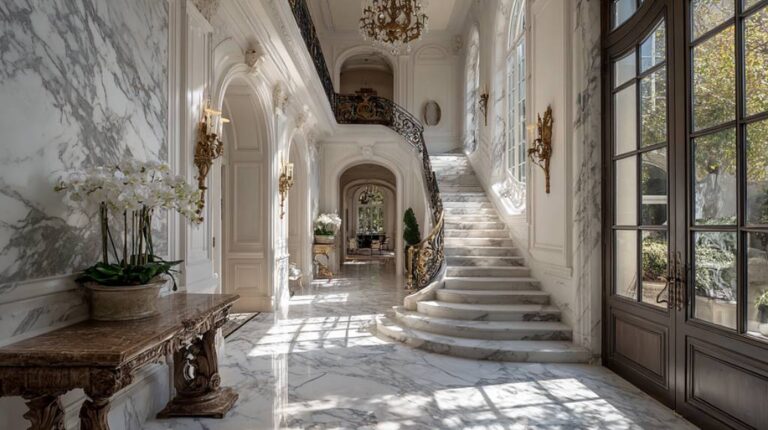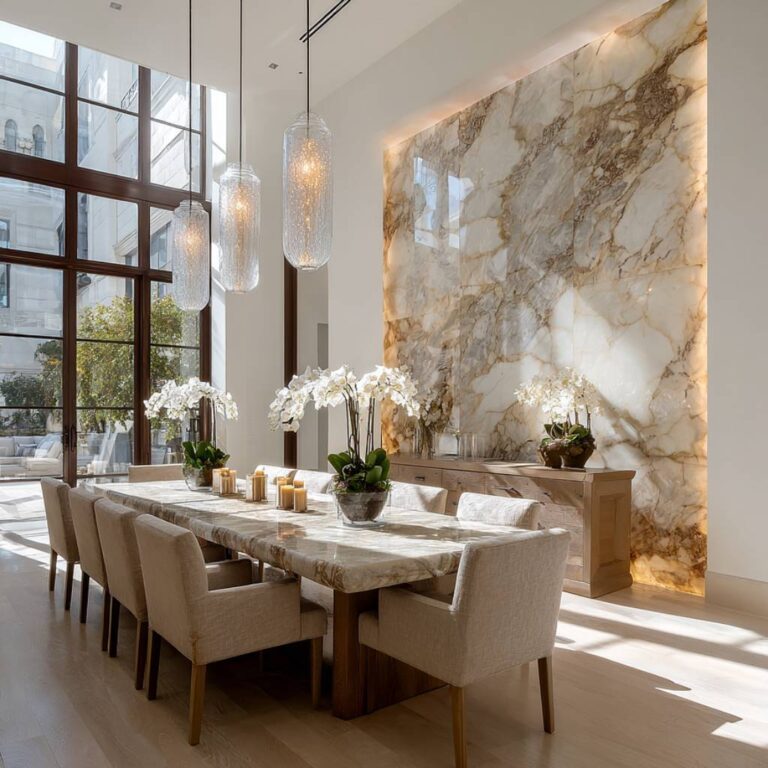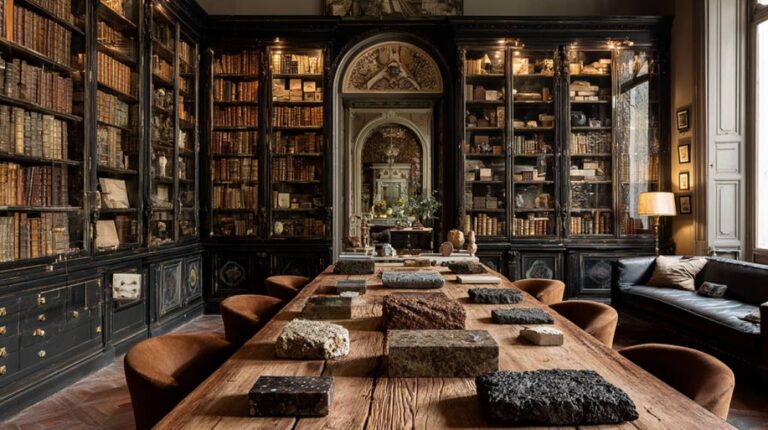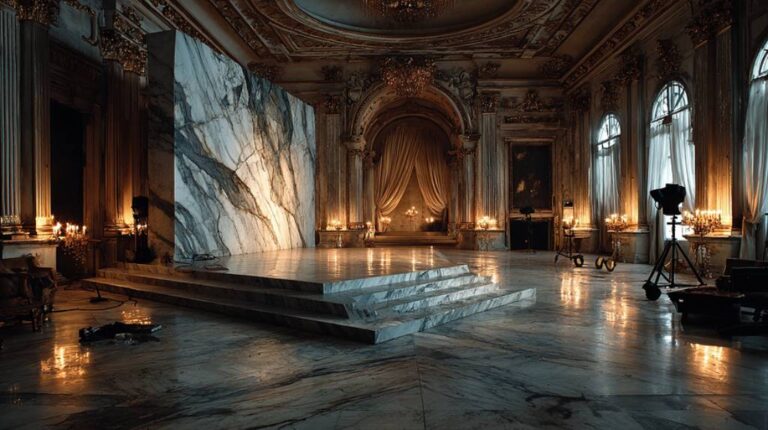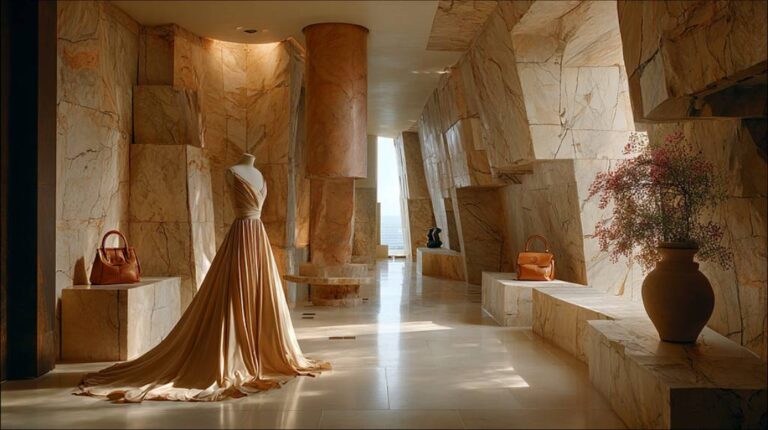
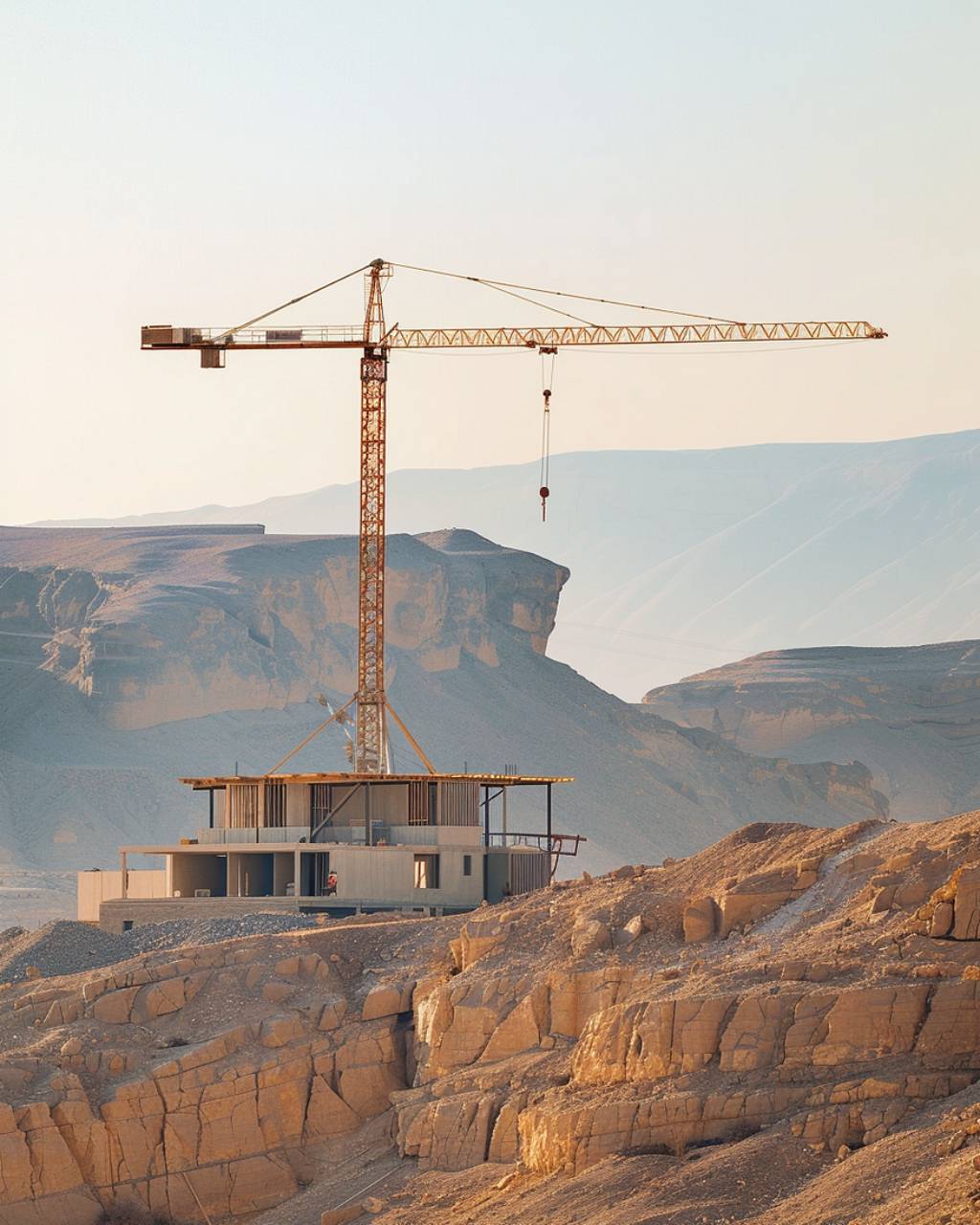
There is a peculiar compression at the heart of contemporary luxury architecture. Homes are conceived in months, constructed in quarters, photographed within weeks of completion. Yet the materials that define their authority may have taken millions of years to form.
Stone is geological time made visible.
When we specify a slab of marble or limestone, we are not selecting a surface in the conventional sense. We are selecting a fragment of planetary history, sediment compacted under ancient seas, minerals crystallized under tectonic pressure, strata formed before language, before cities, before memory. And yet this material is cut, polished, and installed within a residence assembled at the speed of modern project management.
The tension between geological time and architectural time is profound.
Architecture operates within human schedules. It responds to budgets, contracts, market cycles, and planning permissions. It is bound to urgency. The most ambitious private residences today may move from concept to completion in eighteen to twenty-four months. Even monumental civic buildings rarely exceed a decade.
But the stone beneath one’s feet might be one hundred million years old.
What does it mean to live inside that depth?
The ultra-high-net-worth psyche has always been oriented toward permanence. Wealth, at its highest levels, is rarely about immediacy. It is about continuity, intergenerational transfer, legacy, preservation of value across decades. In this context, geological materials hold psychological resonance far beyond their aesthetic qualities.
To live within stone is to inhabit time that predates you and will outlast you.
This is not nostalgia. It is scale.
Modern culture is dominated by acceleration. Digital economies reward immediacy. Social visibility depends on novelty. Interiors are refreshed seasonally. Finishes are replaced before they have time to age. The present moment is constantly optimized.
Against this backdrop, natural stone represents resistance. It refuses speed. It cannot be manufactured instantly to specification. It is quarried, cut, transported, and shaped, but its fundamental character remains governed by geological processes beyond human intervention.
Its veining is not designed. It is inherited.
This inheritance introduces a different rhythm into architecture. When stone is used structurally or spatially and not merely as applied decoration, it anchors a residence within a temporal framework that exceeds fashion. It carries a quiet authority because it embodies endurance.
Architectural time, by contrast, is fragile. Trends move through design culture with increasing velocity. Minimalism yields to maximalism. Warm palettes cool. Cool palettes warm. Technologies evolve. The lifespan of stylistic relevance shortens.
Geological time does not participate in these cycles.
This is why homes constructed with authentic, weighty materials feel fundamentally different from those built with surfaces engineered to simulate permanence. The former possess gravity: literal and symbolic. The latter possess appearance.
Gravity influences psychology.
When one walks across a floor cut from ancient terrain, there is an unconscious recognition of mass and duration. The material does not signal novelty. It signals continuity. It suggests that the house is not simply a container for contemporary life, but a participant in a longer narrative.
For individuals accustomed to volatility, financial markets, global mobility, digital exposure and such stability carries particular appeal. It offers grounding.
Living inside geological history is, in a subtle way, an assertion of temporal confidence. It suggests that one’s environment is not provisional. It will not be obsolete next season. It is calibrated to endure.
This does not imply that permanence equals rigidity. Stone, paradoxically, changes with time. It gathers patina. It softens in tone. It records use. But these changes occur within a framework of continuity, not replacement. The material evolves without surrendering identity.
There is a difference between aging and expiring.
Architectural time often produces expiration. Materials designed for rapid production are designed equally for rapid substitution. Their lifecycle aligns with economic turnover. Geological materials operate differently. Their lifecycle is measured not in trends but in generations.
The deeper question, however, is philosophical.
If architecture is the discipline that mediates between human life and the planet, then working with geological materials is an explicit acknowledgment of that mediation. It recognizes that buildings are not merely assemblies of components; they are intersections between biological time and planetary time.
To live inside stone is to confront one’s own temporality.
It places human ambition within a larger scale. The house becomes not simply an expression of personal success, but a frame for contemplating duration. It is difficult to feel entirely transient when surrounded by matter that has survived epochs.
This is perhaps why the most compelling luxury residences feel less like statements and more like inheritances, even when newly constructed. Their materials carry a memory that predates the owner. They suggest that the building belongs as much to time as it does to its inhabitant.
In a culture obsessed with speed, this is radical.
Geological time does not respond to quarterly earnings or market cycles. It does not adjust itself to trend forecasts. It exists independently. When incorporated into architecture, it introduces that independence into the domestic realm.
The result is not ostentation, but authority.
Authority derived from time is quieter than authority derived from scale or cost. It does not need to announce itself. It is felt in weight, in temperature, in acoustic resonance. It is sensed in the way light moves across mineral surfaces that have been shaped by pressures far greater than any architectural program.
Perhaps this is the true luxury of geological material: not its rarity, but its depth.
To inhabit geological time is to inhabit continuity. It is to situate one’s daily rituals like morning coffee, evening conversation, footsteps across a corridor, within a material context that has witnessed entire eras of transformation.
Architecture may be built in months. But when it engages with geological history, it begins to transcend its own timeline.
In that convergence, between human urgency and planetary patience, luxury acquires meaning beyond spectacle.
It becomes temporal intelligence.