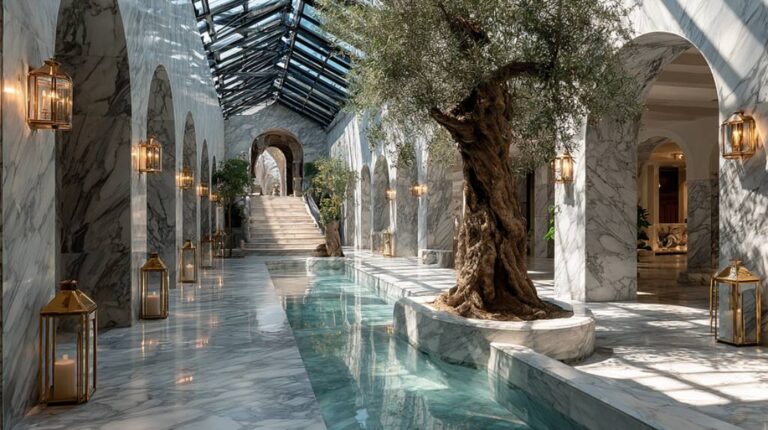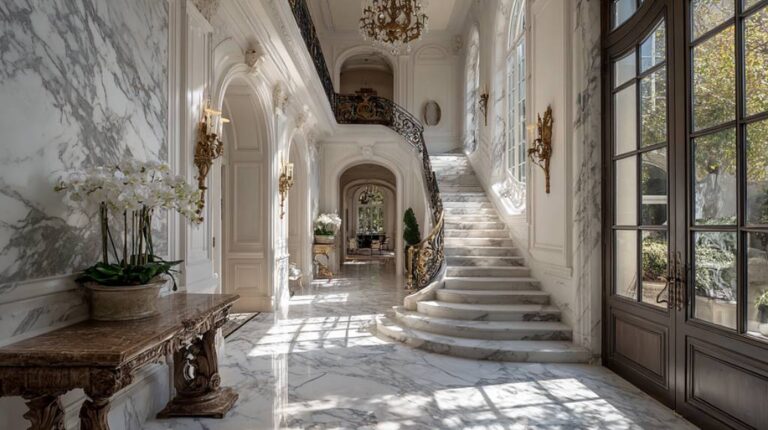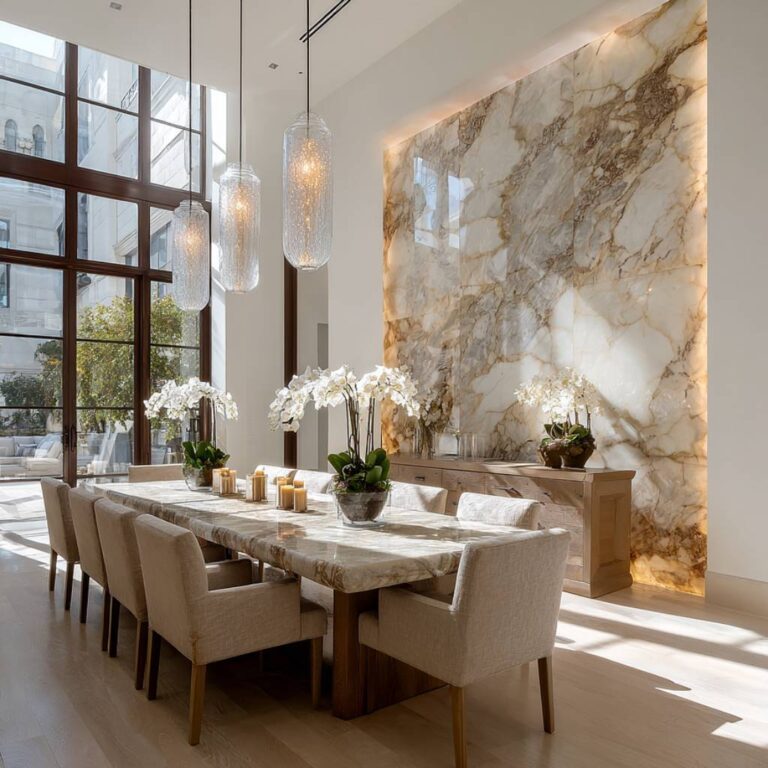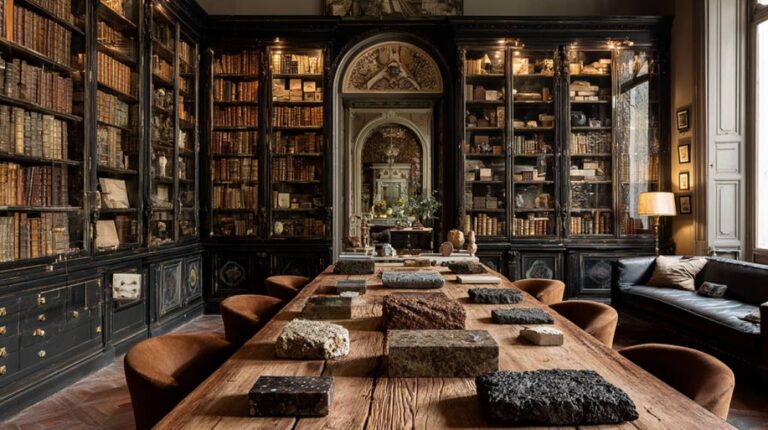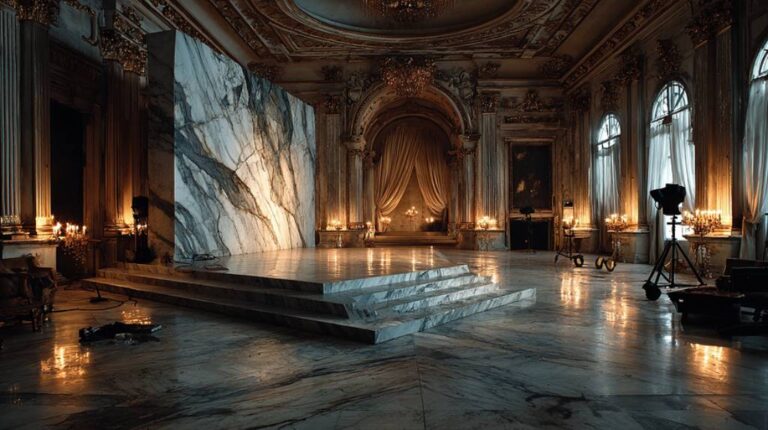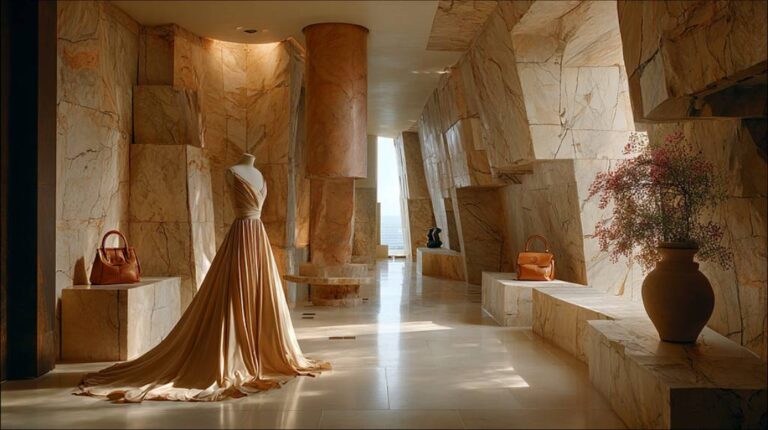
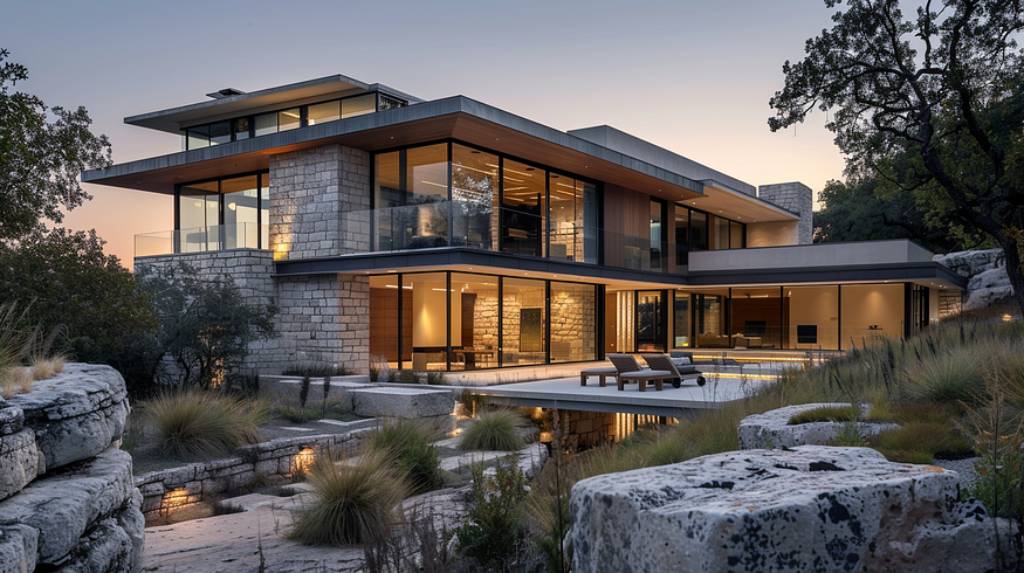
Before stone becomes flooring, before wood becomes panelling, before clay becomes plaster, each material exists in a landscape. It is extracted, transported, cut, processed and installed. What we encounter in interiors is not simply a surface. It is the final chapter of a much longer narrative, one that begins in geology, climate and terrain.
Luxury architecture has increasingly returned to natural materials, but the conversation often remains aesthetic. We speak about texture, tone and visual warmth. Less frequently do we acknowledge origin. Yet origin shapes meaning. A slab of limestone carries with it the memory of sediment and pressure. Timber carries the rhythm of growth rings formed over decades. These are not inert finishes; they are compressed histories.
The journey from earth to interior is both physical and cultural.
Extraction is the first act. Stone is quarried from mountainsides. Marble is cut from geological formations shaped over millennia. Timber is harvested from forests governed by season and soil. Each act of extraction is also an act of removal. The material is displaced from context and prepared for transformation. This moment raises an important architectural question: what responsibility accompanies selection?
When natural materials enter interior spaces, they lose their landscape but retain their character. Veining patterns reveal mineral composition. Grain direction reflects growth conditions. Imperfections signal authenticity. Unlike synthetic surfaces engineered for uniformity, natural materials resist total control. They introduce variability into design systems that often strive for precision.
This tension between control and origin defines their cultural significance.
In contemporary luxury interiors, natural materials are often used to signal refinement. However, refinement is not merely polishing. It is understanding. To specify stone without acknowledging its extraction process is to reduce it to decoration. To use timber without respecting its ageing behaviour is to ignore its life cycle. Lived luxury requires a deeper awareness of material lineage.
The cultural meaning of natural materials shifts depending on geography. In Mediterranean architecture, limestone has long been associated with permanence and climatic adaptation. In Japanese design traditions, timber expresses impermanence and seasonal change. In Indian contexts, stone and lime plaster reflect regional craft legacies and thermal logic. These materials are not universal symbols; they are embedded within cultural memory.
When such materials are placed into globalised interiors without context, they risk becoming aesthetic clichés. But when they are used with sensitivity to origin, they carry narrative weight.
Consider stone flooring in a contemporary residence. Its visual calm may align with minimal architecture, yet its presence is geological. It has endured pressure, erosion and extraction before being cut into slabs. When installed with restraint, neutral palette, seamless transitions, and controlled lighting, the material retains dignity. When over-polished or aggressively contrasted, it becomes spectacle.
The journey of natural materials also includes transformation. Quarry blocks become calibrated slabs. Rough timber becomes milled boards. Clay becomes refined plaster. This transformation is both technical and interpretive. Fabricators decide thickness, finish, and edge detail. Architects decide placement and continuity. At each stage, the original character of the material can either be preserved or diluted.
True material intelligence lies in respecting origin while adapting to contemporary needs.
There is also an environmental dimension that cannot be separated from culture. Extraction alters landscapes. Transport consumes energy. Processing generates waste. The choice to use natural materials must therefore move beyond aesthetic preference. It requires consideration of sourcing, sustainability and lifecycle performance. Lived luxury cannot ignore these realities. Permanence must be aligned with responsibility.
In interiors grounded in discipline, natural materials are rarely excessive. One stone family may extend across floors and walls. Timber may appear in controlled planes. Plaster may soften transitions without ornament. The restraint allows the material’s intrinsic qualities to surface. Light washes across texture. Grain becomes visible. Depth is perceived without visual noise.
This is where the cultural journey completes itself.
The material returns to stillness, but in a new form. Removed from mountain or forest, it becomes part of domestic architecture. It supports daily rituals. It absorbs light differently at morning and at dusk. Over the years, it has been used. Patina develops. Minor imperfections become part of its character. The material continues its narrative within habitation.
From earth to interior, natural materials travel through extraction, transformation and installation. But their most meaningful stage begins once they are lived with. When architecture acknowledges this journey, materials are not reduced to surfaces. They become participants in cultural continuity.
Luxury, in its most mature form, is not about rare materials alone. It is about understanding where those materials come from, how they are shaped, and how they will endure. The landscape does not disappear when stone enters a home. It is recontextualised.
And in that recontextualization lies the true depth of natural design, not as a trend, but as cultural lineage carried forward into space.