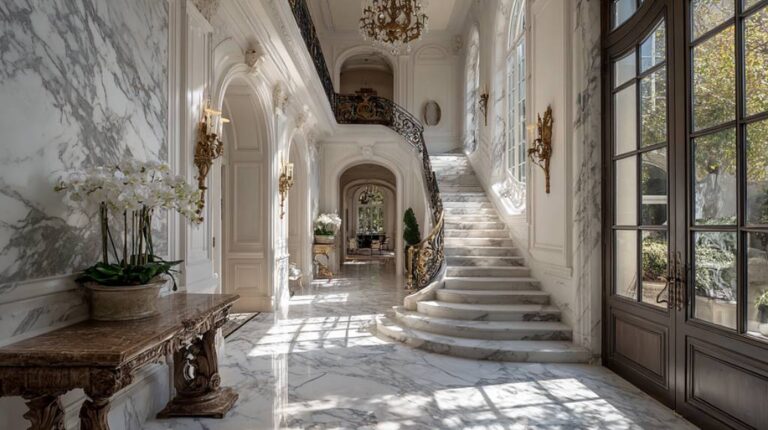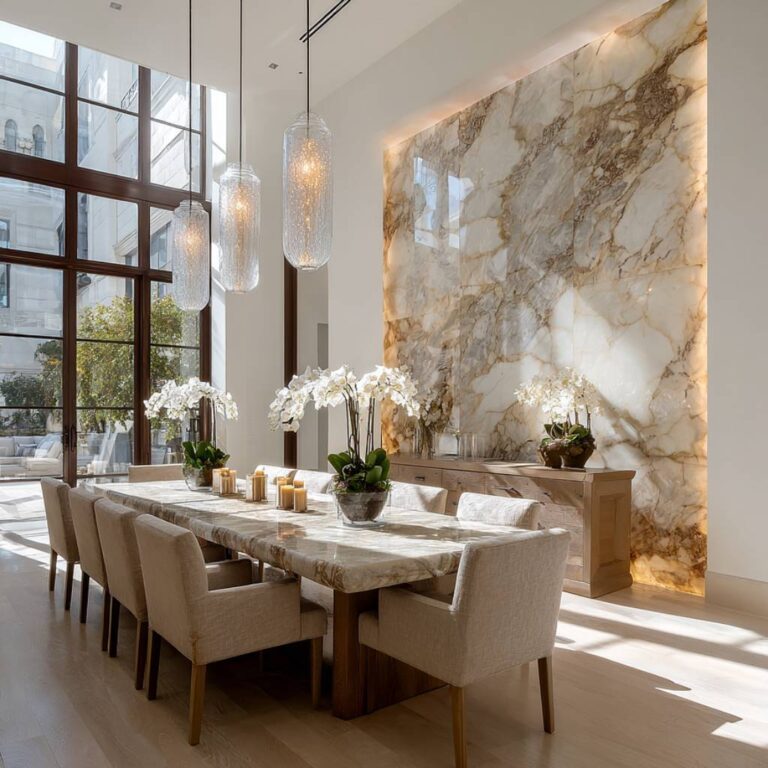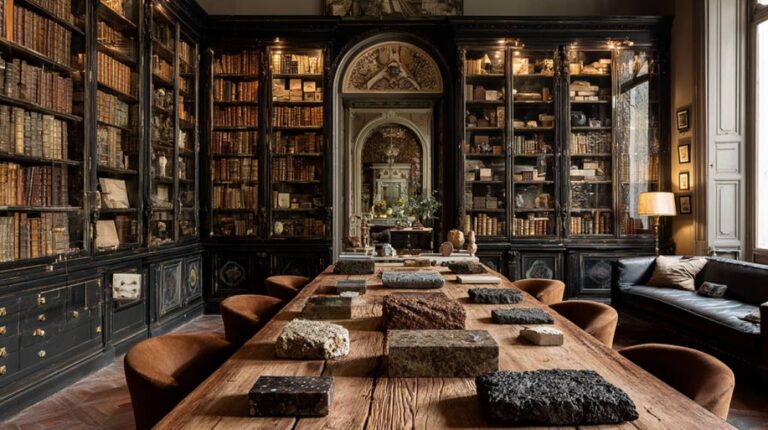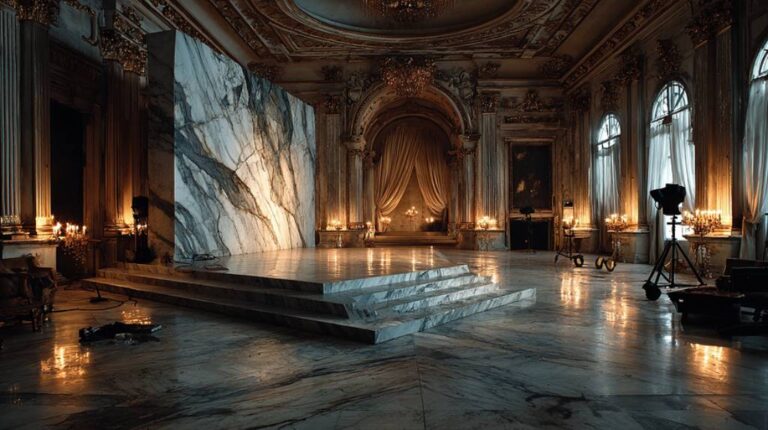
Luxury, in its earliest sense, was never about abundance. It was about discernment.
Long before luxury became synonymous with scale, spectacle, and visibility, it functioned as a language, spoken fluently by those who understood proportion, material, restraint, and time. Architecture, perhaps more than any other cultural form, has always carried this language with particular authority. A home does not merely shelter; it signals. It encodes values, hierarchies, aspirations, and intellectual positions with a subtlety that fashion, technology, or art rarely achieves.
To speak of taste, therefore, is not to speak of preference. It is to speak of capital.
Pierre Bourdieu famously argued that cultural capital operates as a form of invisible power, acquired through education, exposure, and socialisation, and expressed through choices that appear natural but are deeply conditioned. Nowhere is this more evident than in the domestic interior. What we choose to build, restore, conceal, or display within our private spaces is rarely neutral. The home becomes a quiet but persistent declaration of one’s position within culture.
In this sense, taste is not decorative. It is structural.
The Home as a Cultural Text
Every residence is, consciously or otherwise, a text. It is written through spatial organisation, material selection, scale, light, and silence. Its grammar is not learned from catalogues but from histories: of art, of craft, of urbanism, and of inheritance.
A double-height living room is not merely a spatial device; it implies a relationship to ceremony, to display, to social performance. A library that privileges natural light over theatrical lighting reveals a different relationship to knowledge. The decision to age materials rather than conceal their patina speaks of a comfort with time that cannot be simulated.
These gestures are often invisible to the casual observer. Yet they are immediately legible to those trained formally or culturally to read them.
This is why luxury architecture rarely needs explanation. It persuades through coherence. It convinces through inevitability. It does not announce wealth; it implies it, as one implies fluency in a language not commonly spoken.
From Ornament to Intellect
Historically, the language of domestic luxury has shifted alongside cultural authority. The aristocratic interiors of Europe privileged ornament, craftsmanship, and symbolic excess. The bourgeois home of the nineteenth century introduced order, proportion, and moral clarity. Modernism, in its most disciplined form, attempted to replace display with reason, arguing that taste should be aligned with function, honesty, and restraint.
Yet even in its most ascetic expressions, architecture remained a carrier of distinction. Minimalism, far from being neutral, demanded education to be understood. Its apparent simplicity concealed an exacting code: one had to know which absences mattered.
In this way, the home has always reflected not only economic capital but intellectual alignment. It reveals what one considers legitimate, progressive, refined, or cultured at a given moment in history.
Luxury, therefore, is not fixed. It evolves with the dominant ideas of civilisation.
Quiet Signals, Strong Messages
The most powerful homes today rarely rely on spectacle. They operate through calibration.
They privilege material intelligence over novelty. They demonstrate spatial generosity without theatricality. They allow negative space to function as a form of confidence rather than as emptiness. Their luxury is perceptible not through cost, but through coherence.
Such environments communicate several things simultaneously:
- A relationship with time that extends beyond trends.
- A familiarity with global aesthetic codes, without mimicry.
- A preference for continuity over consumption.
- An understanding that refinement is cumulative.
These are not merely design choices. They are cultural positions.
In this sense, taste functions as a social filter. It differentiates not only between rich and poor, but between the newly affluent and the culturally established. Between possession and belonging. Between visibility and legitimacy.
The Economics of Legibility
Contemporary wealth has become increasingly performative. The home, in many markets, is now expected to announce success through scale, surface, and spectacle. Yet such visibility often undermines the very authority it seeks to project.
Cultural capital does not require amplification. It requires legibility to the right audience.
A marble imported without understanding its geological or historical context communicates differently from a stone chosen for its ageing behaviour. A space filled with collectible objects without narrative coherence reads as accumulation, not cultivation. Luxury becomes consumption rather than composition.
The distinction is subtle, but decisive.
True taste operates not by addition, but by editing.
Domestic Space as Social Strategy
Homes are not only private environments; they are instruments of social positioning. They host rituals like dinners, negotiations, alliances, introductions. Their spatial choreography influences interaction, hierarchy, and intimacy.
The placement of a dining table, the proximity between public and private zones, the modulation of thresholds all these are architectural decisions that shape social behaviour. They express how one wishes to be encountered.
Historically, the salon, the drawing room, the courtyard, the verandah each embodied specific cultural forms of exchange. Today, open plans, transitional spaces, and layered privacy perform similar functions under different aesthetic codes.
Taste, in this context, becomes a form of social intelligence.
Education Without Instruction
What makes taste particularly powerful is that it rarely announces itself as knowledge. It appears instinctive. It disguises training as intuition.
This is why the transmission of taste often occurs informally through exposure, mentorship, travel, reading, and inhabitation rather than through formal education. One learns to recognise proportion before one learns to calculate it. One learns to value restraint before one learns to name it.
The home becomes both the medium and the curriculum.
Luxury and the Ethics of Restraint
In an era of ecological anxiety and material excess, restraint has acquired moral weight. To design generously but not wastefully, richly but not redundantly, has become a cultural statement.
Taste today is increasingly judged not only by aesthetic coherence, but by ethical intelligence: longevity, adaptability, and respect for craft and resource.
The quiet home, in this sense, is not less ambitious. It is more deliberate.
What Homes Ultimately Communicate
Every home, regardless of scale, communicates three fundamental things:
- How the inhabitant understands time.
- How the inhabitant understands culture.
- How the inhabitant understands themselves within society.
Luxury emerges not from expense, but from alignment between these dimensions.
Taste, therefore, is not an accessory to wealth. It is its most refined expression.
It is the difference between being seen, and being understood.
And in architecture, to be understood is the highest form of distinction.