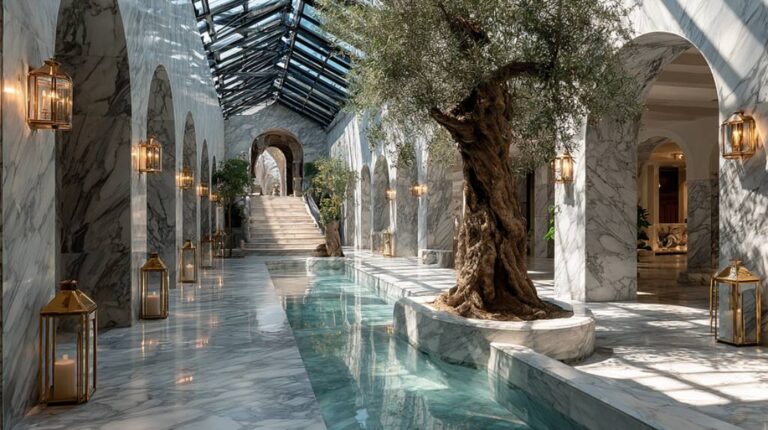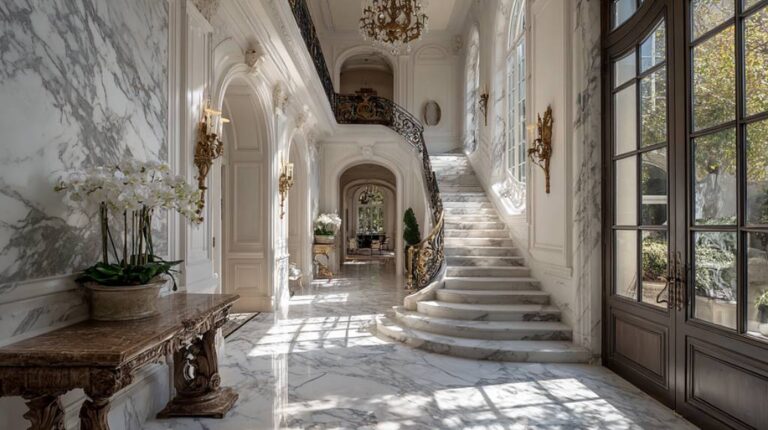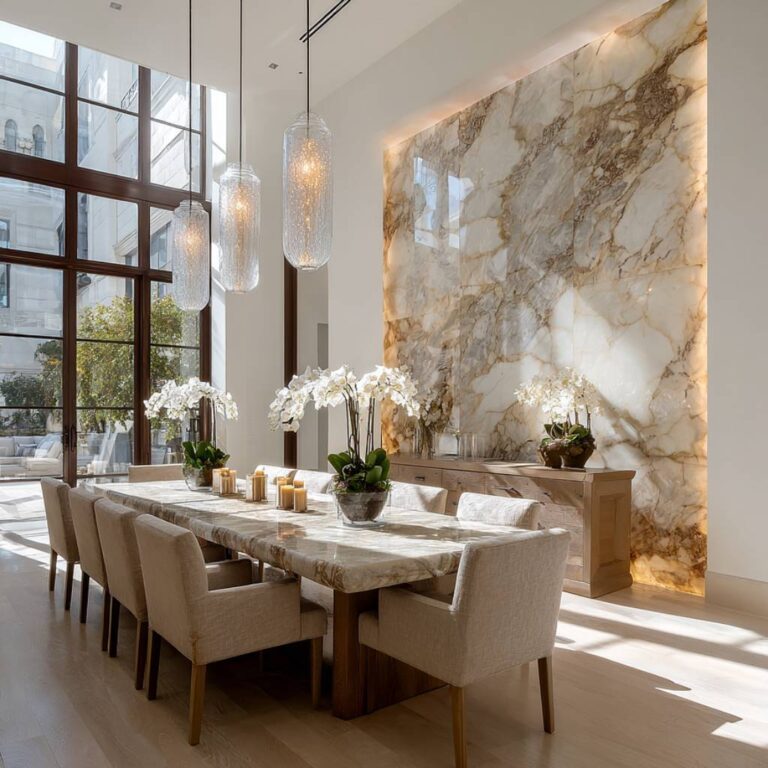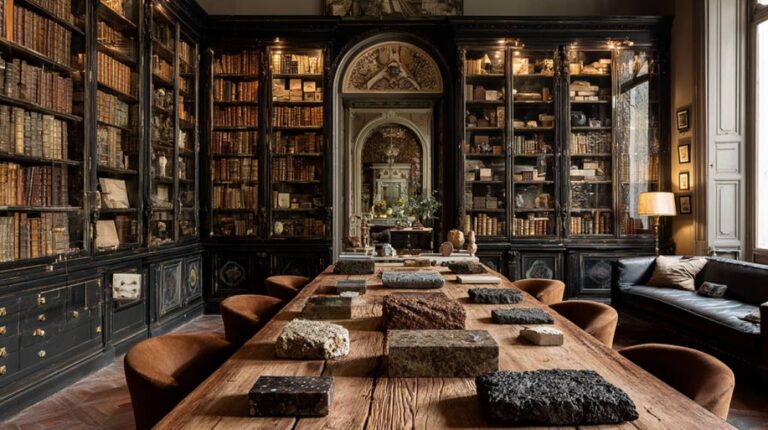
Luxury was once measured in centuries.
Not in square footage, not in finishes, not in the novelty of form but in the quiet confidence that something was built to outlast its maker. The great markers of luxury across history were never obsessed with immediacy. They were slow, deliberate, and unapologetically permanent. Stone was chosen not for aesthetics alone but for its refusal to yield to time. Proportion was considered not for spectacle but for endurance. Ornament was applied with restraint because excess, paradoxically, was seen as fragile.
Today, luxury has shifted its allegiance. Permanence has been replaced by visibility. Longevity has been traded for relevance. And architecture, once the most patient of arts, now behaves like a seasonal product.
This change did not happen abruptly. It crept in, disguised as progress.
For most of architectural history, luxury was inseparable from durability. Civilisations invested their highest skill, resources, and symbolic intent into structures meant to exist like temples, palaces, civic buildings, homes of consequence. These were not designed to “age well” in the contemporary sense; they were designed to age at all. Weathering was expected. Patina was anticipated. Time was considered a collaborator, not a threat.
To build luxuriously meant accepting responsibility beyond one’s lifetime.
Modern luxury, however, increasingly resists this idea. It privileges the new over the lasting, the polished over the weathered, the photographed over the inhabited. Materials are chosen for visual immediacy rather than long-term behaviour. Surfaces are perfected to such an extent that any sign of wear feels like failure rather than evolution. Spaces are designed to peak on the day of completion, not decades later.
The question, then, is not whether luxury has changed but whether it has quietly abandoned one of its foundational values.
At the heart of this shift lies a deeper cultural transformation: the compression of time. Contemporary culture operates on accelerated cycles of consumption, validation, and replacement. What is admired today must be replaced tomorrow to remain desirable. Permanence, by contrast, demands patience. It asks for restraint, for confidence without constant reaffirmation. In a world driven by algorithms and attention economies, such qualities struggle to survive.
Architecture has not been immune.
Luxury homes are now often designed as statements rather than legacies. Their success is measured by how they perform visually on screens, in publications, on social platforms, rather than how they endure physically or culturally. The image has overtaken the object. The moment has overtaken the lifespan.
This is why so much contemporary luxury architecture feels oddly anxious. It over-explains itself through form, material, and scale. It signals expense loudly, as though uncertain that its value will be recognised otherwise. There is little trust placed in time to validate the design; validation must arrive immediately, publicly, and repeatedly.
Historically, true luxury did not seek reassurance. It assumed it.
Permanence, after all, is an act of confidence. To build something meant to last is to believe that its values will remain relevant, that its proportions will continue to make sense, that its presence will not require constant justification. It is an architectural assertion that culture is not disposable.
The erosion of permanence has also altered our relationship with materials. Materials were once selected for their ability to mature, stone that softened with erosion, timber that deepened in tone, metals that developed character through oxidation. Today, materials are expected to remain visually static, resisting change rather than embracing it. The fear of ageing has replaced the acceptance of it.
This fear reveals something telling: contemporary luxury is uncomfortable with decay because it mirrors a broader discomfort with mortality, continuity, and loss of control. Permanence requires surrendering authorship to future generations. It accepts that the building will eventually belong more to history than to its creator.
That is a difficult proposition in a culture obsessed with ownership and attribution.
Design theory has long warned against this drift. When architecture prioritises expression over endurance, it risks becoming illustrative rather than foundational. When buildings are conceived as statements, they age like statements tied to a specific cultural moment, vulnerable to shifts in taste. Permanence, on the other hand, allows architecture to transcend its moment, becoming part of a longer conversation rather than a single declaration.
Luxury once understood this intuitively.
The most enduring luxury spaces rarely announce themselves aggressively. They rely on proportion, material honesty, and spatial clarity rather than novelty. Their richness reveals itself gradually, through use and time. They reward familiarity. They deepen rather than dazzle.
In contrast, much of today’s luxury architecture is front-loaded. It offers its entire vocabulary at once. There is little left to discover after the first encounter. This immediacy may be impressive, but rarely sustains.
The loss of permanence is also tied to the professional ecosystem surrounding architecture and design. Speed has become a virtue. Rapid delivery is celebrated. Long gestation is seen as inefficiency. Yet permanence cannot be rushed. It requires thinking beyond trends, resisting short-term pressures, and sometimes disappointing immediate expectations in favour of long-term integrity.
These are increasingly difficult positions to defend.
And yet, permanence has not disappeared entirely. It survives quietly, often outside the spotlight. In projects where restraint is prioritised over spectacle. In clients who value legacy over novelty. In architects and designers who believe that the highest form of luxury is not visual impact but cultural continuity.
Such work rarely goes viral. It does not demand attention. It waits.
Perhaps the more uncomfortable question is this: Did luxury abandon permanence, or did permanence simply become inconvenient?
To commit to permanence today is to opt out of certain forms of visibility. It is to accept that recognition may arrive slowly, if at all. It is to trust that architecture can still hold meaning beyond metrics and moments. This trust feels radical in an age of constant measurement.
Yet without permanence, luxury becomes hollow. It turns into styling rather than substance, consumption rather than culture. It forgets that its original purpose was not to impress contemporaries, but to endure beyond them.
Luxury, at its most profound, was never about abundance. It was about continuity.
And perhaps the real crisis is not that luxury architecture has become transient, but that we have stopped believing that anything should last long enough to deserve permanence at all.
If permanence no longer defines luxury, then luxury itself must be reconsidered. Not as a category of products or spaces, but as a cultural stance; one that values time as much as it values form.
The question remains open. But architecture, if it chooses to remember its deeper obligations, still holds the power to answer it.