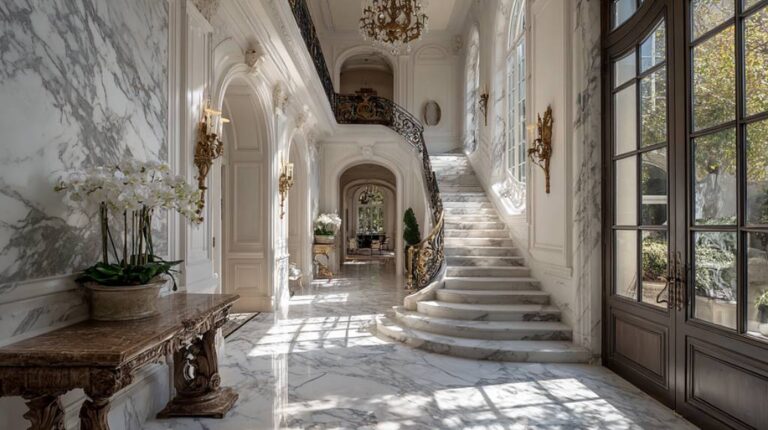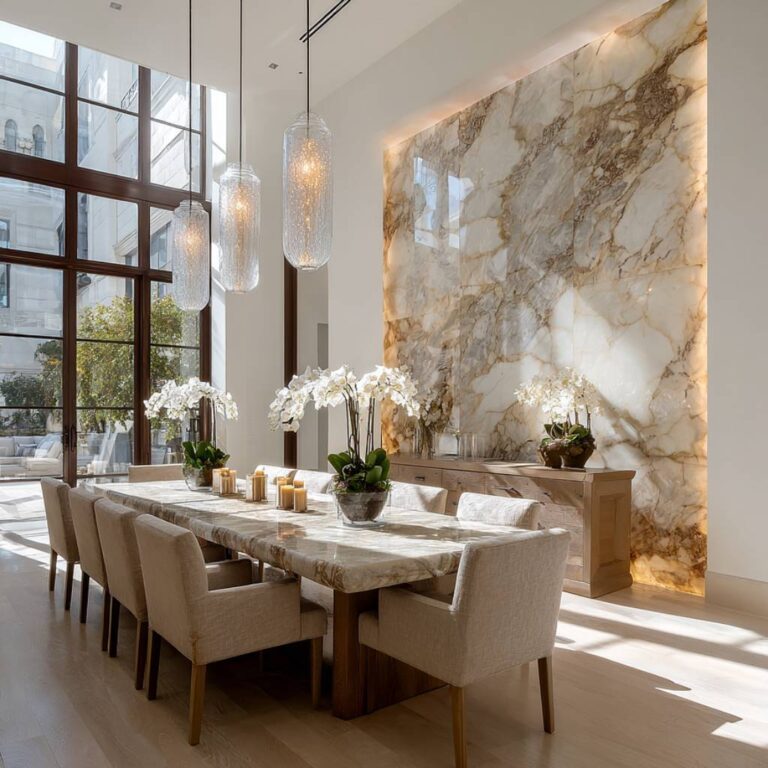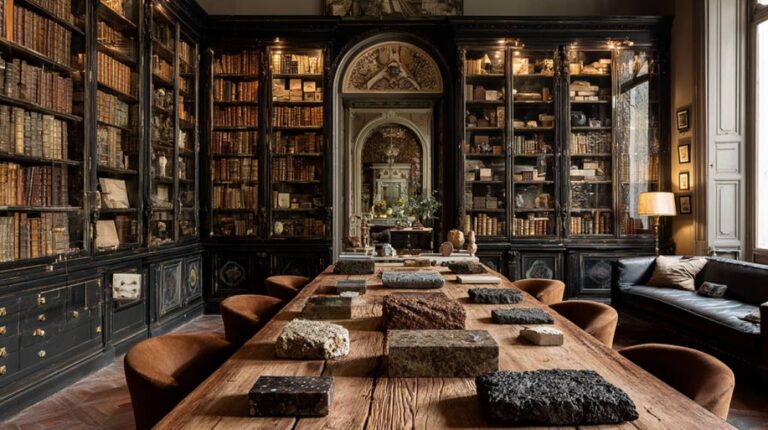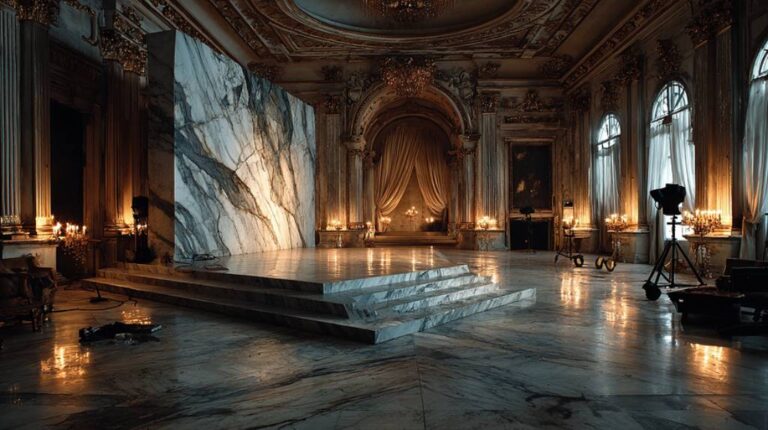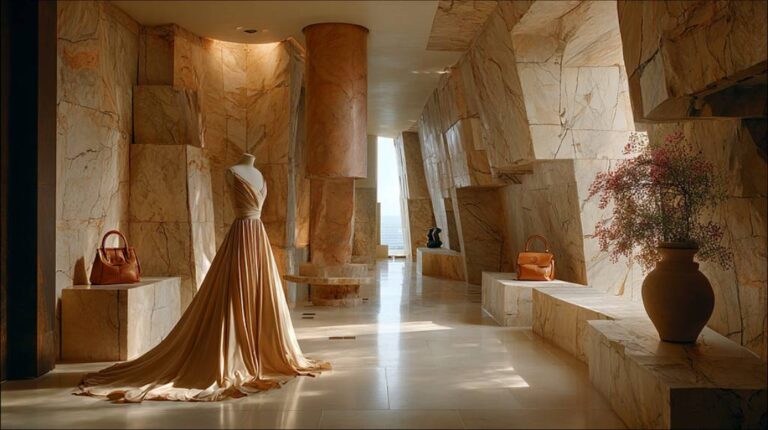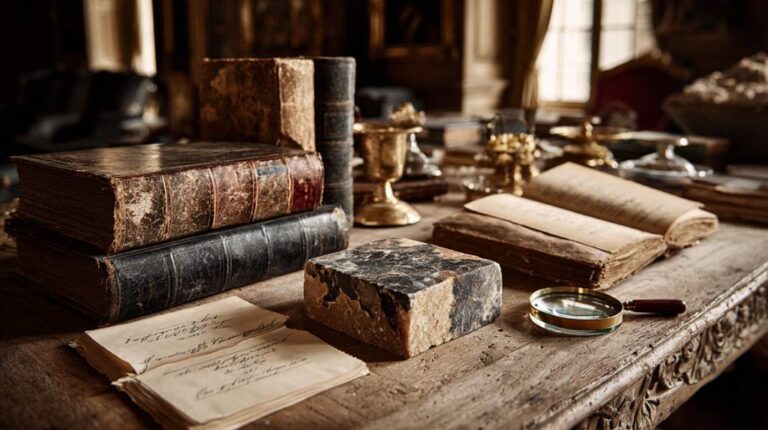
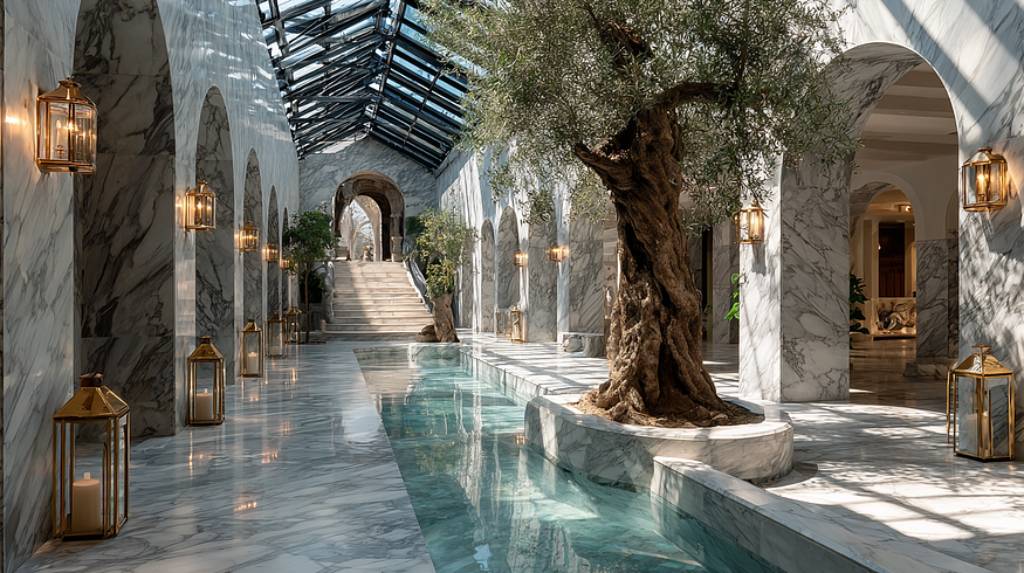
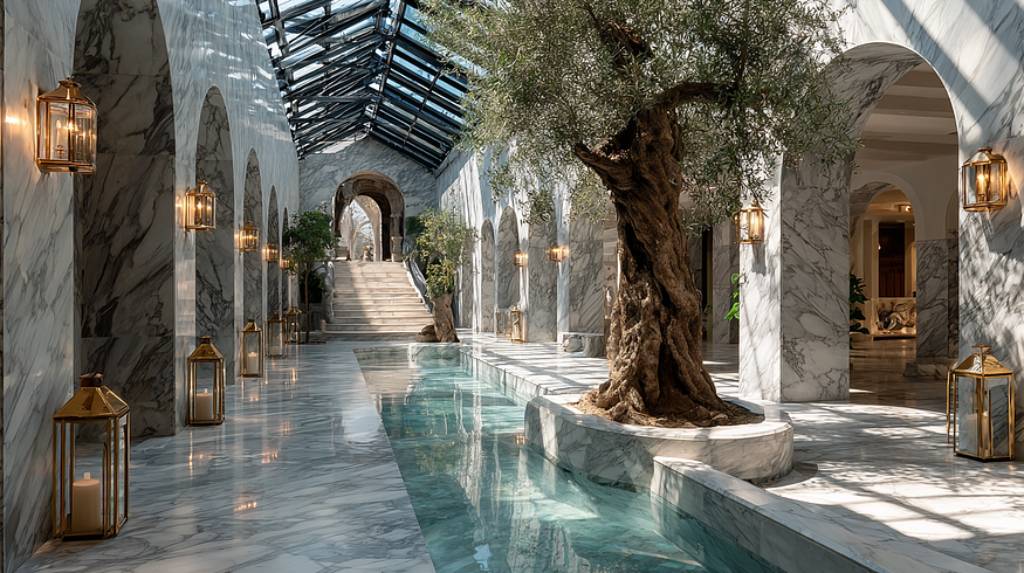
Luxury has always been associated with rarity. We admire what is difficult to obtain, painstaking to create and impossible to replicate at scale. Yet history suggests that rarity alone has never been sufficient to define true luxury. Throughout civilisation, the objects that have endured as symbols of refinement are not merely rare; they have survived the relentless test of time. A marble column standing after two thousand years, a Renaissance palace still inhabited centuries after its construction, a handcrafted table passed through five generation, these are not simply expensive possessions. They are cultural evidence that time is perhaps the greatest luxury of all.
Modern culture has become remarkably efficient at confusing novelty with value. Every year introduces new materials, new finishes, new technologies and new definitions of what luxury should look like. Social media accelerates this cycle by rewarding the immediate rather than the enduring. Spaces are increasingly designed to photograph beautifully on the day they are completed rather than to mature gracefully over decades. Products are launched with extraordinary fanfare, only to be replaced by the next collection within months. In such an environment, permanence almost feels radical. Yet permanence has always been the foundation upon which genuine luxury has been built.
Geological time reminds us how small human trends truly are. Long before architecture existed, marble was already forming beneath mountains through unimaginable pressures acting over millions of years. Quartzite slowly transformed under immense heat. Limestone accumulated through ancient oceans that disappeared long before civilisation emerged. These materials are not valuable simply because they are beautiful. They are valuable because they embody timescales that extend beyond human memory. Every vein within a slab records a history no architect could design and no manufacturer could reproduce. When such materials enter architecture, they introduce a relationship with time that synthetic substitutes rarely possess. They remind us that the built environment is not separate from nature’s history but an extension of it.
Craftsmanship introduces another layer of time. A block of marble possesses geological value, but it becomes architecture only through human skill accumulated across generations. The finest artisans inherit techniques refined by countless predecessors. Knowledge is transferred from master to apprentice, workshop to workshop, century after century. This continuity transforms labour into culture. A beautifully detailed staircase or perfectly book matched wall is not simply evidence of technical ability. It represents centuries of experimentation, correction and refinement preserved through human hands. Luxury therefore emerges not only from ancient materials but also from inherited knowledge.
Architecture itself operates on yet another timeline. Buildings are among the few creations designed with the expectation that they will outlive their creators. The finest residences, civic buildings and cultural institutions are conceived not merely for current occupants but for future generations who have yet to arrive. Every decision of material selection, structural design, craftsmanship, maintenance becomes an investment in longevity. Architecture teaches patience because its greatest achievements cannot be measured within quarterly reports or annual design awards. Their true value often becomes visible only after decades of use.
Institutional time adds an equally important dimension. Civilisations preserve knowledge through organisations capable of surviving individual lifetimes. Museums protect cultural memory. Universities sustain scholarship. Libraries preserve ideas. Conservation institutions safeguard heritage. Increasingly, luxury brands themselves face a similar choice. They can remain retailers measured by annual sales, or they can become custodians measured by the knowledge, craftsmanship and cultural traditions they protect. Institutions earn authority because they think in generations rather than seasons. Their influence grows through stewardship rather than constant reinvention.
This understanding transforms the meaning of sustainability as well. Contemporary debates often focus on immediate environmental impact, an important consideration that deserves continued attention. Yet sustainability also requires thinking across much longer horizons. A material capable of serving a building for two centuries contributes differently to environmental responsibility than one requiring replacement every twenty years. A home designed to become part of a family’s history carries a different cultural value from one designed around temporary fashion. Longevity itself becomes an ecological virtue because permanence reduces unnecessary cycles of consumption, demolition and replacement.
Perhaps this explains why so many historic European homes continue to inspire contemporary architects. Their beauty is inseparable from their endurance. Time has softened stone, enriched timber, polished bronze and deepened the character of every material. These buildings no longer appear valuable despite their age. They appear valuable because of it. Every generation has added another chapter without erasing the previous one. Architecture becomes a living record of human continuity rather than a static object frozen in time.
The luxury industry increasingly finds itself confronting this reality. Consumers are becoming less interested in products that merely appear exclusive and more interested in objects that possess provenance, authenticity and lasting significance. They seek materials with traceable histories, craftsmanship rooted in tradition and brands willing to preserve knowledge rather than simply manufacture desire. This marks a profound cultural shift. Exclusivity is slowly giving way to legitimacy. The question is no longer, “How rare is this?” but, “Will this still matter fifty years from now?”
Looking back across this season, a consistent pattern emerges. Extraction matters because it connects architecture to geological history. Craft matters because it connects materials to human knowledge. Ethical responsibility matters because it connects production to accountability. Custodianship matters because it connects businesses to cultural continuity. Each conversation ultimately returns to the same idea: luxury is never created in a single moment. It accumulates slowly through relationships with time.
Perhaps that is the deepest lesson architecture can offer contemporary culture. In a world increasingly obsessed with acceleration, buildings remind us that meaningful things cannot be hurried. Mountains required millions of years. Marble required geological transformation. Craftsmanship required generations of learning. Great architecture requires patience. Legacy requires stewardship. None of these qualities can be manufactured overnight.
The future of luxury therefore belongs not to those who create the newest objects, but to those who create the longest conversations between nature, craftsmanship and civilisation. When luxury becomes geological, it ceases to be about possession and becomes instead about participation in something infinitely larger than ourselves. Time is no longer an obstacle to overcome. It becomes the very measure of legitimacy. And perhaps that is what we have been learning all along: the finest luxury is not the one that captures a moment, but the one that earns its place across generations.