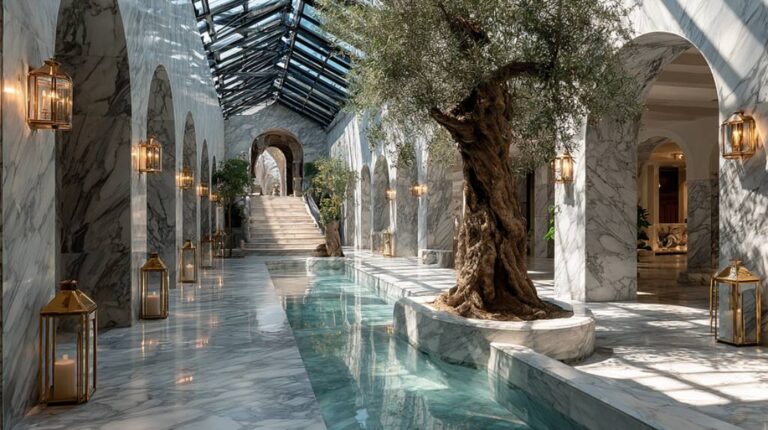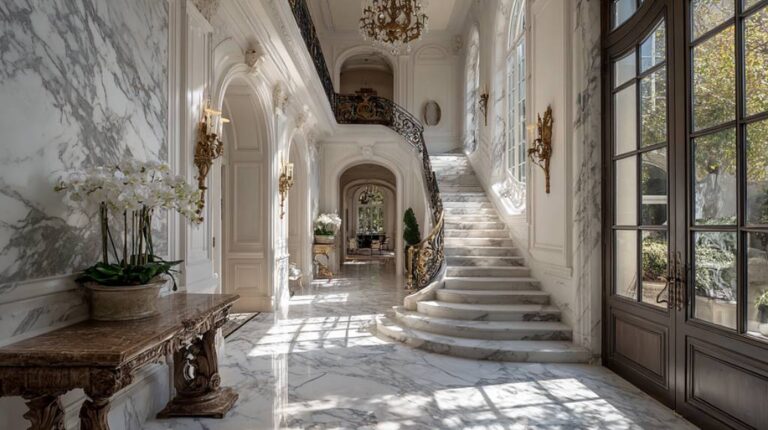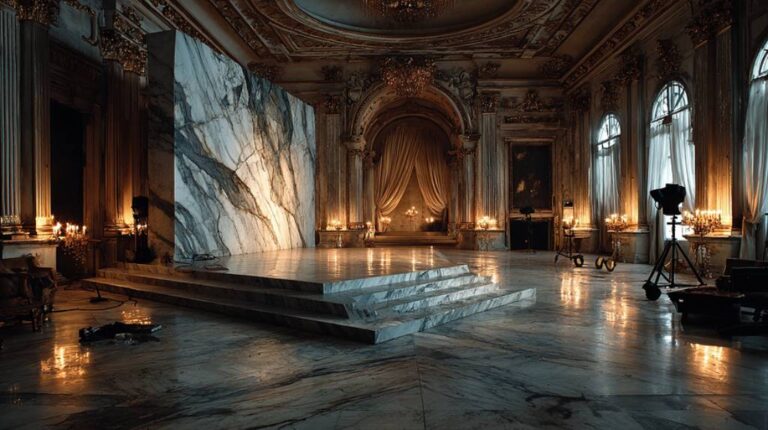
There was a time when architecture served merely as a backdrop. A grand staircase framed a portrait, a marble floor reflected evening light, and a stone wall quietly disappeared behind the people it was meant to support. The building existed, but it was rarely acknowledged. It was considered scenery rather than narrative. Yet somewhere over the past two decades, something remarkable happened. Stone stopped behaving like a background material and quietly stepped into the foreground. Today, it is no longer simply supporting the story. It is helping to tell it.
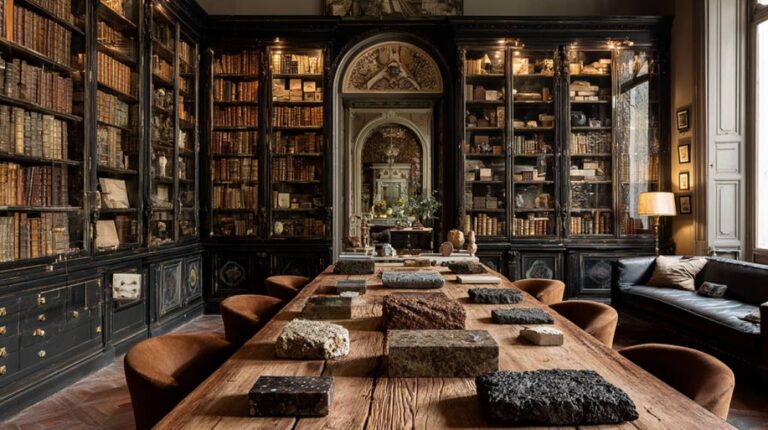
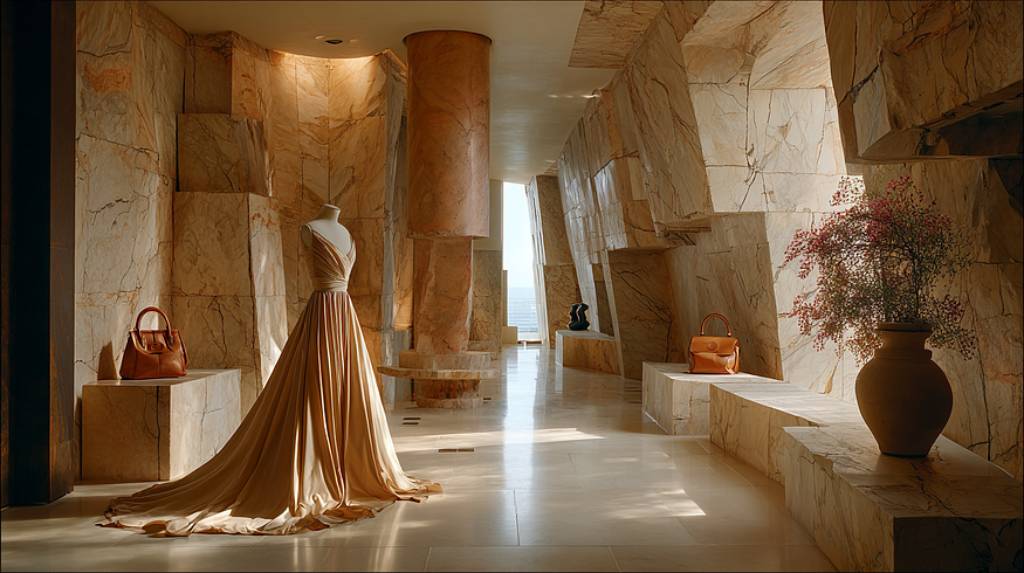
Look closely at the visual language of luxury brands, fashion editorials, cinema, jewellery campaigns or high-end hospitality photography, and a pattern quickly emerges. Models are increasingly photographed against monumental blocks of limestone instead of elaborate wallpaper. Watches rest on sculpted marble rather than polished glass. Perfume bottles sit atop travertine plinths instead of mirrored tables. Luxury handbags are placed against raw stone walls where the texture of geology becomes as important as the object itself. These choices are rarely accidental. They reveal that materials have acquired symbolic power. Stone has become a co-star.
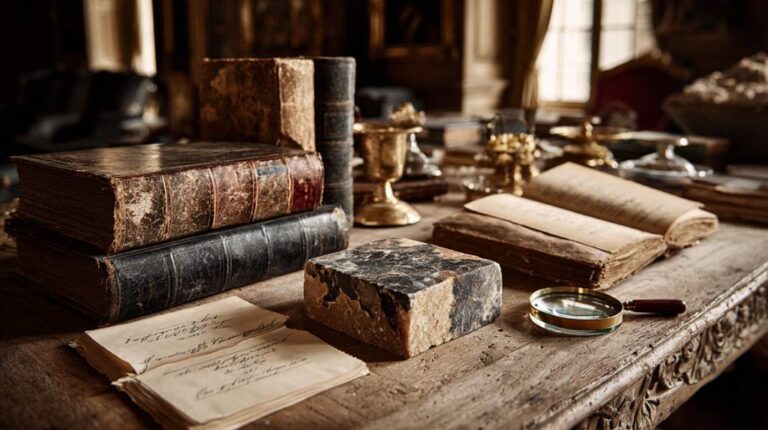
This transformation says something profound about contemporary culture. We are living in an age saturated with digital imagery. Artificial intelligence can fabricate perfect interiors, flawless landscapes and impossible objects within seconds. Social media presents endless visual stimulation, yet much of it feels strangely weightless. Against this backdrop, natural materials have begun to perform a different role. They provide credibility. A block of marble cannot be generated by an algorithm. Limestone carries fossils formed over millions of years. Travertine bears the marks of mineral-rich water that shaped it long before human civilisation emerged. These surfaces remind us that not everything valuable is manufactured. Some things still belong to geological time.
Luxury has always relied on symbols. In previous centuries, those symbols were often explicit like gold leaf, crystal chandeliers, rare woods or elaborate ornamentation. Today, the language has become quieter. Wealth increasingly communicates itself through restraint rather than display. It seeks authenticity instead of abundance. Natural stone has become one of the clearest expressions of this shift because it conveys permanence without demanding attention. It possesses authority without spectacle. Its greatest strength lies precisely in its refusal to compete with the objects placed upon it.
Fashion photography perhaps illustrates this evolution most clearly. A garment photographed against a polished studio backdrop exists in an abstract world detached from history. The same garment photographed against weathered limestone immediately acquires another layer of meaning. The stone introduces memory, geography and permanence into the composition. The clothing no longer appears as a seasonal product but as part of a broader cultural narrative. The material quietly tells viewers that this object belongs within a world of craftsmanship rather than consumption.
The same phenomenon can be observed in cinema. Directors have long understood that architecture communicates character before dialogue begins. A room finished in warm limestone suggests composure. Dark marble introduces drama and authority. Travertine often conveys calm sophistication, while rough-hewn stone walls evoke endurance and resilience. Audiences may never consciously analyse these signals, yet they respond to them instinctively. Materials shape emotional perception long before words appear on screen. They become silent actors influencing every scene.
This is perhaps why luxury brands have increasingly embraced architecture as part of their storytelling. A product photographed in isolation is simply an object. A product placed within a carefully composed architectural environment becomes part of a lifestyle, a philosophy and, ultimately, an aspiration. Stone plays a central role because it possesses something few other materials can offer: narrative neutrality. It never overwhelms the subject, yet it quietly elevates everything around it. It functions much like a great supporting actor and rarely dominating the performance but making every other character appear stronger.
There is also a deeper cultural explanation for this growing fascination with stone. Modern life has become increasingly temporary. Digital files replace physical collections. Streaming replaces ownership. Buildings are renovated to follow trends rather than endure them. Products are designed for short life cycles before the next release arrives. Against this culture of constant replacement, natural stone offers resistance. It reminds us that some things improve with time rather than becoming obsolete. Its presence introduces a sense of continuity into environments increasingly shaped by impermanence.
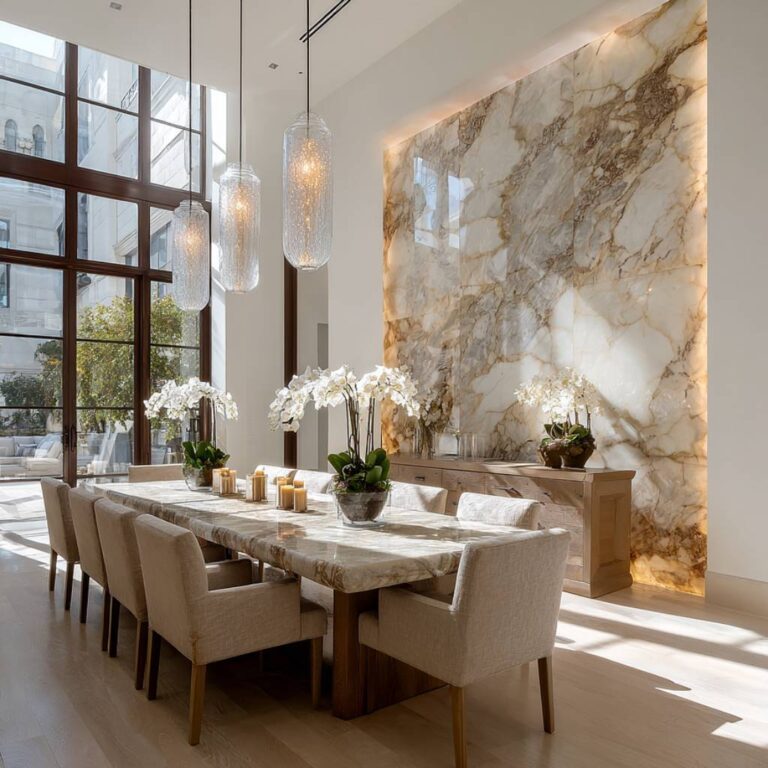
This explains why many of the world’s most sophisticated homes no longer rely upon decorative excess to communicate luxury. Instead, they allow the materials themselves to establish the emotional tone. A single block of beautifully detailed limestone may create more authority than an entire room filled with expensive objects. The material becomes architecture’s quiet protagonist. It shapes how light behaves, how sound travels and how people move through space. More importantly, it shapes memory. Visitors often struggle to explain why certain interiors feel timeless, but they remember how those spaces made them feel. The material has already done its work.
The rise of editorial architecture reflects the same cultural movement. Publications no longer photograph houses merely to document design. They photograph them because architecture has become part of visual storytelling itself. Stone floors, monumental staircases, sculptural walls and textured surfaces no longer exist simply as construction elements. They create atmosphere. They establish mood. They become visual language. Increasingly, the building is not where the story happens. The building is part of the story.
Perhaps this is the greatest transformation natural materials have undergone in contemporary culture. They have moved beyond function without becoming decoration. Instead, they have entered the realm of symbolism. Marble now represents permanence. Travertine suggests calm restraint. Limestone evokes authenticity. These associations have emerged not through advertising but through repeated cultural experience across architecture, fashion, hospitality, cinema and photography. Materials have become part of our collective visual vocabulary.
The finest architecture has always understood that buildings communicate long before people speak. Today, the same principle applies to the materials within them. Stone is no longer chosen simply because it is durable or beautiful. It is chosen because it carries meaning. It lends credibility to the stories brands tell, depth to the worlds filmmakers create and permanence to the homes people build.
Perhaps that is why natural stone has quietly become one of luxury’s most powerful cultural symbols. It no longer waits in the background to support the narrative. It has become one of the reasons the narrative feels believable in the first place.