Few words have become as politically charged in contemporary architecture as extraction. Mention the quarrying of stone, the harvesting of timber or the mining of metals, and the conversation often shifts immediately from design to ethics. The debate quickly settles into familiar positions. Extraction is portrayed as inherently destructive, while materials labelled as recycled, synthetic or low-impact are automatically assumed to be morally superior. This instinct is understandable in an era increasingly concerned with climate change, biodiversity and resource depletion. Yet it also reveals a growing tendency to simplify extraordinarily complex questions into comforting moral narratives. The challenge facing architecture today is not whether extraction should occur. Human civilisation has always depended upon extraction. The more important question is whether extraction can be understood with enough intellectual honesty to distinguish responsible stewardship from irresponsible exploitation.
Every civilisation has been built from materials removed from the earth. The pyramids required limestone. Classical Greece depended upon marble. The Roman Empire expanded through quarries that supplied roads, aqueducts and public buildings. Medieval cathedrals, Renaissance palaces and modern cities all emerged through the careful transformation of geological resources into cultural artefacts. There has never been an architecture without extraction because there has never been a civilisation without materials. Stone does not appear inside a building by accident. Timber does not become a structural beam without forests. Clay does not become brick without excavation. Even concrete, steel and glass begin their lives through the extraction of minerals. The question, therefore, has never been whether architecture extracts. It has always been how responsibly it does so.
Modern discourse, however, often treats extraction as though it exists outside this historical context. The word itself has become emotionally loaded, frequently implying environmental irresponsibility before any evidence is considered. This tendency risks replacing analysis with symbolism. Materials become moral categories rather than physical realities. Natural stone is criticised because it comes directly from quarries, while highly processed alternatives are celebrated despite requiring significant industrial manufacturing, chemical processing and shorter replacement cycles. Such comparisons rarely account for an entire material life cycle. They evaluate origins without examining longevity, maintenance requirements, embodied durability or the cultural value a material may provide over generations.
This is where architecture requires greater intellectual discipline. Sustainability cannot depend solely upon appearances. A material should not be considered responsible simply because its environmental story sounds appealing. Nor should another material be dismissed because its origins involve visible extraction. The true measure of sustainability lies in evidence rather than sentiment. How long will the material last? Can it be repaired instead of replaced? What resources are required to maintain it? How much processing is necessary before it reaches a construction site? Can it remain useful for centuries rather than decades? These questions are less emotionally satisfying than slogans, but they produce far better decisions.
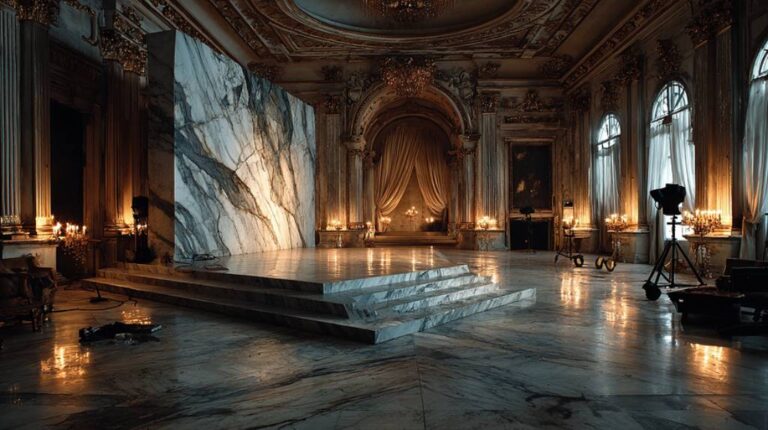
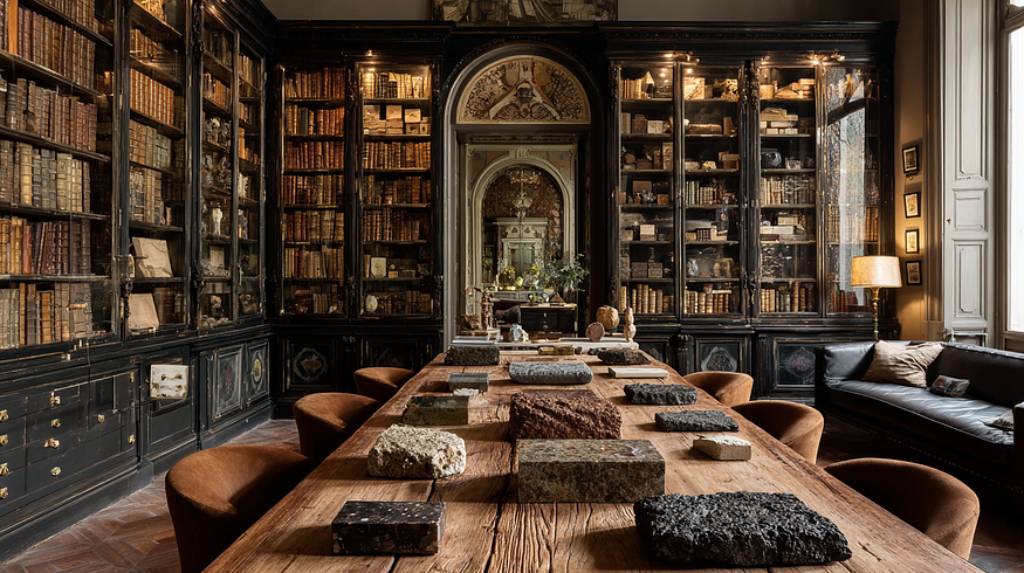
Natural stone offers a compelling example of why nuance matters. A block of marble or limestone undoubtedly begins with quarrying. That reality cannot and should not be ignored. Yet the same block may remain within a building for two hundred years with minimal maintenance, eventually being repurposed rather than discarded. Compare this with many contemporary synthetic surfaces designed for replacement within a generation. Their manufacturing processes often involve petrochemical inputs, adhesives, composite structures and energy-intensive production. Their useful life may be significantly shorter, leading to repeated cycles of demolition, transport and disposal. Judging only the beginning of a material’s journey while ignoring its entire lifespan provides an incomplete understanding of sustainability.
The politics surrounding extraction also reveal a broader cultural challenge. Increasingly, public discussions reward certainty rather than complexity. It is easier to divide materials into heroes and villains than to acknowledge that every building material carries environmental, economic and social consequences. Quarrying affects landscapes, but it also provides employment, supports regional economies and supplies materials that may endure for centuries. Restoration projects consume resources, but they also preserve cultural heritage. Industrial manufacturing reduces reliance on certain natural resources while increasing dependence upon others. None of these realities fit comfortably within simple narratives of good and bad. Responsible architecture requires the willingness to hold competing truths simultaneously.
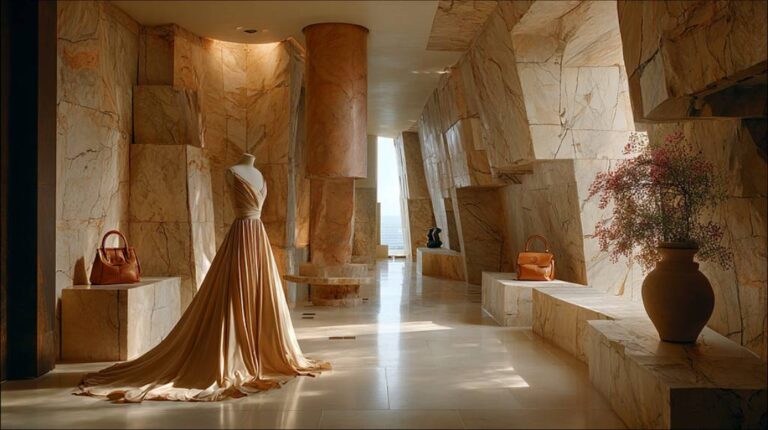
This balanced perspective becomes particularly important in luxury architecture. High-end residential projects often receive criticism for their material choices without recognising that permanence itself can represent an environmental virtue. A carefully detailed stone residence designed to remain relevant for one hundred years may ultimately consume fewer resources than multiple cycles of renovation driven by fashion. Longevity has environmental value, yet contemporary conversations about sustainability sometimes overlook durability in favour of immediate visual signals. A building does not become sustainable simply because it appears environmentally conscious. It becomes sustainable when its materials, construction and lifespan collectively reduce unnecessary waste over time.
Industry standards exist precisely because responsible extraction cannot rely upon marketing language alone. Increasingly, quarry operators and manufacturers are expected to demonstrate measurable environmental performance, restoration commitments, worker safety and operational transparency. These frameworks shift the conversation away from assumptions and toward verifiable evidence. They acknowledge that extraction is neither inherently ethical nor inherently unethical. Its legitimacy depends upon how responsibly it is planned, managed and restored. This distinction is critical because it replaces ideology with accountability.
Perhaps the greatest danger of moral panic is that it discourages meaningful dialogue. Once materials become symbols within cultural debates, opportunities for careful evaluation diminish. Architects, designers and clients begin making decisions to satisfy perceptions rather than performance. Genuine sustainability, however, demands intellectual curiosity rather than ideological certainty. It asks difficult questions about trade-offs, life-cycle impacts and long-term stewardship instead of searching for universally virtuous materials that do not exist.
Architecture has always been an act of transformation. It takes resources from the earth and reshapes them into places where culture, memory and human life can flourish. That transformation inevitably carries responsibility. But responsibility begins not with moral panic or simplistic judgments. It begins with evidence, transparency and the willingness to examine every material honestly across its entire life rather than through a single moment of extraction.
Perhaps the future of sustainable architecture will belong not to the loudest environmental narratives but to the most rigorous ones. The most responsible buildings will not be those that avoid difficult conversations about extraction. They will be those that recognise extraction as an unavoidable reality of civilisation and insist that it be governed by discipline, measurable standards and long-term stewardship rather than assumption. In the end, the politics of extraction are not resolved by pretending architecture can exist without taking from the earth. They are resolved by ensuring that what we take is justified by what we leave behind.