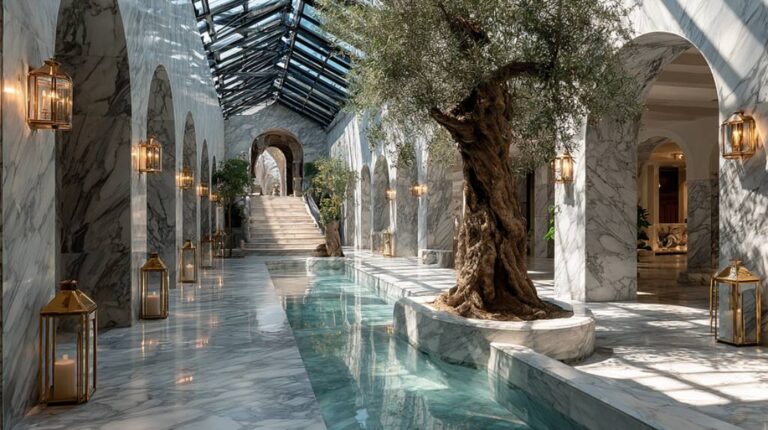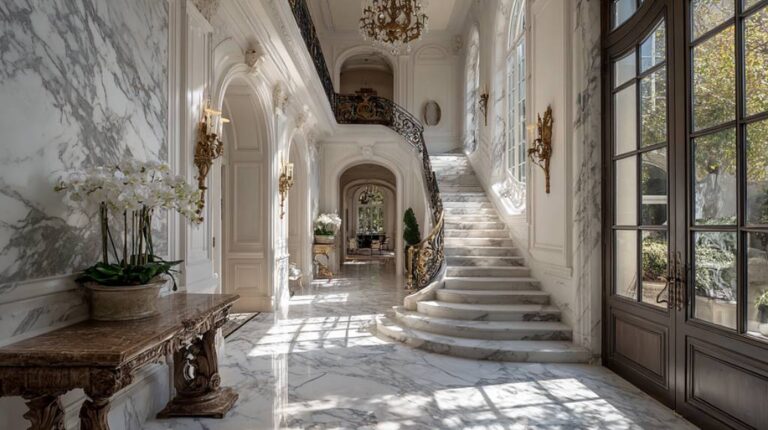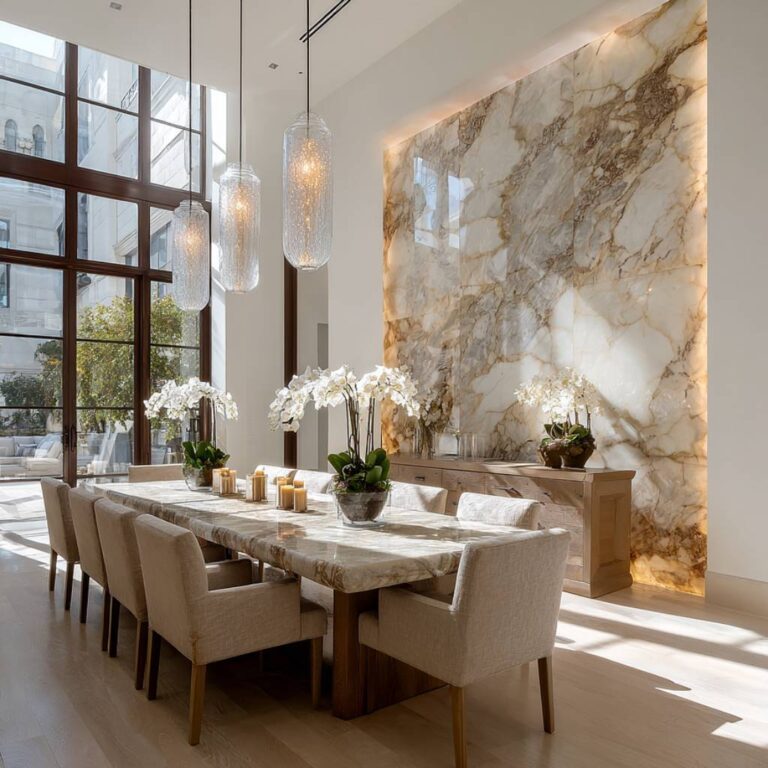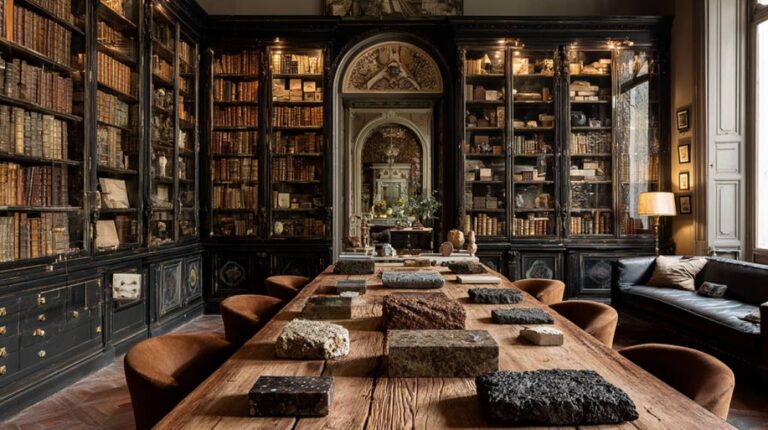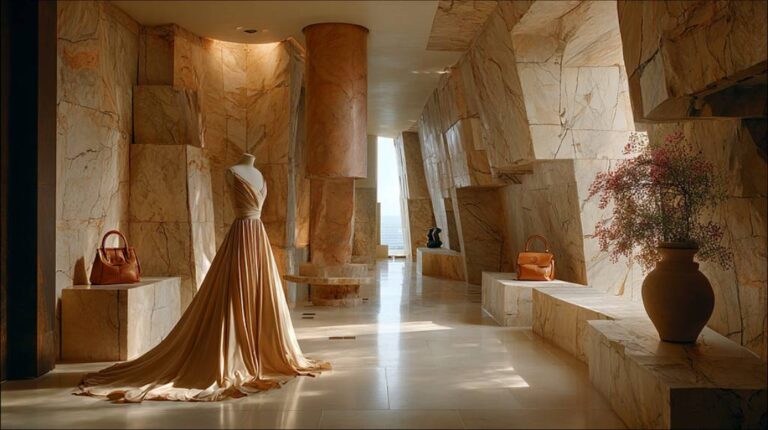
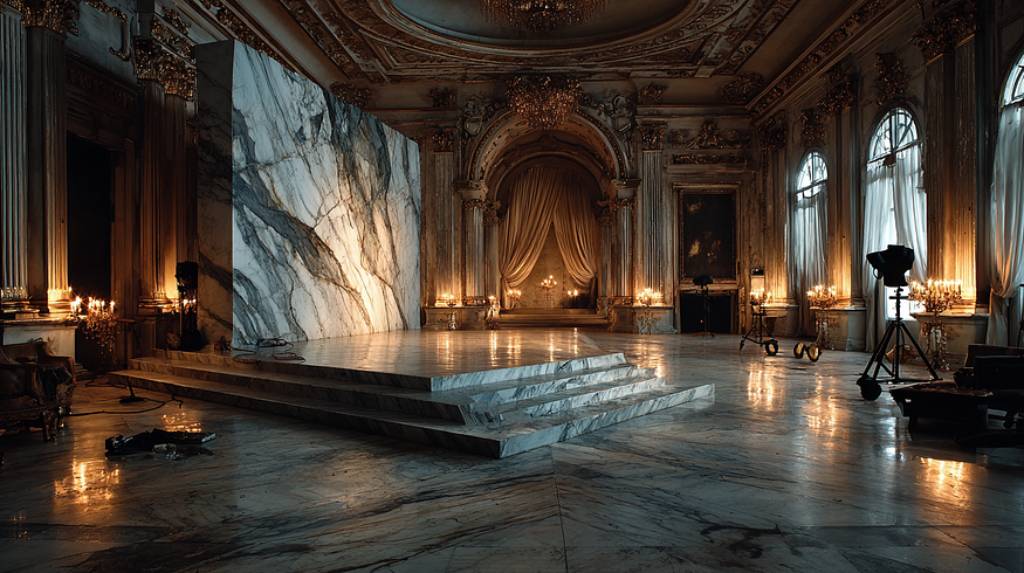
Luxury has always depended upon context. A masterpiece hanging in a museum would lose much of its authority if displayed beneath fluorescent supermarket lighting. A rare timepiece photographed on a cluttered desk would struggle to communicate the craftsmanship invested in its creation. Likewise, the finest architecture has never been simply about remarkable materials or extraordinary objects in isolation. It has always been about relationships. Light relates to stone. Space relates to furniture. Texture relates to silence. Every element exists to strengthen the whole rather than compete for attention. Yet contemporary luxury increasingly faces a subtle problem. In the pursuit of visual impact, the setting itself is often becoming louder than the story it is meant to support. The backdrop no longer frames the subject. It attempts to become the subject.
This phenomenon extends far beyond architecture. It can be observed in fashion campaigns, luxury hospitality, residential interiors, retail environments and even social media photography. Every surface demands attention. Marble becomes dramatically bookmatched across entire walls. Exotic stones cover every available plane. Sculptural lighting competes with furniture. Art competes with architecture. Decorative objects multiply until every corner insists on being noticed. The result is not necessarily ugly. In fact, many of these spaces appear visually impressive at first glance. The problem is that they become difficult to remember because nothing knows when to remain quiet.
The greatest forms of luxury have rarely relied upon constant visual stimulation. Instead, they have understood one of design’s oldest principles: restraint creates authority. A beautifully tailored suit succeeds because unnecessary details have been removed rather than added. Classical music depends as much upon silence as sound. Literature gains emotional power through carefully chosen words rather than endless description. Architecture follows precisely the same rule. A material becomes more meaningful when it is allowed space to breathe.
Natural stone illustrates this principle particularly well. Marble, limestone and travertine possess extraordinary visual richness because nature has already completed the work of composition. Every vein, fossil and mineral variation carries millions of years of geological history. Such materials do not require excessive staging to become beautiful. In many cases, the opposite is true. Over lighting them, surrounding them with competing textures or using them indiscriminately across every surface diminishes their character rather than amplifying it. What should have communicated quiet permanence instead becomes visual noise.
Perhaps this is one of the defining tensions within contemporary luxury. Social media has conditioned us to equate attention with success. Every image competes against thousands of others for a fraction of a second of human focus. The temptation is therefore understandable. Designers, brands and homeowners often feel pressure to make every room instantly dramatic. Every photograph must surprise. Every corner must become “Instagrammable.” Yet homes are not consumed in fractions of seconds. They are inhabited over years and decades. What excites immediately often exhausts eventually. The interiors people continue to admire throughout their lives are rarely the loudest. They are the ones that reveal themselves slowly.
This gradual discovery is one of architecture’s greatest pleasures. A restrained limestone wall noticed differently as daylight changes. A single block of travertine becoming more expressive as evening shadows lengthen. A marble fireplace quietly anchoring an entire room without demanding constant admiration. These moments remind us that architecture is experienced through time rather than spectacle. The finest materials understand this instinctively. They never compete for attention because they possess confidence born from permanence.
The relationship between object and setting becomes especially significant in luxury branding. Increasingly, products are photographed within carefully designed architectural environments. Watches rest upon monolithic stone plinths. Couture appears within minimalist villas. Jewellery is displayed against sculptural marble walls. These choices are not accidental. They recognise that architecture shapes emotional perception long before viewers consciously analyse the object itself. Yet there remains a delicate balance. When the architecture begins overwhelming the product, the identity of the brand becomes diluted. The setting has forgotten its role.
This idea applies equally to residential architecture. A remarkable home does not ask every material to become a masterpiece. Instead, it allows one element to lead while others support. A dramatic staircase requires quieter surrounding surfaces. An extraordinary slab of marble deserves restrained furniture. A sculptural artwork benefits from architecture that frames rather than competes. This hierarchy creates visual clarity. The eye knows where to rest because every element understands its responsibility within the composition.
Perhaps this is why some of the world’s most admired interiors appear almost effortless despite extraordinary craftsmanship. Their elegance comes not from abundance but from editing. Someone had the discipline to stop adding. Someone recognised that beauty often emerges not through accumulation but through subtraction. This discipline requires confidence because restraint rarely seeks immediate applause. It trusts that depth will outlast novelty.
There is also a cultural dimension to this conversation. Great civilisations have always distinguished between monumentality and excess. Ancient temples, Renaissance palaces and Japanese teahouses all understood that symbolism loses power when repeated without purpose. Every material carried meaning because it was introduced deliberately rather than indiscriminately. Luxury functioned as language rather than decoration. Contemporary architecture occasionally forgets this distinction. We mistake visibility for significance. We assume that if every surface is exceptional, the entire project becomes exceptional. In reality, the opposite often occurs. Without contrast, nothing remains extraordinary.
Natural stone teaches a different philosophy. It possesses no desire to dominate. It simply exists with quiet confidence, allowing light, proportion and craftsmanship to reveal its character over time. Its greatest strength lies in its ability to support the story without becoming theatrical. This is why the finest architects often describe materials not as decorative finishes but as participants in a larger conversation. Every element has a voice, but wisdom lies in knowing when to whisper.
Perhaps the future of luxury will belong not to interiors that constantly demand attention, but to those that understand the profound elegance of restraint. The most memorable rooms are rarely those where every material shouts for recognition. They are the ones where architecture creates harmony, where objects remain meaningful because the setting knows when to step back, and where beauty is discovered gradually rather than announced immediately.
In the end, the greatest luxury is not creating a room where everything competes to be noticed. It is creating one where every element understands its place, allowing the entire composition to speak with one calm, confident voice.