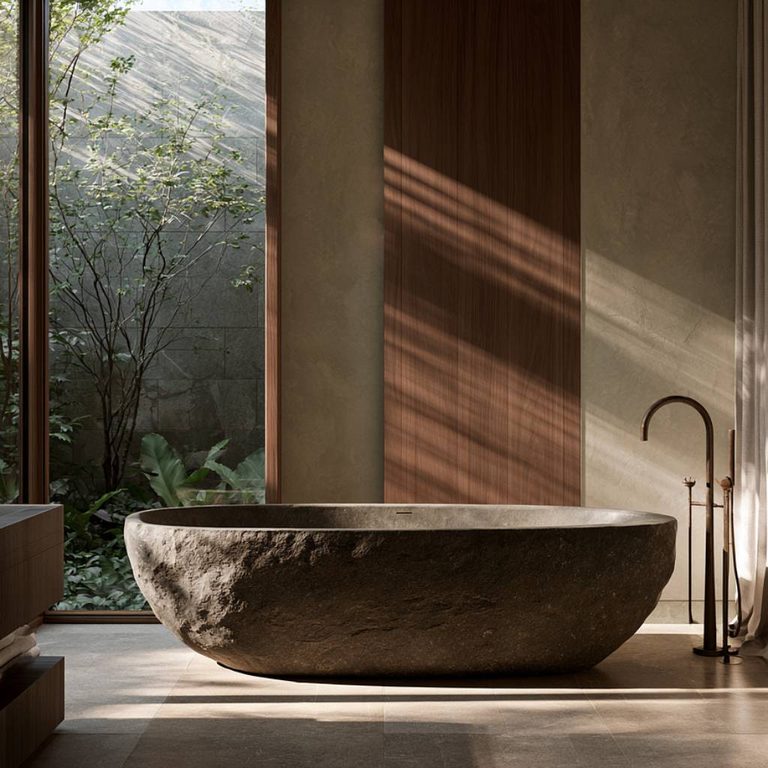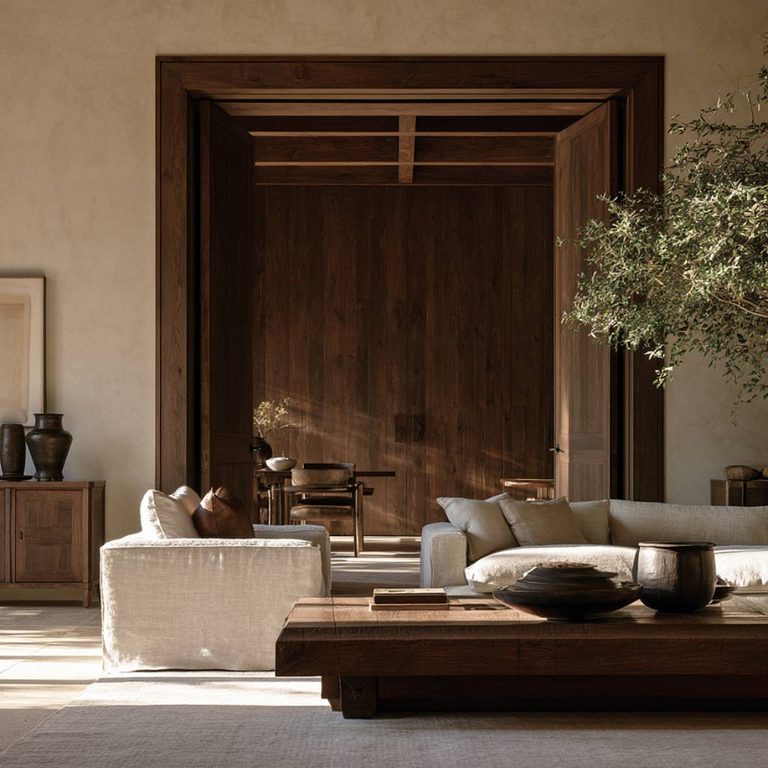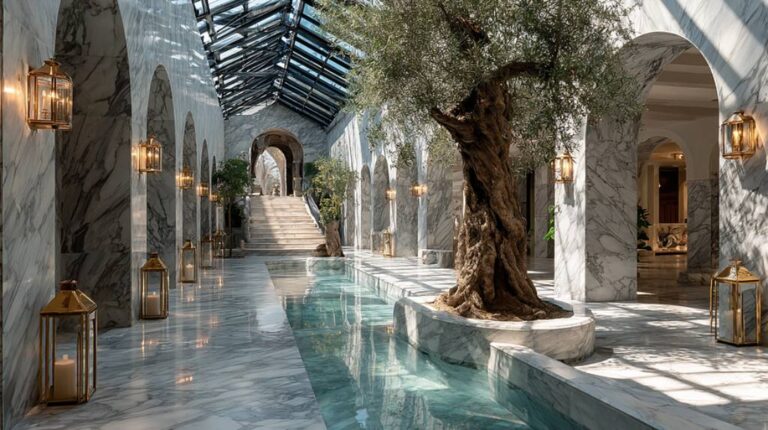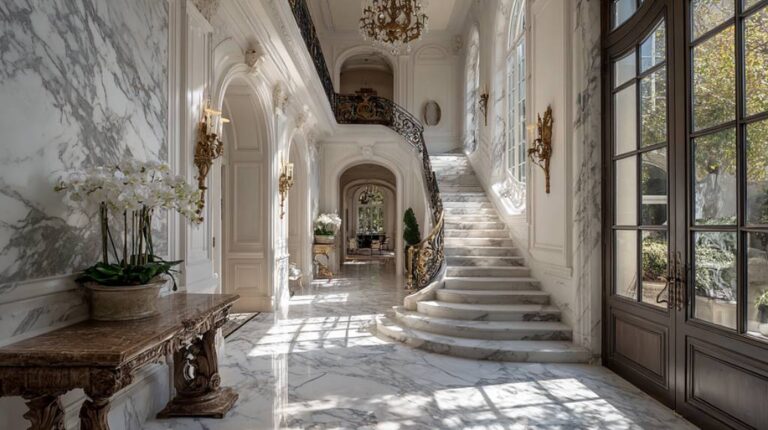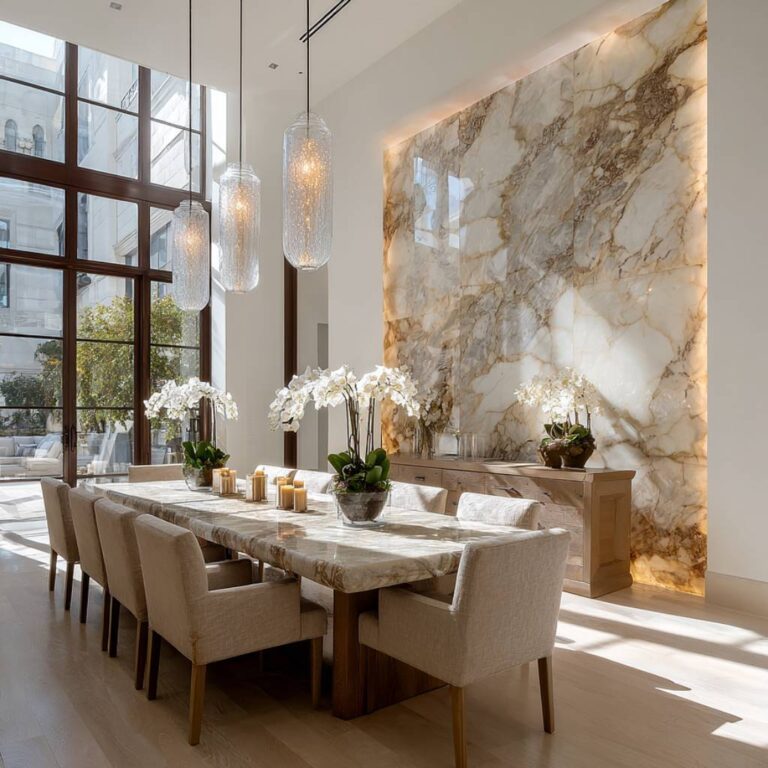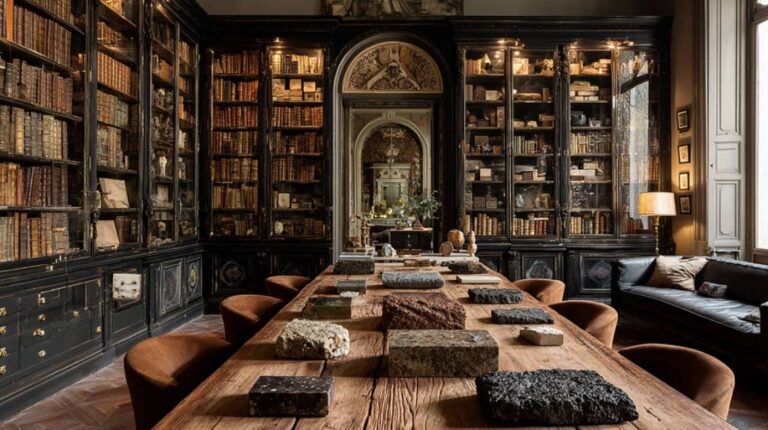
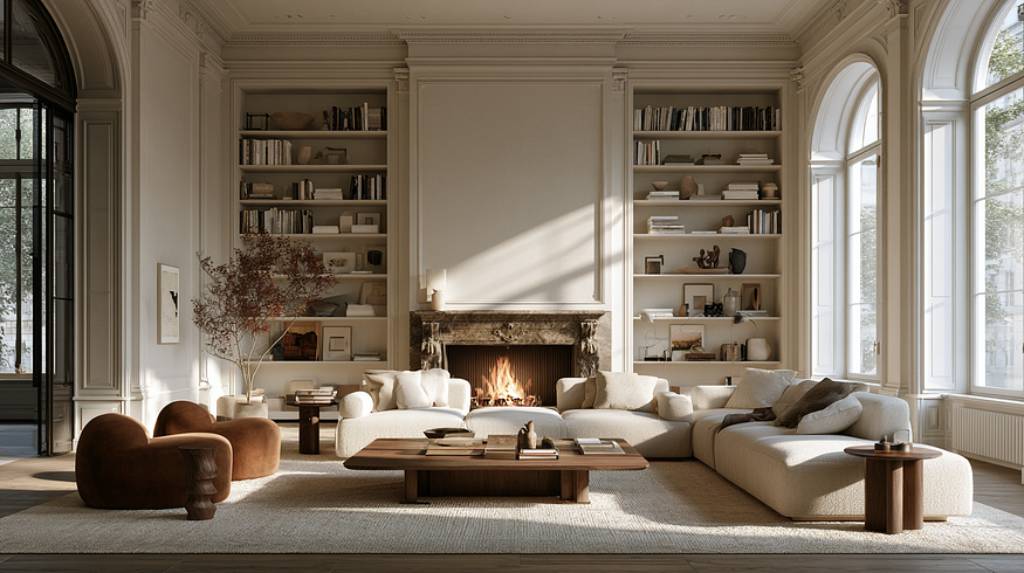
The next domestic ideal may be less concerned with visual purity and more interested in rooms that record taste, time, use and belonging.
There is a peculiar moment that occurs in a perfectly neutral room when someone introduces an object that actually belongs to them. An inherited chair enters beside the pale sofa. A vividly glazed ceramic bowl arrives on the travertine table. Children’s drawings appear on a wall previously reserved for a single restrained print. Books multiply. A textile brought home from a journey refuses to coordinate with the upholstery.
Suddenly, the room acquires a problem. It also acquires a life.
For much of the past decade, a particular interpretation of minimalism offered an attractive answer to domestic complexity. Walls moved through variations of chalk, sand, oatmeal and mushroom. Furniture became sculptural but subdued. Pale woods, cream bouclé, rounded forms and matte surfaces created interiors in which very little seemed capable of causing visual offence. The aesthetic promised calm at a moment when the world outside the home felt increasingly noisy.
Yet minimalism itself was never synonymous with beige. Its modern design lineage emerged from much more demanding ideas about reduction, proportion, function and the relationship between object and space. The interiors movement drew partly from post-war minimalist art and became increasingly influential in design and architecture during the later twentieth century. Somewhere along the way, a philosophy of editing became a palette.
That distinction matters because what appears to be happening now is not the death of minimalism. It is a rejection of anonymity.
Recent design coverage has increasingly emphasised personality, immersive colour, richer fabrics, dark woods, pattern, vintage objects and more layered interiors. Architectural Digest identified “real personality” and immersive rooms among the notable directions of 2025, while its 2026 reporting points towards deeper colour palettes and interiors designed around atmosphere rather than restraint alone.
The interesting question, then, is not what colour replaces beige.
It is what kind of home replaces the idea that good taste should leave almost no evidence of the person living there.
Minimalism Became a Social Language
The appeal of the neutral interior was never difficult to understand. Restraint can be beautiful. A limited material palette can allow architecture to become clearer. Quiet rooms can support concentration and rest. Exceptional stone needs space around it. Beautiful timber does not benefit from competing with twenty decorative gestures. There is intellectual discipline in deciding that a room needs less.
The problem emerged when reduction stopped being a design decision and became a recognisable formula.
Beige was particularly suited to this transformation because neutrality photographs well. It establishes continuity between rooms. It allows furniture, artwork and architecture to be presented without extreme colour variation. Online, where homes are repeatedly encountered as isolated images rather than inhabited sequences, such coherence has an obvious appeal.
A domestic interior, however, is not a photograph held permanently still.
People leave books open. Flowers die. Upholstery fades. Children grow. Objects are inherited from relatives whose tastes were different from our own. Tables acquire marks. Collections expand without consulting the interior designer. Architecture has always had to negotiate between an initial composition and the disorder introduced by life.
The most compelling post-minimal interiors may therefore retain minimalism’s discipline while abandoning its demand for visual obedience.
A room can have fewer objects without requiring those objects to disappear into a tonal scheme. A stone floor can remain quiet while an old lacquer cabinet provides cultural friction. A contemporary sofa can coexist with an eighteenth-century chest, a modern photograph, an embroidered textile or an eccentric lamp. The point is not eclecticism for its own sake. It is permission for different periods, materials and memories to occupy the same domestic territory.
From Decoration to Evidence
This shift changes the meaning of decoration.
For years, ornament was frequently treated as something that had to justify its presence. The post-minimal home asks a different question: does the object reveal anything about how its inhabitants live?
That distinction separates meaningful layering from indiscriminate maximalism.
A room filled quickly with fashionable colour, patterned wallpaper and trend-driven furniture can be every bit as impersonal as the beige room it replaces. Personality cannot be purchased as a complete aesthetic package. Once “character” becomes another retail category, individuality is merely standardisation wearing brighter clothes
A more interesting interior accumulates evidence.
There might be a dining table made to accommodate the particular way a family gathers. Stone selected not because it resembles a reference image but because its geological movement becomes part of the architecture. Cabinetry designed around objects people genuinely own rather than shelves filled after installation. Lighting that responds to evening rituals. Fabrics chosen partly for how they will soften with use. Furniture repaired because familiarity has acquired value.
These decisions allow interiors to become biographical.
Current interest in layered spaces reflects this desire for greater specificity. Recent discussions of “refined layering” describe homes combining contrasting textures, older pieces and contemporary elements rather than pursuing the visual uniformity associated with earlier neutral schemes. The strongest version of this tendency is not stylistic abundance. It is continuity between the designed home and the lived one.
Here craftsmanship becomes significant for reasons deeper than decoration. Handmade or highly skilled work introduces variation because making leaves evidence. Joinery has decisions embedded within it. Natural stone contains geological irregularity. Timber changes colour. Hand-applied plaster records movement. Textiles reveal weave, tension and repetition.
Such materials resist the frictionless image. Their value lies partly in what happens after installation.
The Designer After Beige
For architects and interior designers, the movement away from uniform neutrality creates a more demanding form of authorship.
Designing a beige room convincingly is not easy, but designing a layered room without producing visual confusion requires another kind of intelligence. Hierarchy becomes essential. Colour needs architectural logic. Pattern requires rhythm. Materials must relate through weight, temperature, reflectivity and ageing rather than through identical tones.
The designer becomes less concerned with making everything match and more concerned with deciding what deserves to coexist.
This also creates an interesting opportunity for furniture houses, textile makers, lighting companies, material suppliers and craft studios. The era of absolute coordination favoured products capable of disappearing into a total composition. The post-minimal home can accommodate objects with stronger identities, provided that identity comes from material, proportion, process or cultural relevance rather than novelty.
An expressive chair may now have greater permission to remain expressive. Veined marble does not necessarily need to be quietened by an entirely neutral room. A handwoven textile may carry irregularity visibly. Decorative lighting can occupy spatial territory rather than masquerading as invisible infrastructure.
Brands that understand this shift will need to communicate more than colourways and collections. They will need to explain provenance, construction, repair, adaptation and the knowledge behind their products. When homes become more personal, anonymous objects become less persuasive.
The same change can influence the relationship between designers and clients. A home intended to photograph perfectly on completion may favour control. A home intended to remain meaningful after ten or twenty years must allow change.
That requires asking different questions.
What will the owners bring with them? What might they inherit? Where will objects accumulate? Which surfaces can tolerate evidence of use? Which pieces deserve restoration rather than replacement? Where should architecture recede, and where should material character remain visible?
These questions produce interiors capable of ageing rather than merely surviving fashion.
Beige itself does not need to disappear. In fact, current design commentary suggests that warm beige and related neutrals remain relevant when used as foundations for texture, contrast and stronger personal elements. A limestone wall, linen curtain or warm plaster surface may still create precisely the quietness a room requires.
The difference is that neutrality no longer needs to function as proof of taste.
Perhaps the home after minimalism will be harder to name because genuinely personal rooms resist neat classification. They may contain fewer things than a maximalist interior and more visual information than the neutral spaces that preceded them. Their value will lie in relationships: old beside new, polished beside worn, precise beside irregular, commissioned beside inherited.
A home becomes culturally interesting when it stops behaving like evidence of a style and begins to behave like evidence of a life.
After beige, what returns is not simply colour. It is permission for the house to remember.
Habitus Journal Editorial Note
Habitus Journal welcomes architects, interior designers, furniture and lighting studios, textile houses, material specialists, artists and makers to share projects, objects and processes that explore the movement towards more personal, layered and materially expressive homes for possible editorial consideration. We are particularly interested in work examining longevity, inheritance, craft, colour, collecting and the relationship between contemporary design and objects accumulated over time.
Follow or subscribe to Habitus Journal for essays on architecture, culture, craftsmanship, materiality and the changing meaning of luxury.