Luxury used to be deeply personal.
Not personal in the modern branding sense where every campaign tries to feel intimate, but personal in a slower, more structural way. Historically, luxury existed through relationships. A patron would support an architect for years. A craftsman would dedicate months to a single commission. Workshops survived because individuals believed enough in beauty, culture, and legacy to sustain the people creating it.
Objects were not isolated purchases.
They were outcomes of ongoing collaborations between thinkers, makers, artisans, and patrons who collectively shaped culture over time.
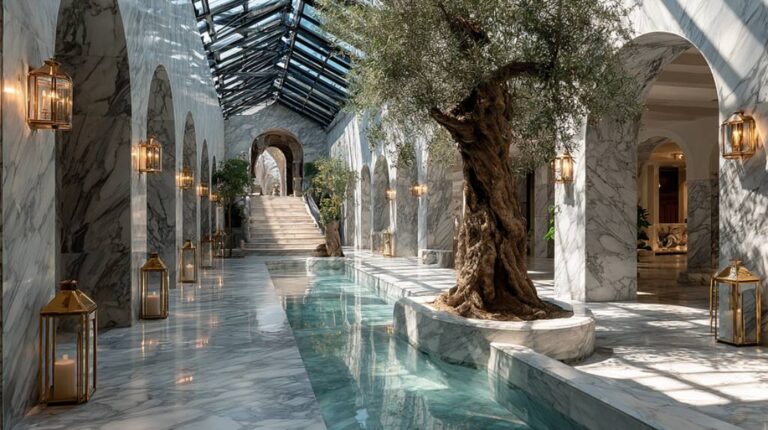
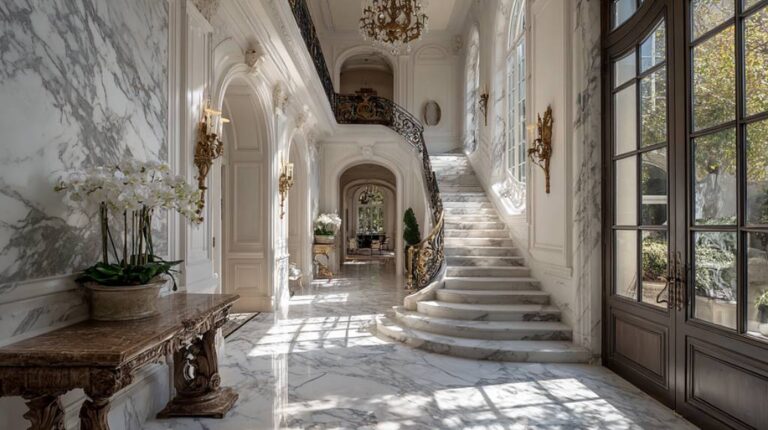
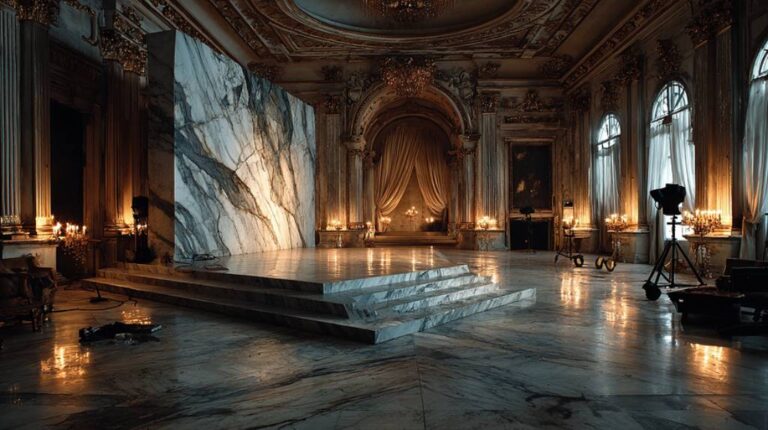
A marble staircase inside an old European residence was never simply a staircase. It represented quarry workers, stone selectors, sculptors, architects, financiers, and decades of material knowledge being brought together into one physical gesture. Even something as seemingly ordinary as a chair often carried generations of craftsmanship behind it.
Luxury was less about acquisition and more about participation.
That distinction matters today because modern luxury has spent decades moving in the opposite direction.
As industries scaled globally, luxury became increasingly optimized for visibility and consumption. Products became easier to distribute, aesthetics became easier to replicate, and aspiration became increasingly standardized. Beautiful things still existed, but many lost the feeling of intimacy that once made luxury emotionally powerful.
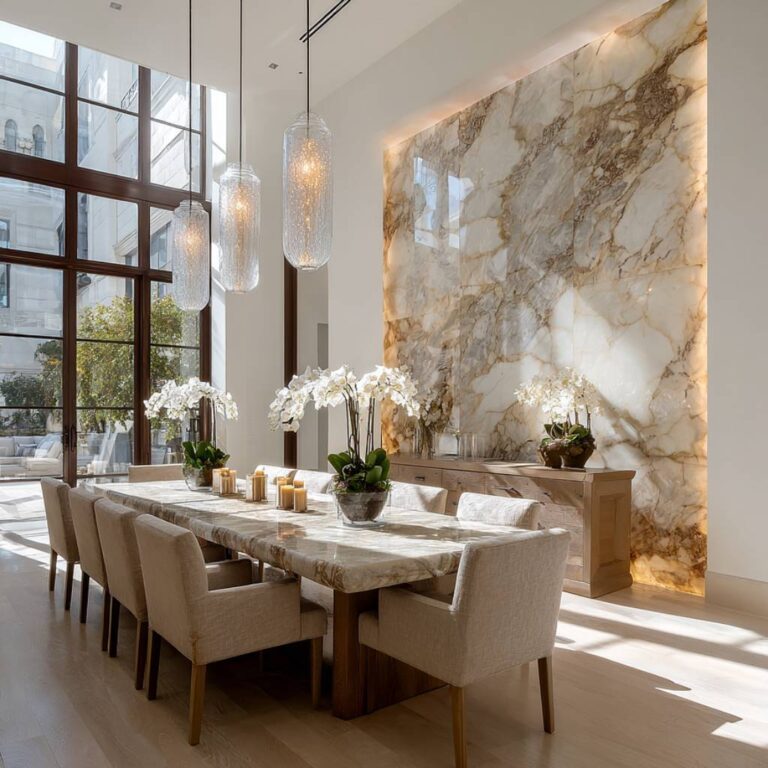
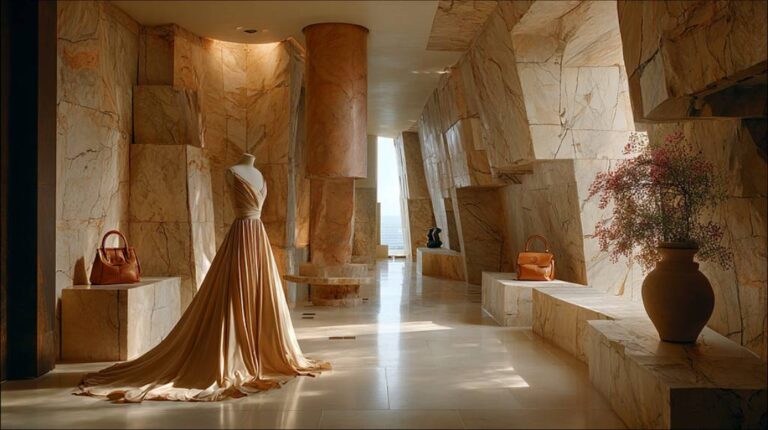
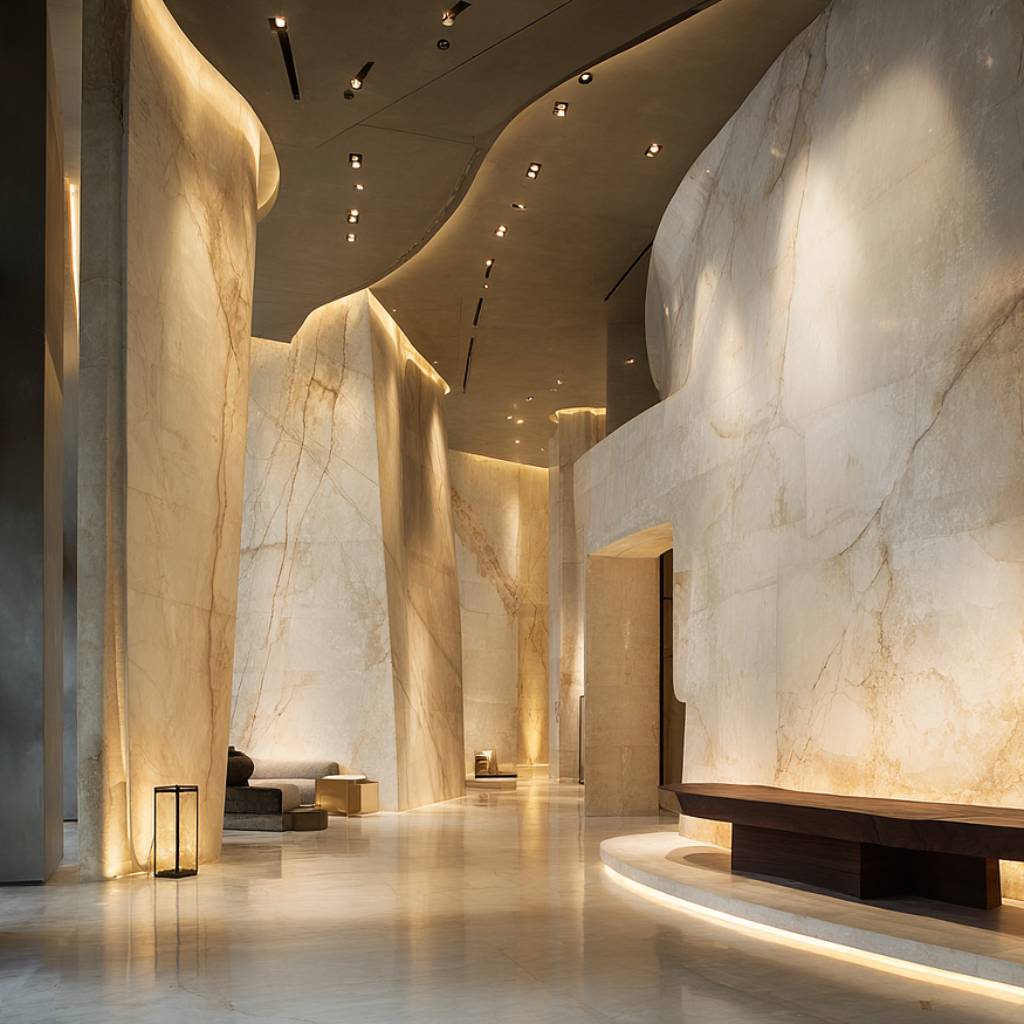
You could travel between cities, hotels, boutiques, restaurants, and residences and begin noticing the same references repeated endlessly. The same marble. The same muted palette. The same lighting language. The same carefully curated neutrality.
Somewhere along the way, luxury became highly refined but emotionally flattened.
And perhaps that is why collaboration feels so important again right now.
Not because collaborations are new, but because they reintroduce human authorship into spaces and objects that had started feeling too systemized.
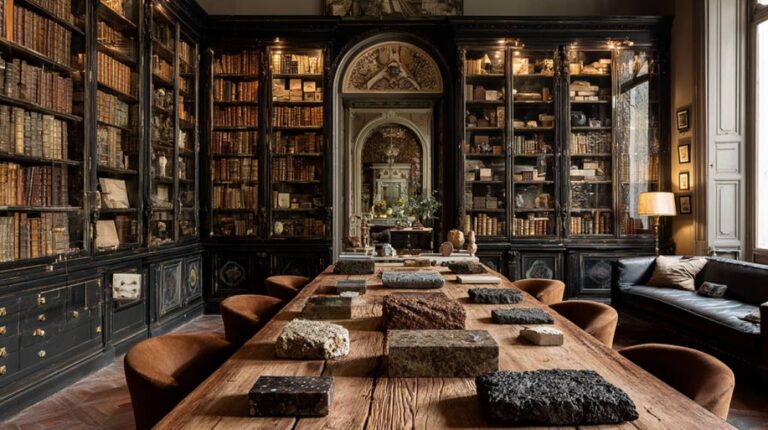
The collaborations that resonate today are rarely the loudest ones. In fact, the most meaningful collaborations often feel surprisingly quiet. A furniture designer working with a stone atelier to explore geological textures. A lighting studio collaborating with an architect before the building even exists physically. A ceramicist shaping custom finishes specifically for one spatial atmosphere rather than for mass retail production.
These kinds of collaborations create a different emotional experience because they produce work that feels relational instead of generic.
And people can feel that instinctively.
Even clients who cannot articulate design language precisely still respond emotionally to environments where ideas feel connected. A room becomes memorable when the furniture appears to belong to the architecture naturally. When lighting feels integrated into mood rather than added afterward. When materials feel chosen for emotional resonance instead of visual trend alignment.
There is a coherence that emerges when multiple disciplines genuinely influence each other during the creation process.
That coherence cannot be manufactured through branding alone. It comes from dialogue.
Historically, patronage created the conditions necessary for this kind of dialogue to exist. Patrons funded ecosystems, not just outcomes. They gave artists, builders, and craftsmen the time and support required to experiment, refine, fail, rethink, and ultimately produce work with cultural longevity.
Today, collaboration is beginning to recreate fragments of that ecosystem again.
You can see it across contemporary design culture. The growing interest in collectible furniture, artisan-led studios, bespoke material applications, limited production runs, and interdisciplinary creative practices all point toward the same underlying shift. People are no longer satisfied with surfaces that simply appear expensive. They are searching for traces of thought.
Not perfection.
Thought.
That difference changes everything.
For many years, luxury relied heavily on visual signals. Scale, rarity, ornamentation, and exclusivity were enough to communicate status. But modern consumers live inside a world of endless visibility now. Every aesthetic is instantly accessible online. Every trend circulates globally within weeks. Replication happens faster than ever before.
In that environment, visibility stops feeling rare.
Depth becomes rare instead.
And depth usually comes from collaboration because collaboration naturally introduces complexity. It creates friction between perspectives. It forces materials, disciplines, and philosophies to respond to one another. The final object becomes richer because it contains multiple layers of authorship inside it.
You can feel this difference immediately when entering spaces that were designed collaboratively rather than assembled commercially.
Commercial assembly often prioritizes coordination. Everything matches. Everything photographs well. Everything feels resolved.
But collaboratively authored spaces feel alive in a more subtle way. There is tension inside them. Warmth. Slight irregularities. Unexpected relationships between materials. Moments that feel difficult to replicate because they emerged from conversation rather than selection.
And perhaps that is the future luxury is slowly moving toward now.
Not louder environments.
Not more decorative environments.
But more thoughtful ones.
There is also something emotionally reassuring about knowing an object carries human presence inside it. In an era dominated by automation, acceleration, and digital sameness, craftsmanship suddenly feels less nostalgic and more psychologically necessary. People are drawn toward objects that still reveal evidence of touch, patience, and individual interpretation.
A hand-finished edge matters because it reminds people another human being existed in the process. A collaboratively designed object matters because it contains relationships.
This is why the idea of patronage feels relevant again today, even if the language around it has changed. Modern patronage may not always look like Renaissance commissions or aristocratic workshops. Sometimes it looks like architects working directly with local artisans. Sometimes it looks like brands funding experimental material research. Sometimes it looks like long-term creative partnerships built slowly over years rather than seasonal campaigns.
The form changes.
But the emotional principle remains remarkably similar.
The most enduring luxury has never simply been about owning expensive things. It has always been about enabling culture to exist at a higher level of care, intelligence, and craftsmanship.
And maybe people are beginning to crave that feeling again because contemporary life often feels so temporary. Digital culture moves quickly. Trends disappear instantly. Images are consumed and forgotten within seconds. In that atmosphere, permanence begins to feel emotionally luxurious.
Not permanence as rigidity. But permanence as meaning.
Objects that feel culturally grounded carry a kind of emotional stability that fast consumption cannot provide. They feel slower. More intentional. More human.
That human quality is becoming increasingly valuable.
The future of luxury may ultimately belong to the brands, designers, and creators capable of building ecosystems instead of simply producing products. The ones who understand that collaboration is not merely a marketing strategy but a way of creating emotional depth.
Because people rarely form lasting attachment to objects that feel anonymous.
They remember objects that feel authored.
They remember spaces where materials seem to speak to one another naturally. They remember environments where craftsmanship feels visible without becoming performative. They remember the feeling of entering a place and sensing that real people cared deeply while making it.
And perhaps that is what true luxury has always been underneath everything else.
Not excess. Not spectacle.
But human attention, carefully embedded into form.