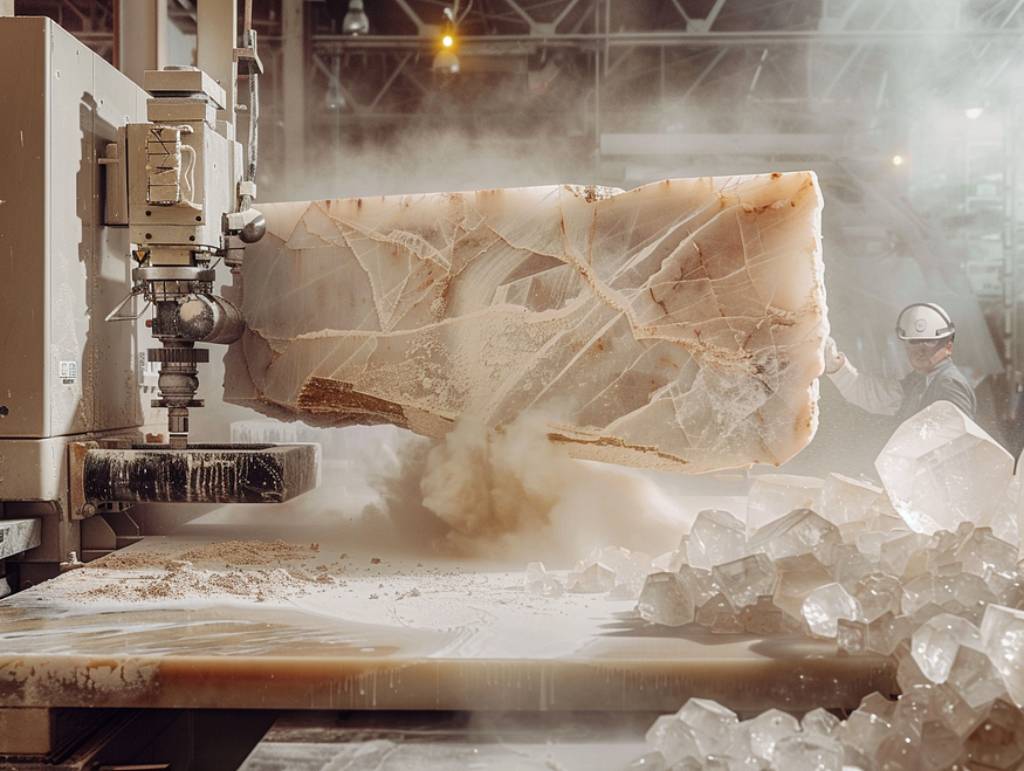
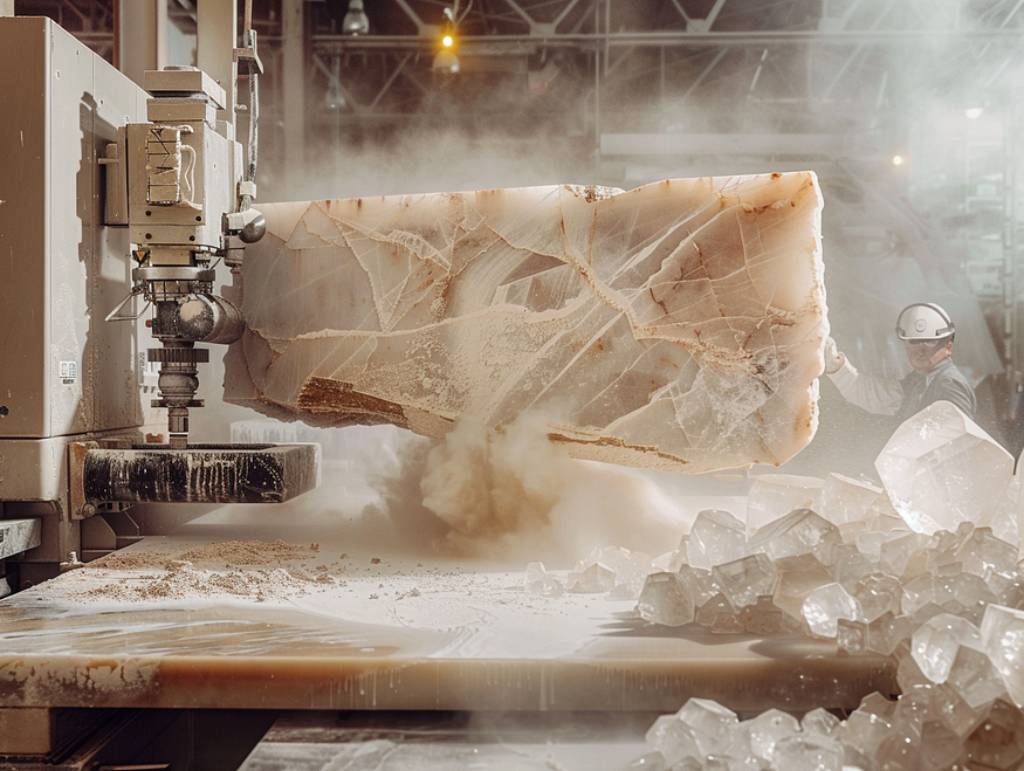
“Handmade” has become one of the most overused and least examined terms in luxury interiors. It appears in brochures, showroom conversations, and brand narratives with an ease that suggests clarity. Yet the word itself holds multiple meanings, some grounded in reality, others constructed for effect. It can signify genuine craft, but it can also operate as marketing language, or worse, as a form of romantic shorthand that obscures more than it reveals.
The problem is not the presence of craft. It is the absence of precision in how it is described.
In its most rigorous sense, handmade work is defined by direct human intervention at critical stages of production. It involves decision-making in real time, an ability to respond to material variation, and a reliance on skill that cannot be fully standardized. However, in contemporary luxury contexts, the term is often applied more loosely. Processes that are partially automated, assisted by machines, or repeated at scale are still framed as handmade, creating a blurred boundary between craft and production.
This ambiguity benefits the narrative, but not the understanding.
What is frequently presented as handmade is, in many cases, a hybrid condition. Machinery may shape the initial form, while human labor refines, assembles, or finishes the final surface. This does not diminish the value of the work. In fact, hybrid processes can produce exceptional results. The issue arises when the complexity of this process is collapsed into a single word that implies total manual authorship.
The result is a mythology of craft.
This mythology relies on the idea of the artisan as a solitary figure, working slowly and intuitively, producing objects that carry an inherent authenticity. While this image is compelling, it rarely reflects the reality of contemporary production systems. Luxury interiors today are the outcome of coordinated workflows, involving multiple specialists, calibrated tools, and tightly managed timelines. Craft exists within this system, but it is distributed, structured, and often interdependent with technology.
To describe such work simply as handmade is to oversimplify it.
A more accurate language would focus on accountability rather than romance. Instead of asking whether something is handmade, the more relevant questions are: Where does human skill enter the process? At what stages does judgment replace automation? How is quality controlled, and how are errors corrected? These questions do not reduce the value of craft; they make it legible.
Process transparency becomes critical in this context. When the stages of making are clearly articulated, the narrative shifts from mystique to understanding. Time, skill, and coordination are no longer hidden behind a singular label. They become part of the value itself. The object is not appreciated for an assumed origin, but for the clarity of its production.
Repair pathways further extend this idea. True craft is not only about how something is made, but how it can be maintained. An object that allows for repair acknowledges its own construction. It anticipates wear, use, and change over time. This continuity reinforces the role of labor beyond the moment of completion, positioning craft as an ongoing condition rather than a fixed identity.
What emerges from this is a different way of reading luxury interiors. One that moves away from symbolic language and toward structural understanding. “Handmade” becomes insufficient not because it is false, but because it is incomplete. It compresses a complex set of processes into a single, unexamined claim.
For designers, brands, and clients, this presents an opportunity. By replacing vague descriptors with precise narratives, the conversation around luxury can become more grounded. Craft can be discussed in terms of process, skill, and responsibility rather than myth.
In doing so, the value of labor is not diminished. It is finally made visible.
Luxury, then, is not defined by whether something is handmade. It is defined by how honestly its making is understood.