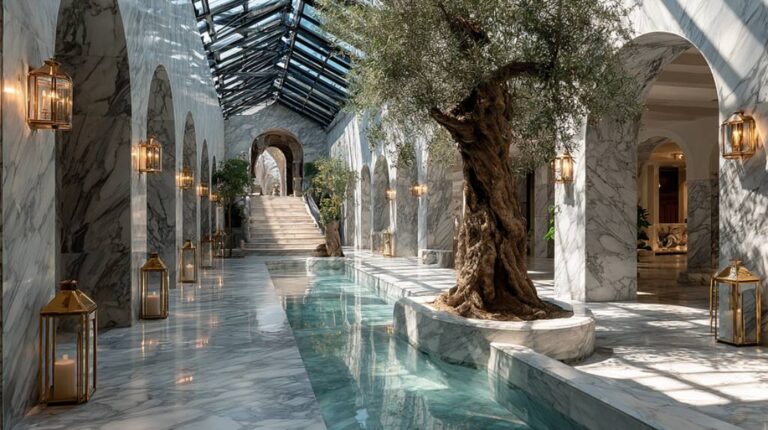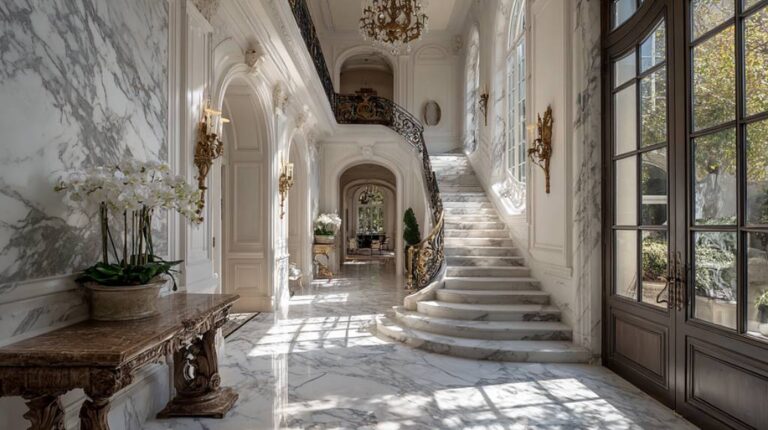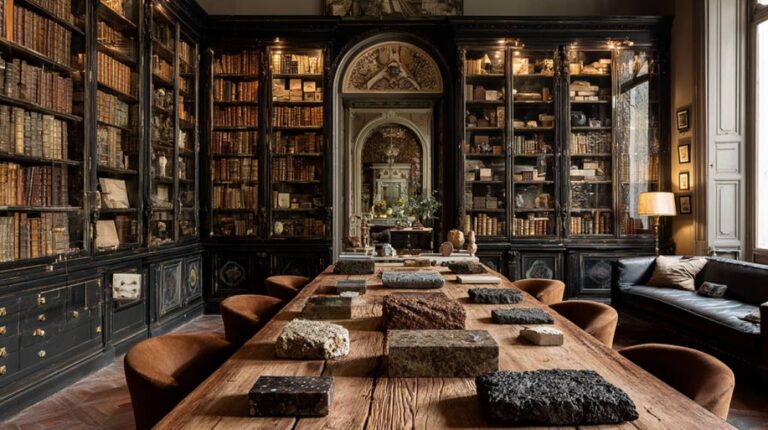
Power has always required material expression.
Empires do not declare themselves through words alone. They construct permanence. They inscribe authority into matter. And for much of human civilization, that matter has been stone.
Long before glass towers defined financial districts, stone defined sovereignty. It was not simply a building material. It was a civilizational language, the one that spoke of endurance, dominion, and continuity beyond a single reign.
In ancient Rome, marble was political.
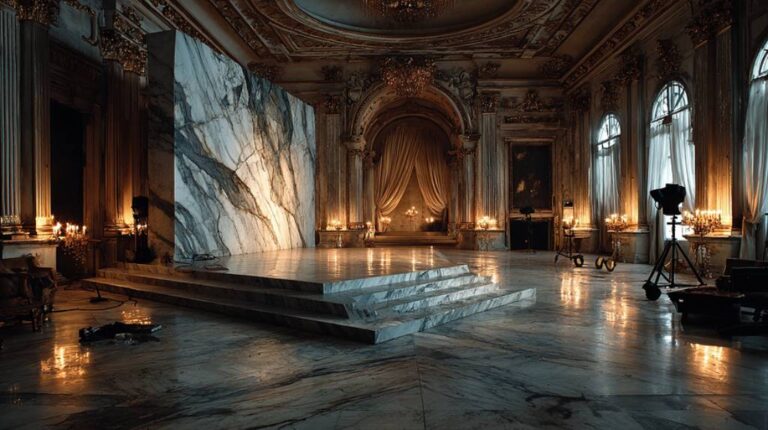
The Roman Empire understood that conquest extended beyond territory into aesthetics. When Augustus famously claimed that he found Rome a city of brick and left it a city of marble, he was not describing a renovation. He was describing transformation of identity. Marble symbolized order, imperial reach, and economic control over distant quarries. To clad a city in stone was to declare that the empire commanded both land and labor.
Marble was not chosen for convenience. It was chosen for message.
The Renaissance inherited this understanding. In Florence and Rome, stone became the medium through which humanism and power converged. Palazzi rose in rusticated limestone; their massive blocks deliberately roughened at the base to convey strength. The Medici did not build lightly. They built heavily, embedding political stability into façades that suggested unshakable authority.
Stone was theatre, but theatre grounded in mass.
In Mughal India, stone carried spiritual and imperial meaning simultaneously. The Taj Mahal’s luminous marble was not merely ornamental; it represented control over vast territories and trade networks. White marble signified both divine purity and imperial wealth. It reflected light with delicacy, yet its weight asserted permanence.
The Ottomans, too, mastered stone as symbol. Their mosques combined massive domes and stone piers that created spaces of transcendence while maintaining structural gravitas. The architecture communicated that faith and empire were inseparable, that spiritual authority was housed in enduring matter.
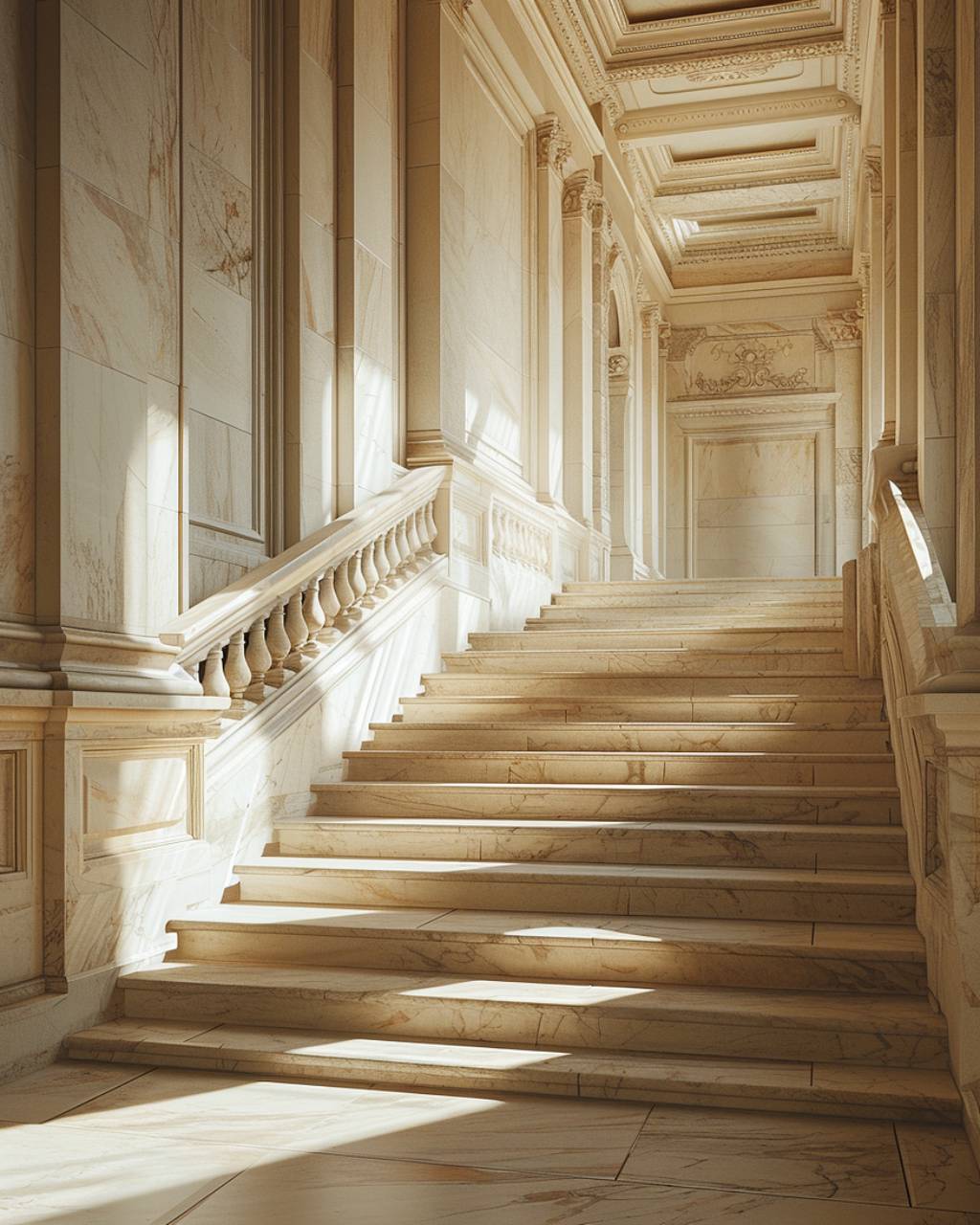
Across Europe, from Versailles to Vienna, palaces were constructed not simply as residences but as statements of continuity. Thick stone walls insulated against both climate and instability. Carved façades proclaimed dynasty. Floors of marble and limestone suggested permanence underfoot.
In each of these civilizations, stone functioned as more than structure. It was an instrument of narrative.
The choice of stone conveyed control over extraction. It implied access to quarries and transport routes. It suggested logistical sophistication and economic dominance. A ruler who could move massive blocks across landscapes could command loyalty as well.
Stone signalled command over time.
Unlike timber or brick, stone resists decay. It erodes slowly, almost reluctantly. When empires built in stone, they were projecting confidence that their influence would endure. Even when the empire fell, its architecture remained as testimony.
This is the paradox of stone and power: it outlives its patrons.
As centuries passed and industrialization accelerated, the symbolic language of stone evolved. Steel and glass began to represent modern progress. Transparency replaced opacity as the metaphor of advancement. Lightness signalled technological liberation from gravity.
Yet even in the most radical phases of modernism, stone never fully disappeared.
It adapted.
In twentieth-century minimalism, stone shed ornament but retained authority. The heavy carved cornice gave way to monolithic planes. The message shifted from decorative dominance to restrained permanence. Power became quieter, but it remained embedded in density.
Modern minimalism did not abandon stone; it abstracted it.
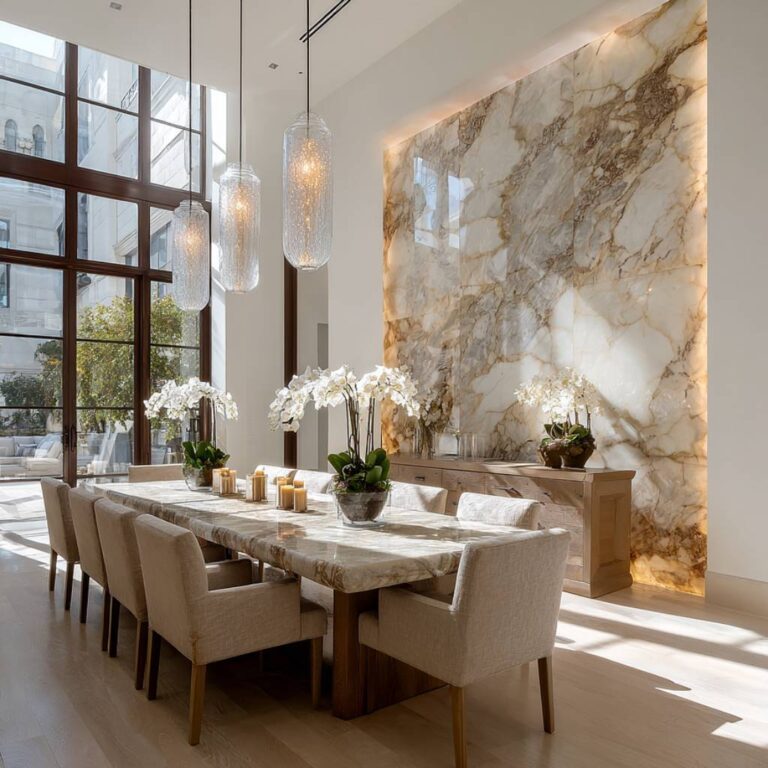
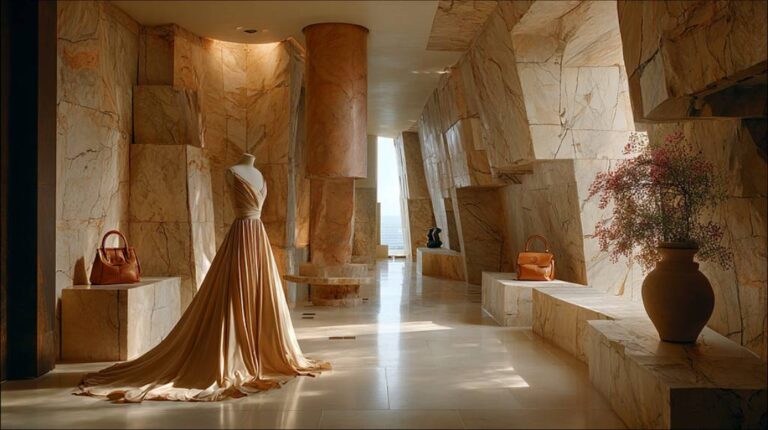
A single expansive slab in a contemporary residence carries echoes of imperial halls, even if its lines are clean and its detailing minimal. The message is less theatrical but equally potent: this structure is grounded. It belongs to a lineage of buildings that resist impermanence.
The difference lies in tone.
Where Rome proclaimed empire through spectacle, contemporary luxury often expresses power through restraint. The polished stone surface is no longer overloaded with carving. It is allowed to speak through mass, proportion, and texture.
Yet the underlying psychology persists.
Ultra-high-net-worth individuals today may not identify explicitly with emperors or dynasties, but the desire for permanence remains. In a volatile world of shifting markets and digital abstraction, the solidity of stone carries reassurance. It connects present wealth to historical continuity.
To inhabit stone is to inhabit lineage.
This lineage extends beyond Europe and the Middle East. Across civilizations; from Incan temples in Peru to Angkor Wat in Cambodia, stone has consistently represented alignment between human ambition and geological time. It anchors architecture within the earth itself.
That anchoring is the core of its symbolic power.
Modern minimalism, often misunderstood as weightless and purely aesthetic, still relies on this anchoring. Even the most restrained contemporary residence achieves authority when it integrates dense materials thoughtfully. A floating glass volume without grounding risks appearing ephemeral. A minimalist structure articulated in stone acquires gravitas.
Stone corrects lightness.
The contemporary fascination with clean lines and seamless finishes has not erased our instinctive respect for mass. It has refined it. Today’s power is not always expressed through scale alone; it is expressed through material confidence. A thick threshold. A monolithic plinth. A wall that absorbs light rather than reflecting it.
These gestures echo millennia of architectural symbolism.
The history of stone and power is not linear; it is cyclical. Periods of extravagance give way to restraint, but the material persists. Its forms change, its detailing evolves, yet its fundamental association with authority endures.
Stone remains the medium through which civilizations articulate permanence.
From marble empires to modern minimalism, the message is consistent: to build in stone is to build beyond oneself. It is to participate in a tradition that understands architecture not merely as shelter, but as declaration.
Power requires presence.
And presence, across history, has been measured in weight.